The teacher who suffered the homophobic aggression in Andratx: "I explained to the students that crimes have consequences"
A fake Google Classroom account spread insults and demeaning images against him; several minors involved have already been identified

-
CAT -
DE
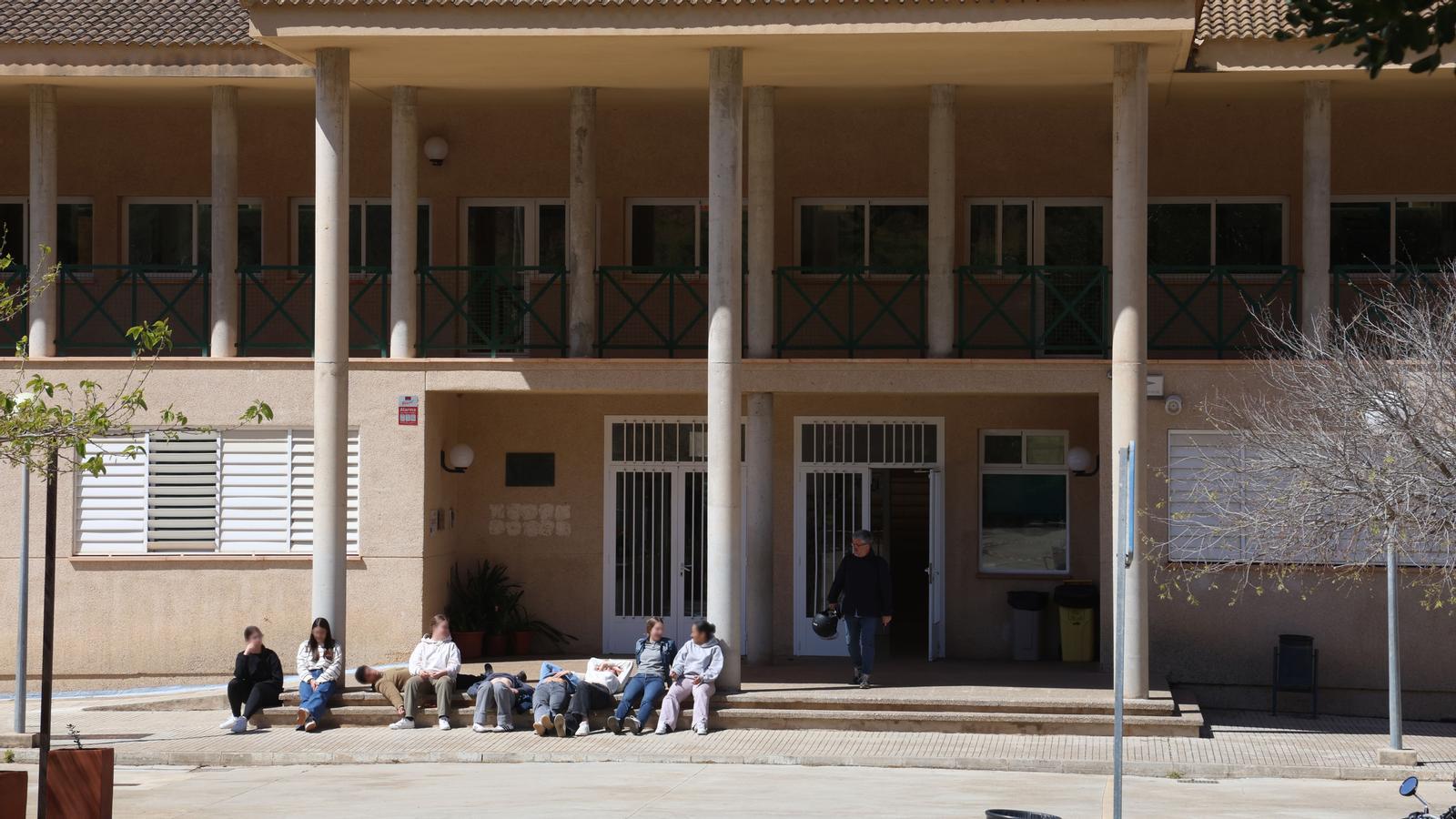
PalmFirst words of the teacher who suffered the homophobic aggression at IES Baltasar Porcel, a case that ARA Balears exclusively reported and in which several minors have already been identified. “I am very grateful for the support received. I finish at the center this Wednesday and right now I am correcting the last exams. I am fine, in fact, I am very well. I have a lot of work, but I feel good,” he explains. “I have a law degree. I had a class with the suspects and I made them read the Penal Code and the Minor's Law, to show them that, even though they are minors, all types of crimes have consequences. They are 16 and 17 years old, and everything has repercussions: even if they don't go to prison, they can be sent to a juvenile center,” he adds in conversation with ARA Balears.

The homophobic aggression took place through a fake account created on Google Classroom, from where some 4th year ESO students, with the possible collaboration of students from the CC Ramon Llull of Andratx, spread insults directed at the teacher, sexually explicit images, and demeaning comments that violated his dignity. The events were discovered last Wednesday, and that same afternoon the school principal filed a complaint with the Civil Guard; the following day, the teacher also formalized his own complaint while the school opened an internal investigation.
Cross-party rejection
The case has gone beyond the Balearic Islands and has even reached the United States. The faculty of IES Baltasar Porcel has expressed “profound indignation” and has called for a “clear and effective” response from institutions. It has denounced that these behaviors of contempt and insults are not isolated cases, but part of a recurring dynamic of disrespect inside and outside the classrooms. Shortly after the attack, the faculty posed for a photo dressed in black as a sign of support for the teacher; while they were doing so, some of the suspected students, already identified, were laughing.
Both the Minister of Education, Antoni Vera, and the President of the Government, Marga Prohens, have condemned the attack and called for respect. The union fabric and teaching organizations have also denounced the “normalization” of this type of behavior and have called for measures to ensure an environment of respect and safety for the teaching staff. According to sources from the center and the investigation, several suspects have already been identified, and the authorities continue the search to fully clarify the students' involvement.
Now, Educational Inspection will have to prepare a report to determine what happened and take the corresponding punitive measures. It must also be determined what crime the aggressors have committed and to what extent the penalties could reach. With the aim of preventing such conduct, Education is working to promote new training courses for the next academic year to prevent misogynistic, homophobic, and racist behaviors. These will be offered in Secondary and Vocational Training.
Aggressions against teachers, on the rise
The homophobic episode that a teacher from IES Baltasar Porcel recently suffered has put the focus on an increase in violence against teachers in classrooms, according to ARA Balears. This case has triggered a kind of educational MeToo, with various professionals sharing similar experiences of verbal violence, sexism, insults, and discriminatory attitudes within schools. The educational community has been warning for some time about the increase in aggression and lack of respect towards teachers, including a significant percentage of physical incidents.
According to testimonies collected by ARA Balears, behaviors such as sexist and homophobic insults –expressed in comments like “you go, you are a woman” or other offensive phrases directed at colleagues and teachers– are more common than one would like and are often normalized within the school environment. Some of these expressions have been detected both in person and in digital environments, and many teachers point out that these violent discourses are, in part, influenced by content shared on social networks.
The reaction of the educational sector includes strong indignation and demands for firmer measures from institutions, as well as a widespread call to defend respect, coexistence, and diversity inside and outside the classrooms. Awareness and support among professionals are becoming key tools to make visible a problem that many consider has been silenced for too long.
