Julián Reina: "Stonecutters are as important or more important than an architect"
Stonemason and writer
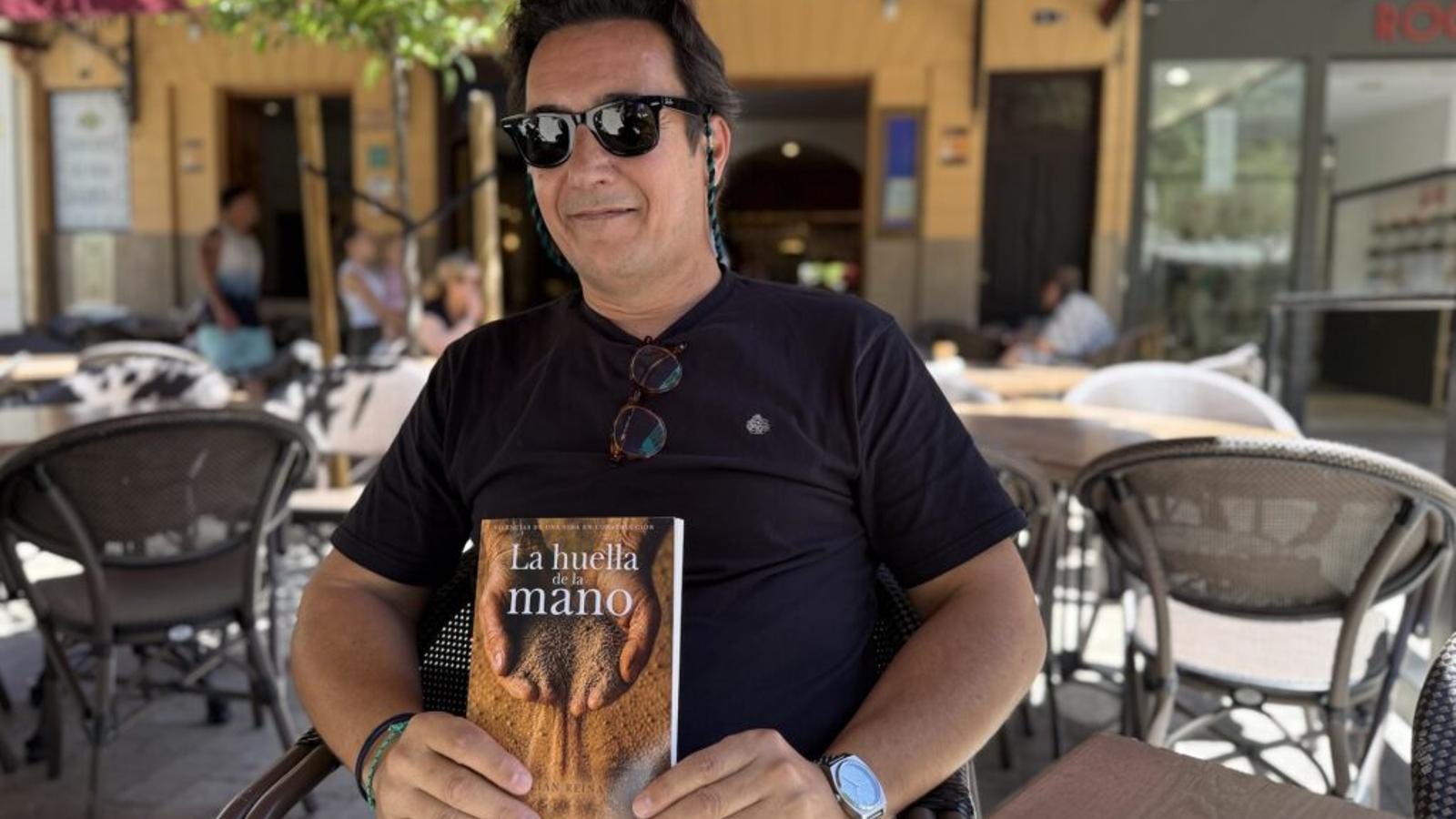
ManacorJulián Reina, born in Felanitx (1976) and adopted by Manacor, has just written La huella de la mano, a book about the stonemason profession, its importance and some anecdotes and reflections from a master builder over the years. A curious and necessary text that can be purchased through Amazon.
Where does the interest in writing a book about the profession come from?
— For 15 years we have been in the construction world, meaning it has been 35 years. With all this time, when you reflect, you realize that it is a very undervalued job, unfairly so. Certainly, not all stonemasons are good, but in many cases they are as important as or more important than an architect or any other professional involved in a project. A house is not built or a renovation done with a pen, but with hands, yes.
To claim an undervalued job and way of doing things?
— It is not about belittling the role of an architect, but simply valuing who is on the construction site, enduring heat and lifting heavy loads for hours. It is to show that not all medals should always be awarded to the same people. Building houses has a very human component, where everyone is necessary. A good stonemason can do very beautiful things, and it is also a craft that is being lost. Young people no longer want to suffer in the sun all day, they don't want to do hard work, they want to work in an air-conditioned office. That's why it's so complicated nowadays to find people willing to do this work. They come out less specialized. The old stonemasons are retiring, and the trade is looking for people but can't find them.
How has the profession changed in the last 35 years?
— Nowadays, work is no longer done with noble materials as it was done before. They are not designed to last more than a hundred years as in other times. Materials have changed enormously; now there are many resins, new products. Plasterboard is faster, but you know that sooner or later humidity will eat away at it. The best thing is to find a balance between the two. When something has been done in a certain way for a hundred years, it is for a reason.
Does it charge well?
— Although it is a demanding and very physical job, I consider that we continue to earn well, if we compare it with other jobs such as waiter in a bar or chambermaid, for example. You suffer a lot, it is a very physical job; you suffer sun, wind and cold, noise and dust...
By the way, why did you start? Were you forced or did you like it from the start?
— Because my father already had the company, and since I didn't want to study and wanted to make money, I started there. That said, all of a sudden I felt good about it, it's not that I suffered. On the construction site you could shout, as they say, it was a very wild profession and I liked that a lot. I remember I spent my first salary all at a sports shop, on branded shoes, jackets, and trousers. My father got so angry that he didn't give me a salary for a whole year. Then he gave it to me all at once [smiles].
What is the secret to keep getting up with enthusiasm?
— The work continues to please me because I always have a maxim: do things as if you were doing them for yourself. If you go to work with this attitude, it's impossible for things to go wrong for you. Then I like to start and finish a project, not leave it to go elsewhere or handle several works at the same time. I believe it's a matter of respect for the client.
Do you prefer building new constructions or doing renovations?
— More restoring or rehabilitating an old house. In fact, we no longer accept repetitive jobs, those that are always the same, like hotels. I enjoy more personal processes more because they give me more satisfaction.
And do you enjoy the process more or the end?
— You enjoy the process, but when you've finished and you see that it's done and it doesn't fall apart, it's a very special feeling.
What is the best?
— When people trust you, they give you freedom and confidence. When they call you, not because there's anything to fix or something has gone wrong, but because they want to assign you another job.
Do they ask you for many strange things?
— Many times they want things they have seen in a magazine. But they have to take into account that things that may work in Norway, here in Mallorca they don't, due to materials or way of doing. Even so, whoever pays calls the tune…
Why is the book titled La huella de la mano?
— Because I think we leave a mark on what we do and that it is a very human component. The book is very sincere, with real stories. There are two or three chapters dedicated to materials and then to the accumulated experience with life events.
Do you have any curious anecdotes?
— One day, while making a small pool in Portocolom for a woman who had been widowed, she asked me if I could mix her husband's ashes with the glue I was going to use to stick the pool tiles; so that, in some way, she could continue bathing with him.
