'Brioche' Pedroche against sofrit pagès: traditional Ibizan cuisine fights to survive
The new Academy of Cuisine of Ibiza and Formentera wants to go to the rescue of its own gastronomy that is drowning among the very wide offer for tourists
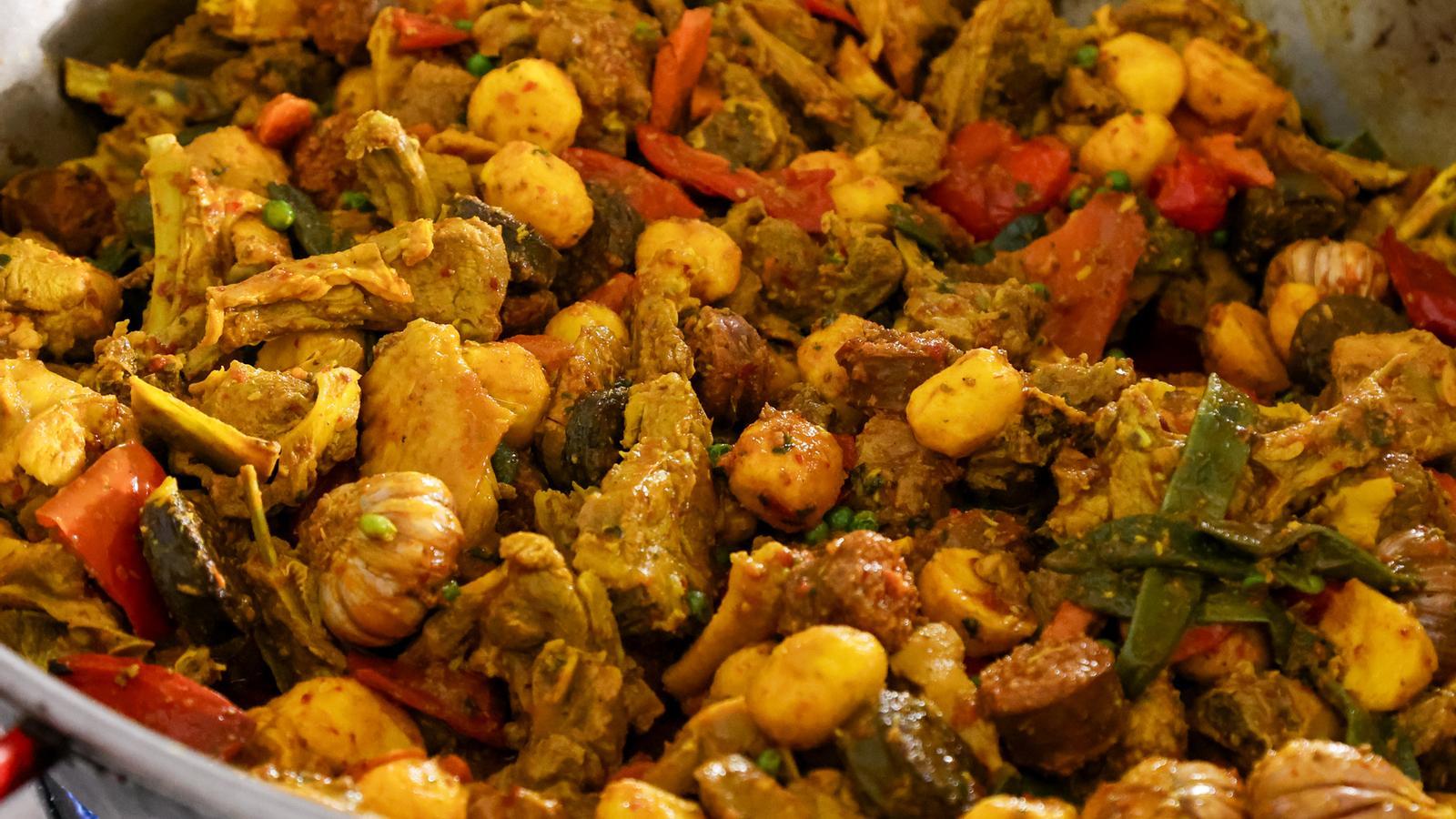

IbizaThe sofrit pagès suffers like never before. Yes: it's a very bad pun. The situation of Pitiüsan gastronomy is also not good. Sofrit and other Ibizan specialities are drowning amidst an avalanche of pizzas, tacos, sushi, chicken tikka masala and spring rolls. Not to mention the competition from Michelin-starred restaurants, establishments by famous chefs and fast food franchises. It's an unequal fight. A quick search on Google Maps reveals the difference in forces: in the capital of the main Pitiüsa island alone, the search engine offers 23 Japanese restaurants, 16 Chinese restaurants, 24 restaurants classified as Italian cuisine, 21 pizza-only places, and 23 Mediterranean cuisine. There isn't a specific tab for local cuisine, but we must assume it's included in the 'Mediterranean cuisine' category. Without even going online, any Ibizan knows they will have plenty of options if they want to eat sushi or pizza, and practically none if they fancy a sofrit pagès, the main meat dish of traditional Ibizan cuisine.But the sofrit is no longer alone. Last week, the Academy of Balearic Islands Cuisine was presented to the public in an event at the Consell d’Eivissa; this organization, for the first time, has four members from the Pitiüsa Islands, three from Ibiza and one from Formentera. A kind of Pitiüsan resistance against culinary globalization. There was talk of "defending our own" and the "danger of extinction" of local cuisine. It is still relatively easy to find the famous fish stew (bullit de peix) on the menus of Pitiüsan beach restaurants – another matter is whether the fish used is truly Pitiüsan – alongside international cuisine dishes. It is much more difficult to find less popular preparations, such as sofrit and borrida de ratjada. The same applies to desserts; beyond flaó on some menus and perhaps greixonera, it will be almost impossible for you to find any other.

Tourism as a solvent
“Downstairs from my house, I only have Italian restaurants,” laments Toni Montserrat, one of the Ibiza members of the Academy. “I live right in the center of Vila, in front of the port, and there’s nothing left that offers Ibizan cuisine. The gastronomic offer has diversified enormously, and our gastronomy, because it is more laborious or because we have valued it less, is getting diluted.” According to Toni Montserrat, the main factor of “dilution” has been tourism. “It seems that Ibizan cuisine is only the fish stew.” Toni Montserrat is a popular novelist and also holds a degree in Business Administration, and he has worked as a business consultant at a state and international level for companies like Coca-Cola and Gallina Blanca; he joins the Academy not to cook, but to help define a strategy “to recover Pitiüsa cuisine.” The other three members of the Academy are the blogger María José Amengual – perhaps the most relevant disseminator on social networks of Pitiüsa preparations –; the businesswoman and co-founder of Agroeivissa Carmen Riera and the Formentera restaurateur Santi Costa, from the restaurant Es Caló.
María José Amengual learned the recipes she now tries to spread from her great-grandmother. “She would spend the whole morning in front of the stove,” she warns. “We have the recipes we have, we must admit that we cannot compete with fast food, these are preparations made over a slow fire: you have to make a sofrito, take things out, put things in…”. The blogger believes that the Academy's job should be to contribute to diversifying the offer of Ibizan cuisine; otherwise, some recipes are threatened with disappearance. This is the case of the olla podrida, for example, a dish based on meats, cured meats, legumes and fresh vegetables. The adjective ‘podrit’ (rotten) does not have its most obvious origin in this case, but rather comes from ‘poderós’ (powerful). Traditional cuisine was not made with 21st-century marketing in mind.
The three Ibizan members of the Academy agree on the idea of taking Ibizan recipes beyond the most obvious channels: to school canteens, to hotels... “What dishes are on offer at the airport restaurants?” asks María José Amengual. “Why couldn't Ibizan dishes be included?”. Carmen Riera has a farm, but she also comes from a hotelier family. “Getting traditional cuisine into hotels is difficult. Our cuisine is very closely linked to our identity, perhaps we should make it known first”. Of the three Ibizans, she is the most optimistic. “I've made a list, from memory, of restaurants that incorporate some Ibizan dish and I've come up with at least twenty; I don't think we're doing that badly”. She believes that, in addition to promoting the recipe book, emphasis should be placed on local products.
Pekingese, pork cheek Aztec curry, and XO ramen; for dessert you will find the dumplingPeking, the Aztec pork cheek curry, and the XO ramen; among the desserts you will find the briochePedroche and the sweet takowith pineapple ice cream the shepherd style. “Ibiza is made for StreetXO and StreetXO is made for Ibiza,” declared the Madrid chef.
The Culinary Academy has presented itself to society with a demanding but conciliatory message, without wanting to "go against anyone". But Dabiz Muñoz's StreetXO is perhaps the perfect symbiosis of everything that is killing traditional cuisine, in Ibiza and, surely, anywhere else in the world: fast food with airs of haute cuisine and very effective marketing. The new academics will need all the help of their ancestors if they want to save the traditional cuisine of Ibiza and Formentera.
