The risk of fire will be high or extreme on the day of the eclipse
The Aemet maintains very high or extreme danger levels in a large part of the Balearic Islands this Wednesday, coinciding with the total solar eclipse

-
CAT -
CAST -
GER
PalmaOn Wednesday, August 12, coinciding with the total solar eclipse, the Balearic Islands will face a day with a very high or extreme forest fire danger level in a large part of the territory. This is not just a consequence of high temperatures: the index used this year by the State Meteorological Agency (Aemet) combines various meteorological and environmental factors to determine how favorable it is for a fire to occur and spread.

What increases the risk?
The new Spanish Meteorological Agency (Aemet) Forest Fire Danger Index (IPIF) takes into account, among other variables, temperature, relative humidity, wind, and accumulated rainfall over the last 24 hours. However, the system also incorporates elements that allow for a more complete picture of the territory's condition: soil moisture, vegetation status, and land use.
This is important because it's not enough for it to be very hot for the risk to be extreme. High temperatures combined with very dry vegetation and low soil moisture mean there is more fuel available for flames. If, in addition, there is wind, the fire can advance more quickly. Aemet explains that wind is especially important for estimating an fire's propagation capacity.
Heat is one of the factors, but not the only one
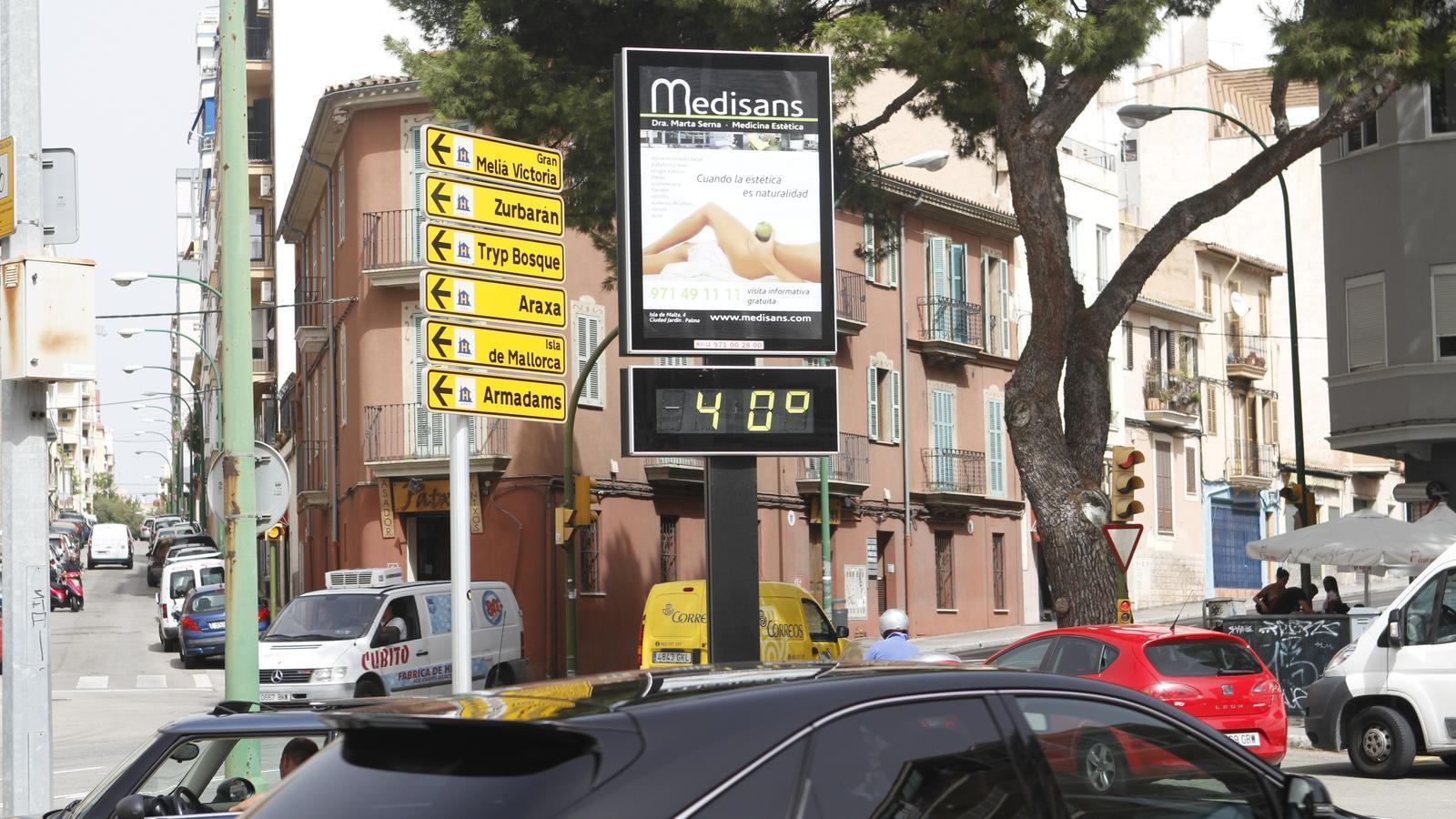
The 35 degrees forecast for Wednesday are not the only factor that explains the risk level. Aemet also takes into account air humidity, wind, accumulated rainfall, soil moisture, and the state of the vegetation. In the middle of August, dry vegetation can act as fuel and, if humidity conditions are low, any ignition can favor rapid spread.
Wind is also especially important, as it can accelerate the advance of flames and make control difficult. Therefore, two areas with the same temperature can present a different fire risk depending on the state of the terrain, the vegetation, and the meteorological conditions of each place.
And what about the eclipse?
The eclipse does not cause the risk of fire. What makes this day particularly delicate is that it coincides with a meteorological and environmental situation of high danger.
Furthermore, the eclipse will cause many people to travel to open spaces, rural areas, and elevated points to observe the phenomenon. Therefore, on a day with a very high or extreme danger level, authorities recommend taking extreme precautions and avoiding any behavior that could cause a fire.
Do not light fires, do not throw cigarette butts, and do not leave waste that could act as an ignition source are some of the basic precautions.
A more precise index than in previous years
In 2026, Aemet has launched the new IPIF, which replaces the previous system and incorporates more information about the territory's conditions. The resolution has also increased: it goes from five-kilometer grids to one-kilometer resolution, allowing for better detection of risk differences between nearby areas.
The system establishes six levels of danger: very low, low, moderate, high, very high, and extreme. These categories serve as an indicator of both the probability of a fire occurring and the possible extent and intensity it may reach.
