40 (almost) useless years of the Language Normalization Law

This April marks the 40th anniversary of the enactment of the Balearic Islands' Law on Linguistic Normalization, modeled after similar laws passed a few years earlier (1983) in Catalonia and Valencia (the latter known as the 'Law on the Use and Teaching of Valencian'). It seemed a major step forward in promoting the islands' own language, Catalan, as the language of normal use in all areas of society, after more than two centuries of marginalization and 40 years of fierce political persecution. Indeed, the law's approval fostered this hope among all sectors of society concerned about the issue, who expected that from that moment on, the attitude of institutions and society in general towards the language would change. We had a Statute of Autonomy that allowed for decisive and sustained action in favor of the language, if the will was there, and we now had the legal tool to do so. Forty years after the law's enactment, however, utter disillusionment has replaced the initial enthusiasm: the Catalan language has not only failed to become normalized, but has actually declined in social standing and presence, losing its proportional use among the population and becoming a source of constant conflict, not in and of itself, but due to the contempt with which it is viewed by many in other places—nearby or far—and by those born here who do not consider it their own. What has happened to make this once-promising law so ineffective?
Regarding institutions, the law expresses many intentions, many desires, but very few prescriptions, and the few it does include can be ignored without penalty, because no article addresses legal responsibility for non-compliance.
The law makes specific reference only to official institutions (autonomous government, island councils, municipalities, etc.) and non-university educational centers, because universities have the autonomy to regulate their own operations; at most, it affects the preliminary section in a general way. Regarding education, drafted at a time when this was not a competence of the autonomous community, it merely states that the Catalan language and literature must be taught within educational programs "in harmony with the state curricula and at least equal to the [time dedicated] to the study of the Castilian language and literature" (Article 1). It adds (Article 20) that the Government must guarantee that schoolchildren know Catalan and Castilian correctly upon completing compulsory education. Nowhere does it mention instruction in Catalan, neither for nor against it, which makes schools that operate solely in Catalan—with Castilian instruction, naturally—just as legal as those that operate in Castilian—with theoretical Catalan instruction. To promote Catalan-language schools, given that the LNL was not doing so, the Balearic Cultural Association launched an intense campaign for the Government to take effective measures to this end, resulting in the so-called Minimum Requirements Decree of 1997, which will be 30 years old next year and is still a MINIMUM!
In addition to not providing for sanctions for institutional leaders who do not comply, the law makes no provisions regarding the use of the language in civil society (commercial signage, the presence of Catalan in film and the media, consumers' linguistic rights, commercial information in brochures, posters, respect for those who truly held the language in civil society, etc.). This has only occurred in very specific cases, of very unequal social significance (the official names of towns, signs indicating urban and interurban roads, and little else). Title III of the law (From social media) and the IV (Of the normalizing function of public powersVirtually nothing has been spent; some articles have been fulfilled a little, unevenly, and others have not been fulfilled at all, and so, with a law that is more symbolic than effective – which in Catalonia already gave way in 1998 to the Law of linguistic policy, much more ambitious and prescriptive – while the island society was changing and 40 years have passed in which our language, the only one of its own, has been increasingly marginalized.
The LNL, it is true that it mentions several times the right of citizens to use the Catalan language both with public bodies and in the private sphere (articles 2, 8, 10, 11, 16, 18, 22, 25…), but it speaks more rarely of obligations, and always in reference to Catalan as a subject of teaching. (It is true that rights generate theoretical duties for the recipients of those rights, but if these duties are not specified and made concrete, they remain within an abstract obligation with which no one feels involved.) In some articles referring to institutions, the periphrasis 'must + infinitive' is used, which linguistically is considered an obligation, but which legally refers to the measure: "The Government (...) must regulate (...) the normal use of the Catalan language (...) in the administrative activities of the bodies within its competence," "The Government (...) must promote the normalization of the Catalan language (...) in public registries not dependent on the autonomous community," "The island councils and local corporations must regulate the use of the.9." There are many phrases like these: "must promote," "must encourage," "must contribute," "must foster," "must create"... It never says when, how, or to what extent, and subsequent legal provisions to make them effective are scarce, and some have even minimized them. Articles 37, 39, and 40.1 have practically never been applied, and they are the most important for achieving the social and environmental presence of Catalan.

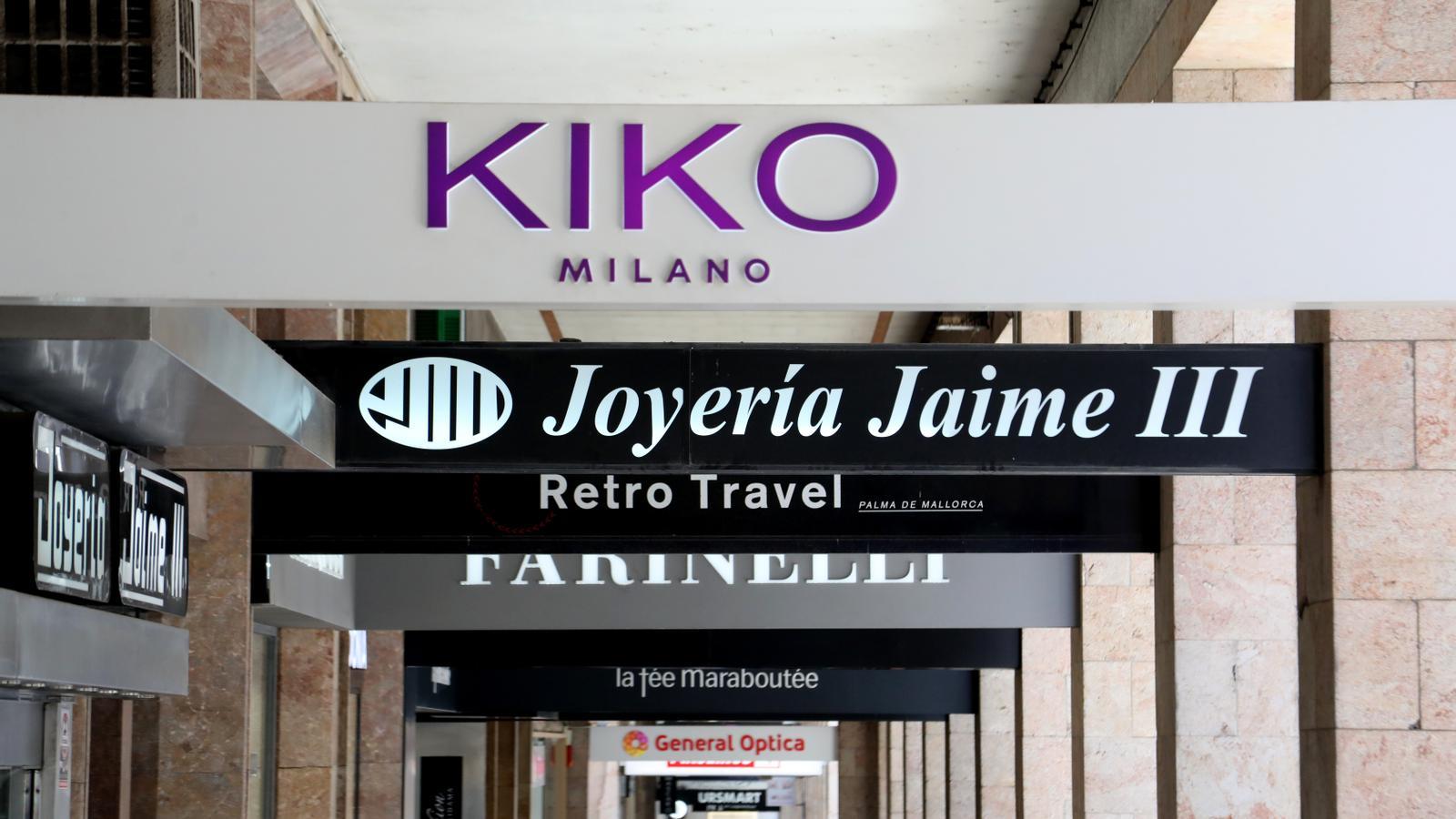
In short, the Balearic Language Law (LNL) is an ineffective law. It has only just succeeded, after 40 years, in getting regional and local institutions (not the national government) to recognize and use Catalan, but it hasn't achieved widespread use within Balearic society, nor has it made Catalan speakers a minority. On the contrary, we are increasingly discriminated against and insulted by various people simply for speaking our language. We can't go to any restaurant and read the menu in Catalan; we can rarely go to the cinema in Catalan; and very few establishments provide us with written information in Catalan. There is a much greater presence of English in commerce than Catalan… If you walk through the streets of Palma (and we're not talking about the tourist areas, especially Ibiza) you get the impression that you're in a completely foreign city…
All the successive governments that have existed since the period when Catalan speakers were still the majority—Cañellas's government, the one that wanted to pass the law to "look good," with no intention of applying it more than superficially. His 12 years in government were the most decisive; he could have dignified the language of the country, but he didn't want to and did nothing, instead marginalizing it further. Afterwards it became much more difficult due to social changes, and those who came after (with the exception of Cristóbal Soler, and it cost him his position) either followed his example (Matas and Bauzá) or made timid attempts to change the situation; however, they dared to take the bull by the horns; And now we've returned to a time similar to Cañellas's: doing nothing to support our own language and letting it die on its own, under the pretext that there's no linguistic conflict (according to Na Prohens).
In short, there's no reason to celebrate, or even commemorate, a fairy-tale law that has proven to be merely a tool to silence 'Catalanists,' insufficient for the normalization of the Catalan language. Only one action would do it justice: enacting a new one, much more ambitious and effective. But we know that with the current socio-political situation, this is just wishful thinking. And that day will mark a year…
