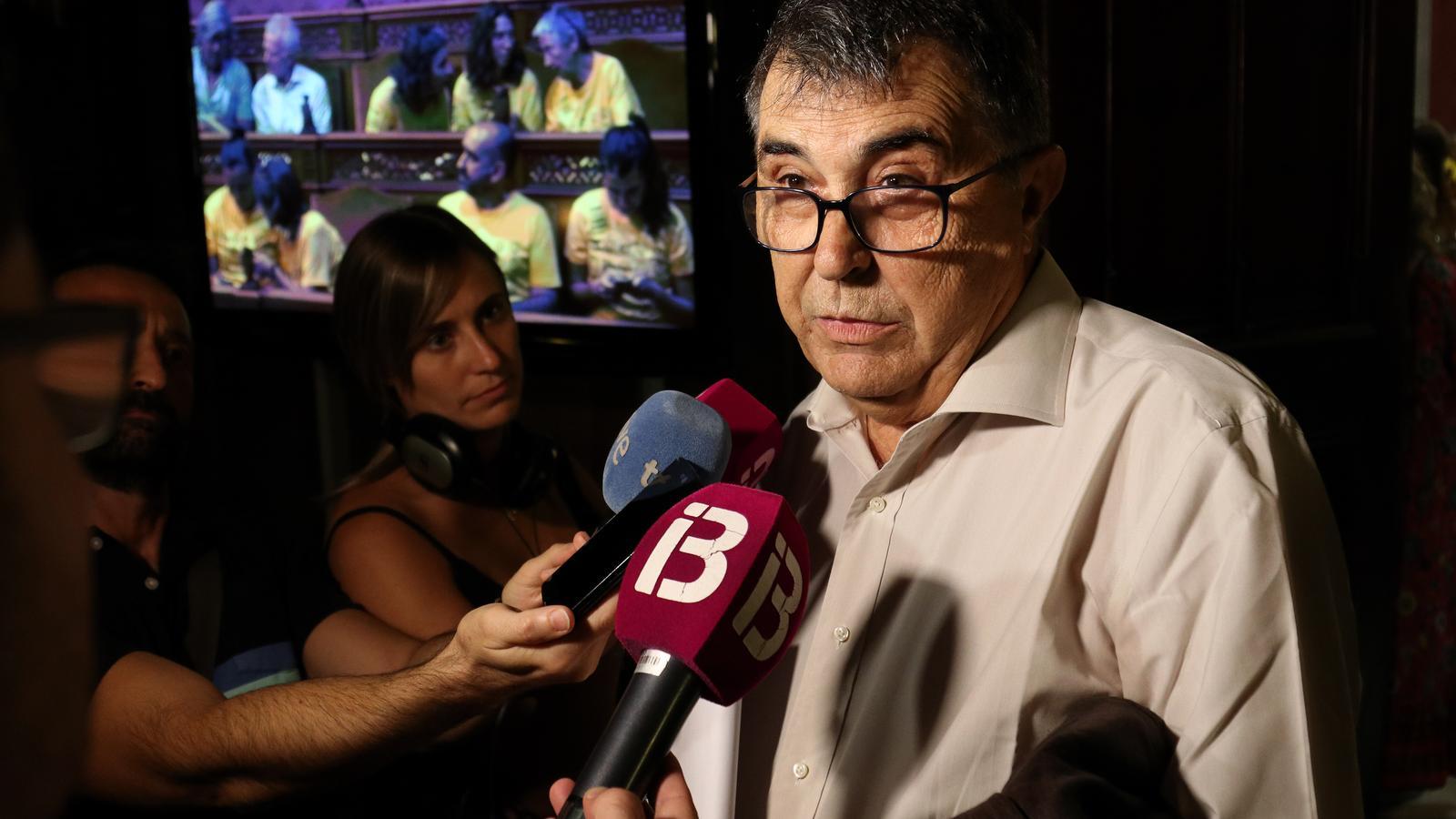
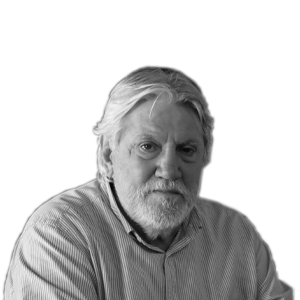
Celestí Alomar, the friend, the politician, and the country
-
CAT -
CAST -
DE
One evening, while dining together in Madrid, we looked at each other with a certain perplexity. Celestí Alomar was Director General of Tourism and I was Vice-Rector of the University. I don't know if we said it exactly like that, but we both must have thought more or less the same thing: what are we doing here? We had met many years before, when we were two lads from the Pla de Mallorca, he from Llubí and I from Sant Joan. And another scene came to our minds, also distant: Franco's bust emerging from the balcony of the Rectorate of the University of Barcelona towards the street. We had gone from all that to Madrid, with ties, positions, and responsibilities. "Two suited up youngsters," he said.

Our life has had a bit of this air of an improbable journey. He went from Pla to Barcelona, from student organizations to Bandera Roja and then, to island socialism, to the PSI. He directed the campaign of Josep Melià Pericàs's Unió Autonomista and, when Melià entered Adolfo Suárez's government, ended up working with him. Then came other landscapes and other jobs: Mexico, where he spent six years linked to the Spanish embassy; RTVE; Mallorca; the tourism administration; Madrid once again, the general director of Tourism with Jaume Cladera, of the PP, and finally, the Ministry of Tourism of Francesc Antich's first Government. It's not a bad curriculum for the son of the Llubí apothecary.
What was interesting was not only where he went, but what he was thinking during the journey. Celestí was not a one-photograph politician. He went through different organizations, parties, administrations, and responsibilities. He knew power up close and also its limitations. He had a concern that, over the years, ended up becoming the center of his public life: what were we doing with Mallorca. He was a geographer and, perhaps for that reason, he had the bad habit of looking at the territory. Looking at it not as a postcard, nor as a simple surface available for further construction, but as something limited. An island cannot be stretched. Perhaps his entire tourism career can be summarized, after all, in this very elementary evidence. Mallorca is not infinite and our economic model has worked for decades as if it were.
The ecotax was their great public battle. The battle was considerable. And, as often happens, at those moments politics and certain economic interests did not spare it blows. During the most aggressive debates on the ecotax, moments of great verbal tension were experienced. In the Balearic journalistic and political sphere, the literal phrase of a hotelier was recorded, who, out of resentment at the time, even exclaimed in a meeting rejecting the tax that "had to remove the president or kill the minister". Then the ecotax disappeared, and years later a similar figure once again became part of the fiscal reality of the Islands. Time, at times, has these ironies: what one day seems an extravagance ends up becoming an evidence. Reducing Celestí Alomar to the ecotax would be a bit like reducing a life to a photograph. The tax was a tool; behind it was a much more uncomfortable question: how far can tourism grow without ending up eating the territory that sustains it? That question brought him problems. The battle was tough and economic and political interests spared him no blows. But time has a curious way of modifying some certainties. And, meanwhile, the debate has become even bigger. Tourists have continued to arrive, planes have continued to land, and Mallorca continues to discuss, perhaps with more urgency than ever, its own limits.
25 years after that battle, Celestí had it even clearer. It was no longer just about imposing a tax. He openly argued that the number of visitors and the excessive weight of tourism within the Balearic economy needed to be reduced. It was not, therefore, a matter of longing for an old government measure. It was a way of continuing to think about Mallorca. And here, probably, lies an important part of his legacy. Not so much having always been right – none of us are always right – as having insisted on a question when many preferred to consider it resolved. When I think of that dinner in Madrid, I still find it amusing to imagine us both. Life, sometimes, has these strange journeys and Celestí, despite positions, trips, and offices, remained that man with whom you could discuss politics, Mallorca, or anything else.
He was the father of four children, he had a family, friendships, and affections that are another part of his biography and that no political curriculum can explain. And he also had his convictions, his disagreements, and, like everyone who doesn't just let themselves be carried along, his contradictions. He was a geographer, a politician, a counselor, a high-ranking state official, and one of the men who most clearly wanted to introduce into public debate the need to rethink tourism and its limits. Now he is gone. And perhaps the best tribute will not be to turn him into a statue or to limit ourselves to listing his positions. Perhaps it will be to continue asking ourselves the question that he, in one way or another, kept alive for so many years: how long can we continue growing on an island that doesn't grow?
