Neither apocalypse nor normalization: Catalan 40 years after the Normalization Law

-
CAT -
CAST -
GER
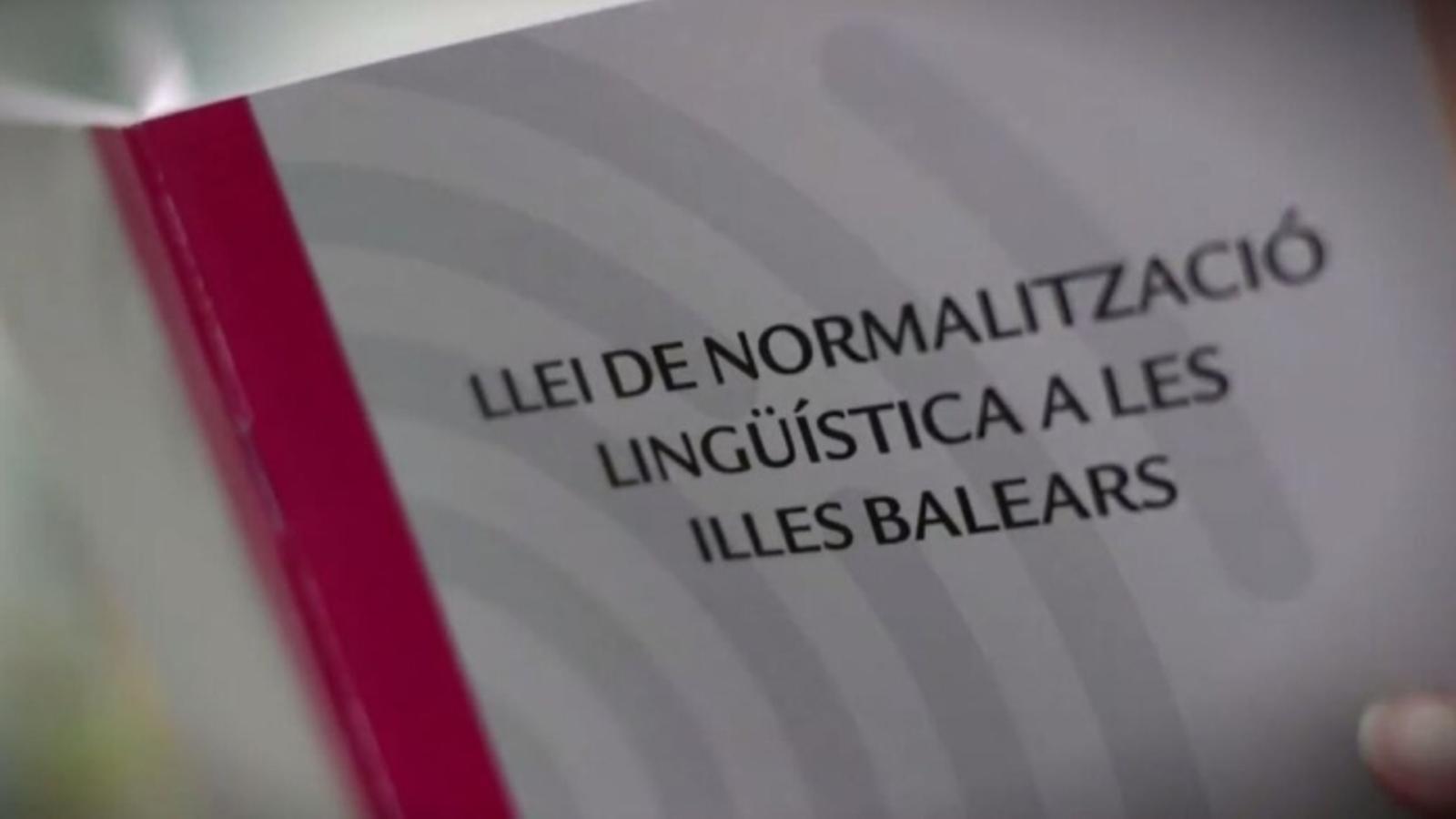
40 years ago, the Balearic Parliament approved the Law of Linguistic Normalization. Forty years later, while it is true that the situation of Catalan as the native and co-official language of the Islands has not been normalized, it is also true that too often abnormality is accompanied by apocalyptic diagnoses. There are reasons for concern: Catalan is losing presence in many areas and young people, especially in informal relationships, are increasingly communicating in Spanish. However, if we only look at the glass half empty, we fail to see a part of the reality that is equally significant.
The first Barometer of the Social Council of the University of the Balearic Islands offers a relevant data: 51% of students would like to receive classes mostly in Catalan, while 40% opt for Spanish. Some will focus on the fact that almost half of the students prefer Spanish. But we can also highlight that more than half of the public university students are asking for more Catalan in the classrooms.

And this is not a minor detail. Especially if we take into account that the UIB, which according to the Statute of Autonomy is the consultative authority on the Catalan language, has been dragging a contradictory situation for years. There are degrees that are taught almost entirely in Spanish and the university itself set a goal of reaching 35% of teaching in Catalan when the actual percentage barely reached 25% three years ago. That is to say, there is a significant number of students who are asking for more Catalan than what the institution that should be a benchmark in this area actually offers.
The data becomes even more valuable if we consider that many of these same students habitually use Spanish outside the classroom. It is the language with which they often relate to each other, the one that dominates social networks, audiovisual content, and a good part of the youth socialization spaces. But it seems that when they think about university and their professional future, a majority consider it important to be proficient in Catalan.
This means that, despite the difficulties, Catalan is still perceived as a useful tool. And here is probably the key to everything. Languages are not maintained solely by emotional speeches or institutional commemorations. They are maintained when they are necessary, when they open doors, when they provide opportunities, and when society transmits the idea that mastering them is a value. Now, however, the idea is often conveyed that Catalan is dispensable, that it is no longer needed, that it is an excessive requirement or a bureaucratic hassle.
And, despite this, more than half of the UIB students still want more presence in classes, surely because they see it as a tool for the future. The challenge for administrations, for the university, and for society in general is precisely to make Catalan increasingly useful, more present, and more necessary. Because when a language is useful, people not only defend it, they also use it.
