Virgilio Moreno: "If the budgets are not approved, elections will have to be called"
Mayor of Inca
-
CAT -
CAST -
GER
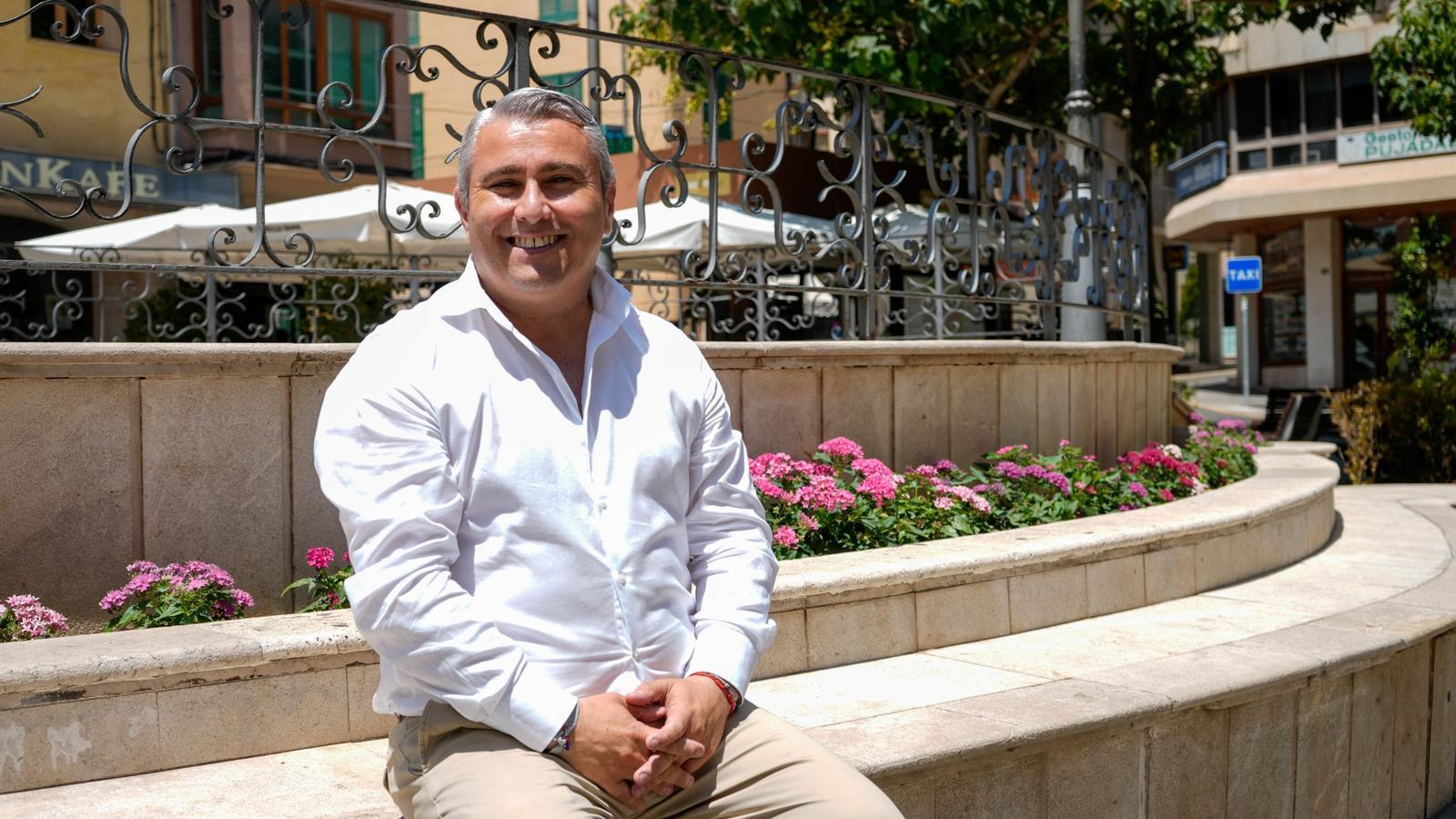
IncaThe mayor of Inca, Virgilio Moreno, spends some time walking the 59 meters that separate the City Hall from one of the bars in front. Every two steps he stops to talk to someone. An elderly gentleman who greets him effusively, a lady who comes from Madrid to spend time in the municipality, a young couple, a man who asks him for one euro for the train (the mayor gives it to him, but asks him if he's sure it will be for the train and inquires if he has asked for help from any organization)... Upon sitting down, he greets the bar workers and asks for a bottle of cold water. The people of Inca know that it is hotter in the capital of Raiguer than in Palma and other places in Mallorca.
How do you define yourself as a mayor?
— I am a local politician. I have been at the Inca Town Hall for almost 25 years, 12 as mayor, and I love listening to everyone. Every morning I try to go to different bars, because that's where you know what worries the neighbors. That's what politicians should do, especially those who govern in town halls, the trenches. We live the citizens' problems very closely.
Can you walk down the street without anyone asking you for anything?
— It is not possible. From the City Council to here, I have touched upon four different issues, because each person is concerned about something. In Inca we are close to 37,000 inhabitants, but we continue to be a city with the heart of a town, and we must not lose this heart of a town. We have to work and not just say it. Each person has their own problem: their street, their square, and their requests. We try to turn these citizen demands into an opportunity to improve, because it is a collaborative matter. We are also greatly helped by having direct channels such as WhatsApp, telephone, and email.
Do you consider yourself a broad-spectrum politician?
— It has to be this way. You are the mayor of everyone, whether they voted for you or not. Obviously, ideology sets principles for action, but you have to respond to all citizens. At the municipal level, you have to go beyond your voters, because electoral results are often different from those obtained by the party in the Council, the Government, and Madrid.
After 11 years as mayor, are you thinking about succession or do you want to continue?
— Our objective is to continue and finalize the project to change Inca that we began in 2015, when we first won the elections. Since then, we have been consolidating this project and improving our results in each election. Four years are enough to drive initiatives, but it is when citizens renew their trust for successive legislatures that you can transform a city. We still have work to do to consolidate this change and we believe we are on the right path.
Which Inca would you like to leave?
— A more cohesive, more plural city with consolidated coexistence. That is why we have promoted the first Coexistence Plan for Mallorca. We also try to ensure that crucial issues have the maximum possible consensus, so that they can continue. One of the first issues we worked on was the school enrollment plan for our city. There were issues that had not been addressed, and one was the integration of newly arrived students. We have achieved a better distribution of newly arrived students, of children from migrant families who are joining various schools in our city, whether public or private. It was an important step, and I want to thank the involvement of the entire educational community. We are now seeing the results. Another fundamental issue was that the LGTBIQ+ collective, very important in our city, had its space, not only for leisure but also for work [10 years of Orgullosament Inca]. And we are among the first municipalities to have a historical memory regulation.
Amidst the rise of xenophobic and anti-immigration discourse, is Inca still an example of coexistence?
— When you raise these questions normally, most people end up understanding them. These are things that happen. We have a very simple maxim: what works must be reinforced and what doesn't work must be innovated. Even in the most delicate matters.
Is housing currently the main problem in Inca?
— Without a doubt. It is the main challenge we have. That is why we have tried to act within all the competences we have as a City Council, even though housing policies depend mainly on the Government. We ceded public land to IBAVI, so that it could build protected housing. We ceded the last one in 2024 and two developments have already been delivered. We will cede land whenever we have it available. We are clear about it, regardless of the party's political affiliation: if a measure is good for Inca, we will apply it. We have made progress in decisions that have been made subsequently. For example, the change of use of premises, this has already been done, in part, thanks to the peculiarity of having a shopping center. When the PGOU was approved in 2012, we warned that building commercial premises in the expansion would cause a relocation of the shopping center. Now we have been able to zone with the Government's decree. And we are not only focusing on new housing, but we have also created lines of action for housing rehabilitation that have had a very significant impact in the old town. We want the center to be for living in, not for companies to come and buy the houses to allocate them to tourist exploitation. At the moment there are about 1,500 tourist places in Inca, and the city center should be for the people.
As mayor, what have been the most unpopular decisions you have had to make?
— Those related to mobility. When technical or fire department reports tell you that you have to eliminate parking spaces on a street, for example, you know that in half an hour you will have a dozen protest messages, but there are also people who are happy. Governing is finding balance and making decisions, even if they don't please everyone. There have also been other complicated ones, such as terminating the construction contract for the Principal Theater because the company was not complying.
Is municipal politics harder than it looks?
— Much more. In city councils, problems are immediate and the response must also be. You have to be practical, act within the law, but find quick solutions. Furthermore, here citizens tell you directly. If a decision is not liked, the very next day they let you know on the street or via WhatsApp. If you are in Parliament or Congress, you don't deal with this. Everyone should spend time in a City Council.
Have you ever thought that you could have been Francina Armengol's successor and made the leap into regional politics?
— I am very focused on Inca. Francina Armengol invited me to be part of her municipal candidacy in 1999 and my goal now is to consolidate the transformation of the city. I don't completely rule it out in the future, but it will come later.
How are you experiencing the PSOE situation in Madrid?
— The PSOE's situation is very complicated, that is undeniable. But, in this situation, the party must do its job, move forward where we govern and oppose where we do not govern. Nowadays, I have not met anyone who stops me to tell me things about Sánchez. In the villages, people know how to differentiate and they count people.
Do you think the legislature should end?
— The legislature will end when the president decides it and work is now being done to move forward with a budget. But I also believe that if the budget is not approved, elections will have to be called.
Does this wear and tear harm you, socialist mayors?
— This is always worrying. When you govern, what happens in your party also affects you. But experience tells me that people differentiate municipal politics from others very well. In Inca they know us, they know who we are and how we govern. Many people who are not socialists vote for our candidacy, because they value the work done.
Is Francina Armengol's candidacy late in the handover?
— Francina Armengol has been everything: president of the Consell de Mallorca, of the Government and now of Congress. We must begin to assume with naturalness that the leadership of the party and electoral leadership do not always have to fall on the same person.
Is Rosario Sánchez a good candidate?
— Yes. She is prepared and has government experience. She was within the structure of the Consell de Mallorca, then she was Minister of Finance and [Spanish] government delegate, and now she is Secretary of State. She is a good candidate, but she has come at a very complex time for the party.
Inca has become a benchmark for Pride. How have you experienced the controversy surrounding the organization in Palma?
— With surprise. Each town hall makes its own decisions, but there was a job that had been done for many years that should not have been interrupted in this way. We have been committed to Pride for more than a decade, because we understand that it is part of the city model we want to build. It is not just a party: it is a claim and an expression of coexistence. The Town Hall must accompany civil society, make things easier so that it promotes its own initiatives.
We'll finish with a more personal question. Which PP leader would you go for a drink with?
— [River] I have a good relationship with many people, but probably with Antònia Maria Estarellas.
