"Boomers are interested in housing remaining as it is and young people do not have the capacity to change it"
The housing policy expert Javier Burón assures that the crisis is not technical, but economic and generational, and warns that territories like the Balearic Islands do not have an alternative model to tourism

-
CAT -
CAST -
GER
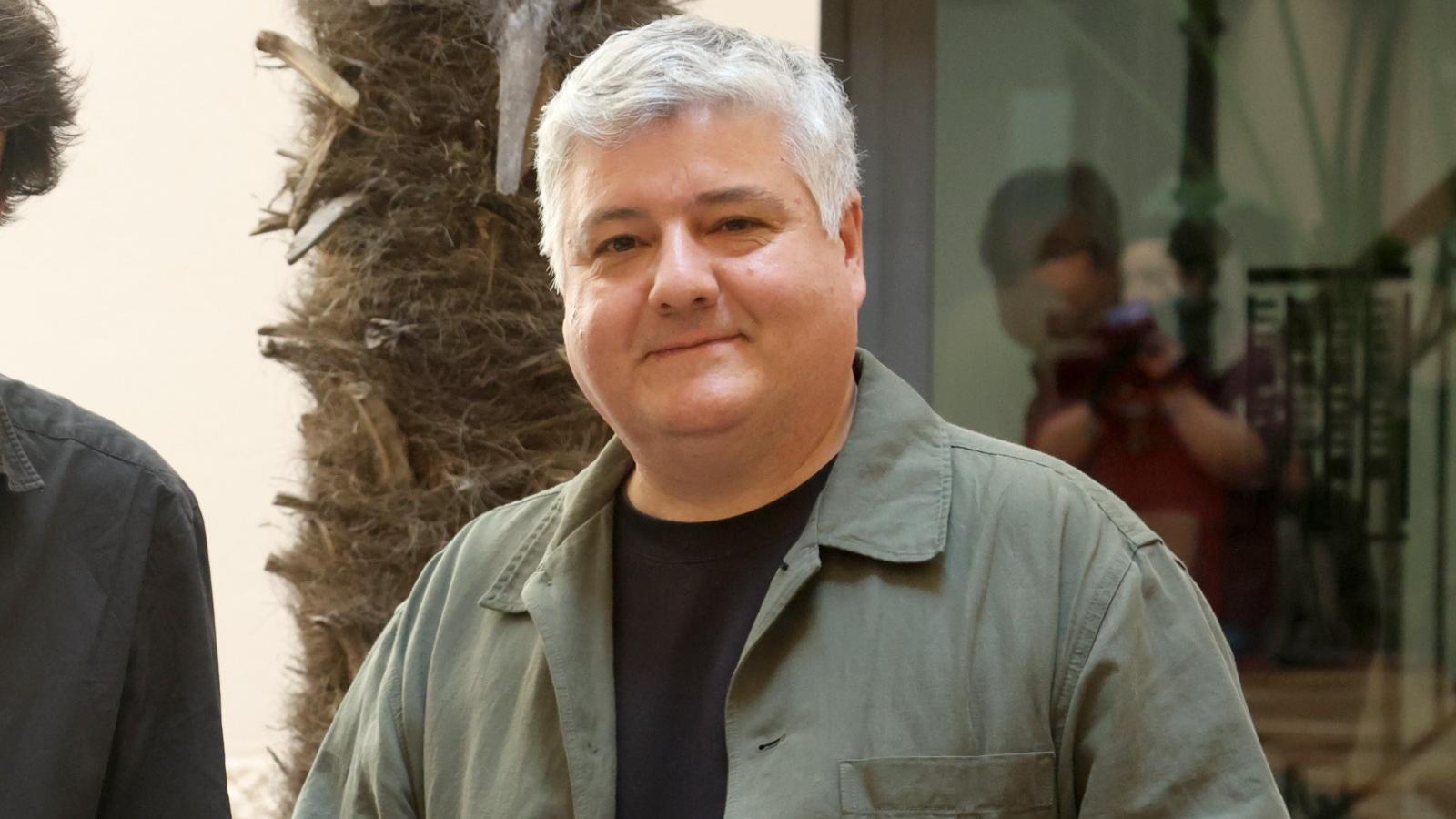
PalmJavier Burón resorts to a simile to explain the housing problem as a public manager of the matter, with 25 years of experience in different regional governments. "We see how the lava advances and we are sitting on the terrace saying: 'Well, there's time.' When we have the lava on top of us, we'll see what we do.'" Author of the housing problem (Arpa Editors) and managing director of the public company for industrial land, housing, and territorial cohesion of the Government of Navarra, he is participating this Thursday, April 30, in Ca n'Oleo in Palma in a conference organized by the UIB on what is needed to have social and affordable housing.
"The diagnosis is made. No one doubts what is happening. We know that there is less and less housing intended for permanent residence at prices linked to wages and, more for short stays. This, in itself, is not bad. Tourism is not the enemy. The problem arises when an economy depends exclusively on it," analyzes Burón with a description that fits the Balearic Islands. According to his argument, there are experiences, tools, and examples throughout Europe "and also in Spain" that change is possible: "The question is why we don't do it."
As the lava advances, two reasons explain the inaction. The first is the economic model: "In territories like the Balearic Islands, the weight of tourism and the real estate sector is so great that there is no plan B. Changing the structure of an economy is not simple: it takes decades and generates tensions." The second is generational: "The majority of owners, multiple owners and landlords are people over 50 and 60 years old, with a conception of housing as an economic asset. In contrast, the majority of tenants are young people who share flats and cannot access housing. While it benefits boomers for everything to stay as it is, millennials and Gen Z have no capacity to change it. Therefore, the problem is not technical. It has to do with the economic model, the social structure, and political decisions."

Tense areas
Burón defends the declaration of tense market areas, which the PP has refused to apply in the Balearic Islands. “It is a tool that works. It does not serve to lower prices, but it does serve to prevent them from continuing to grow uncontrollably. They do not eliminate supply, but rather reduce turnover and increase stability”, he explains, and cites a difference of almost 20 points in the behavior of rental prices in Madrid, where there is no regulation, and Barcelona, where there is. “It is not a structural solution, but a tourniquet to prevent the wound from continuing to bleed. If measures like this are applied alone and for a long time, they generate side effects. That is why they must be combined with deeper public policies”, he recommends.
The key point for Burón is the creation of a public housing stock, like the one he led in the Basque Country, where since 2003 HPOs cannot enter the free market. “Without real public investment, there is no housing policy. No government that limits itself to using state and European funds, without contributing its own resources, is betting on housing. A strong public sector is needed, one that has housing, manages it, and knows the market. And from here, collaboration with the private sector. But this order is important. If you don't have public capacity, when you negotiate with private entities, you are at a disadvantage”, he continues.
Permanent protected housing
The historical context is that of Francoist Spain, when millions of protected homes were built, designed to end up on the open market. “It was a policy designed to turn workers into homeowners. The problem is that democracy did not correct this model,” he states to explain why the current public housing stock is so scarce. However, in Euskadi “different decisions were made: permanent protected housing, strong land reserves, and an active role for the public sector.” “This has not ended the market, as some feared. It has simply introduced a different balance.”
In the Balearic Islands, the challenge is complex. “The dependence on tourism is very high and there is a social feeling that there is no turning back. But the transition is possible, although it will be slow. And in the meantime, short-term policies are fundamental, because for many people this 'in the meantime' is their whole life,” he explains.
The key lies in “generating an ecosystem” made up of strong public companies, cooperatives, and private operators willing to work with moderate, long-term profits. “And, above all, we must ensure that protected housing is truly and permanently protected. Ultimately, this will not be solved by technology alone. It has to do with collective decisions. With what economic model we want, with what policies we vote for, and to what extent we are willing to act before the lava burns us,” he concludes.
