DORA the 'exploiter' lands at Ibiza airport
The airport operator plans the biggest expansion in history at Codolar airport, with opposition from the Council and environmentalists

-
CAT -
CAST -
GER
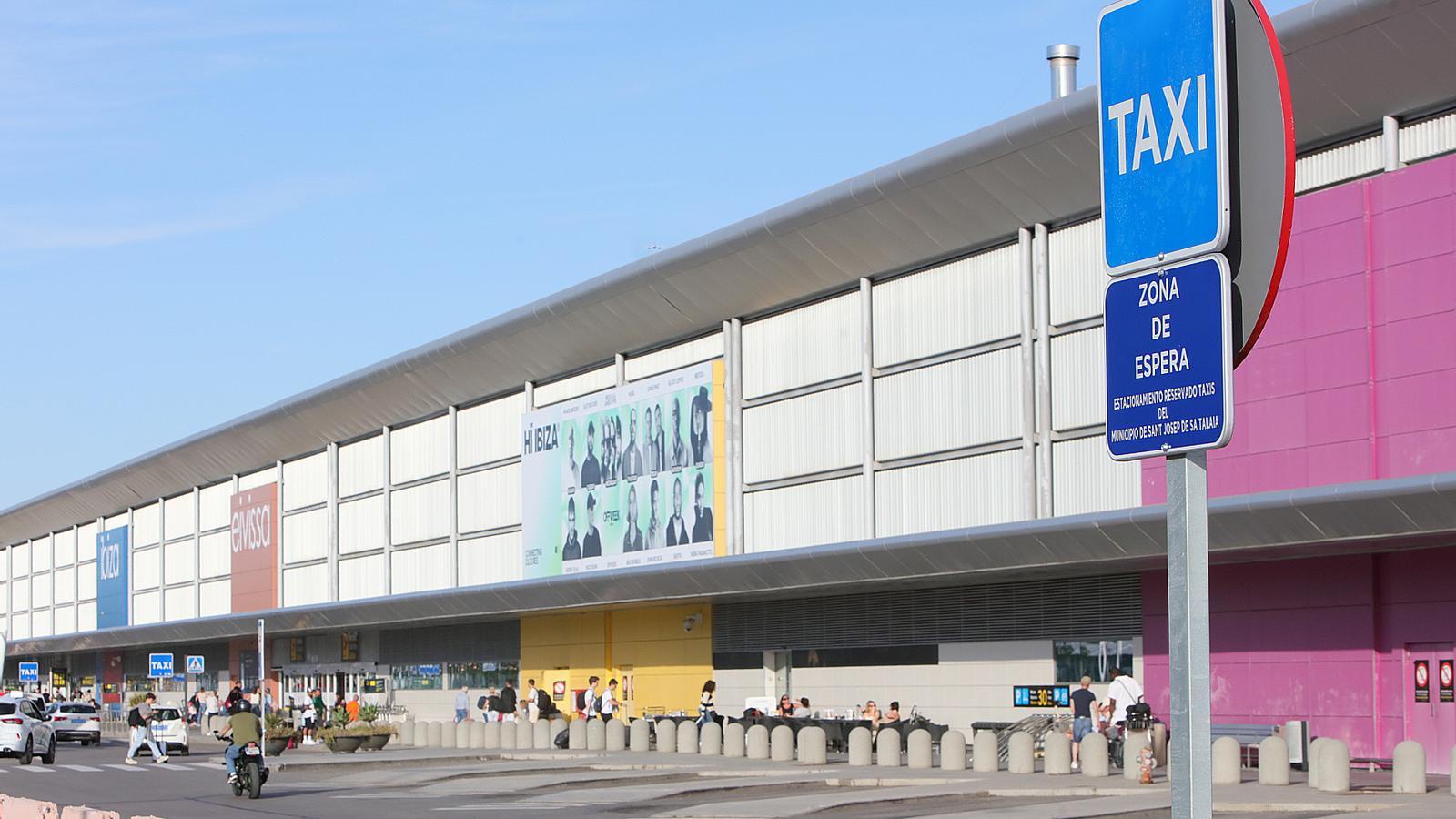
IbizaAena has its own plans for the Eivissa airport and they are not what the Eivissa residents would want. At least, they are not what the Eivissa Council would want, which officially defends that the island has already reached its peak in terms of visitors. So much so that, in Eivissa, just like in Formentera, the number of vehicles that can access it by sea during the summer is limited and regulated. But in Eivissa, visitors arrive mainly by air. And many arrive. Only until April, 1,374,000 passengers have already passed through the Codolar airport. Almost triple those who have passed through Menorca in the same period; let this comparison serve to give an idea of the impact of the Eivissa airport. And the peak season has not yet begun, at the end of the year there will surely be more than 9 million.

Aena believes it is not enough. Ibiza can do more for state coffers. There is still business here, the hen is not exhausted. Aena's DORA III plan for 2027-2031 allows for practically doubling the current capacity of the infrastructure. DORA stands for Aena's Airport Regulation Document. Nothing to do with Dora the explorer. Dora the exploiter, if anything. The regulation, if approved, goes along these lines: El Codolar will go from the current 17 boarding gates to 32, will incorporate 16 new check-in desks and a 17-lane security filter; the new VIP lounge will have 2,000 square meters and a 420-meter terrace – lest the passengers of the jets be cramped. The well-being of these passengers seems to be one of the key points of the reform, as the GEN-GOB environmentalists have denounced. Residents of luxury villas who usually contract everything outside of Ibiza: zero wealth for the Ibizans.
DORA III is the largest expansion in the history of Codolar, with an investment of 230 million euros in the next five years. In practice, it means that Ibiza will be in a position to move from the category of a medium-large airport (currently it is the tenth with the most passengers in Spain, just behind Seville) to almost enter the Champions League places, next to aerodromes like Alicante, Gran Canaria and Malaga. In reality, Aena is only following the evolution of demand: twenty years ago, in 2005, Codolar handled 4.6 million passengers; last year there were 9 million, just double. If you project the figure forward, Aena's accounts make sense.
The problem is that Ibiza is an island of only 570 square kilometers with increasingly evident limitations. No one with two fingers of sense wants many more expansions, starting with the administrations. 'Growth' has become a taboo word. The president of the Consell d'Eivissa, Vicent Marí, has been staunchly opposed to "the excessive expansion of the airport". The Consell d'Eivissa is particularly offended to learn "through the press" about a reform of this magnitude. Let's remember that, in matters of airports, the island councils do not actually have any competence or decision-making power. The island president has not missed the opportunity to criticize the PSOE. "From the PP, we have supported a bill so that the autonomous communities, the councils and the town halls have a say in airport policy, we want a co-management model; the PSOE voted against it and they should explain why," said the Eivissa official.
Key infrastructure
It is obvious that the airport has been decisive in the lives of the people of Ibiza. Before 1949, Codolar was nothing more than a small military aerodrome of no relevance. Regular flights – the authentic umbilical cord connecting Ibiza with the rest of the planet – did not begin until 1958; the first routes were to Palma and Barcelona. And it was only from 1966 that the aerodrome opened to international flights; these were the beginnings of 'mass' tourism. The first regular international route documented by Aena was established by the airline British Caledonian with the United Kingdom. As if it were an indelible preference, British tourism is still today the main international market for Ibiza, with 827,000 tourists in 2025. The airport, in effect, has been the main engine of progress for the island's economy, the spur that has propelled the history of Ibiza forward.
But one thing is to progress and another is to drown. The largest of the Pitiusas received 3,727,000 tourists last year, 1.2% more, with an expense of 4,548 million euros (data from Ibestat). Aren't they enough? Does Ibiza still not generate enough income? The current tourist pressure not only pushes Ibizan infrastructure to the limit, but also prevents access to affordable and decent housing for a significant portion of residents and workers. Where will we put the increase in tourists that the new airport will presumably generate? Who will provide them with a service, if the workers already have to live in substandard housing? Perhaps the masterminds at Aena should consider these questions and stop compulsively fiddling with the calculator. The last and most unsettling question is this: how is it that the Ibizans have nothing to say about an infrastructure that determines our way of life so forcefully? And then there are those who are surprised by the discredit of democracy.
