Eight entities charge against the 350 million of the second beltway of Palma
Organizations question that the new infrastructure will solve the mobility problems of Mallorca and demand more alternatives to the car
-
CAT -
CAST -
DE
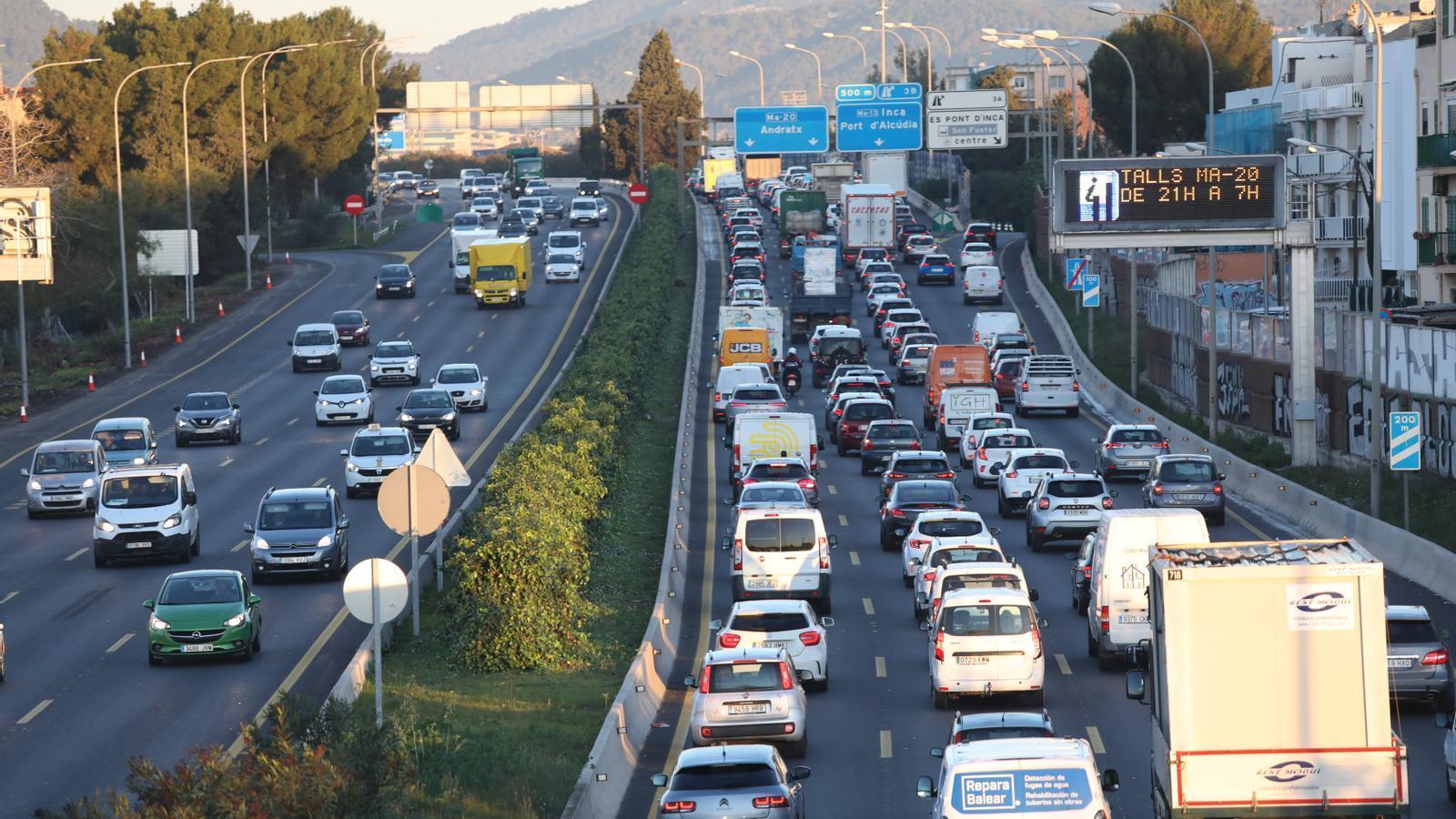
PalmaEight entities linked to mobility, trains, cycling, and territory defense have questioned the second Palma beltway project, presented this week by the Council of Mallorca with a projected investment of 350 million euros. GOB, the Train Users Association, Vianants Mallorca, Terraferida, Friends of the Earth, Anti-Highway Platform, Maria Poble Petit Platform, and Sineu en Bici i a Peu consider that the action does not respond to the mobility needs of a large part of the island.
The project presented by the Council foresees an operation in two phases, with a cost of 90 million euros for the first and 260 million for the second. The latter includes a tunnel of approximately one kilometer and a boulevard on the surface. The works have a global timeline approaching six years.
The entities consider that the investment focuses on access to Palma while mobility problems in the municipalities of the Part Forana remain pending. They cite the example of Sineu, where they claim they have been demanding for ten months that the Council make a pedestrian crossing used daily by students of the CEIP Rodamilans more secure.
They also point out the crossing in Campos, which a study by the same Council identifies as a conflict point, and call for actions that allow these urban spaces to be made safer before continuing to expand the road network.
From 110 to 350 million
One of the main arguments of the seven entities is the increase in the budget compared to the first version of the project. They recall that in 2024 the second ring road was presented with a cost of 110 million euros, while now the announced investment is 350 million. The current project incorporates, among other actions, the underground section.
The platforms also question that it has not been specified how many vehicles it will allow to be removed from the beltway. The Council defends that the action will serve to decongest access to Palma, while the entities maintain that increasing road capacity can generate more traffic.
In the document, they compare this situation with the road expansion model of the United States during the 20th century and argue that a new lane may end up being occupied by new vehicles.
The entities also relate the project to the Sectoral Master Plan for Mobility of the Balearic Islands, approved in 2019, which set as an objective that by 2026 36% of residents' trips would be made by private vehicle, compared to the 56% starting point. They consider that the expansion of the road network does not contribute to achieving this goal.
Another of the arguments is the dependence on private vehicles in the Part Forana. The entities claim that in the Balearic Islands there are 913 vehicles for every 1,000 inhabitants and relate this figure to the lack of alternatives to get to work, to health services, and to other municipalities without a car.
For this reason, they demand that investment in mobility also be directed towards public transport, travel on foot and by bicycle, and the improvement of road safety in towns. The second ring road project reserves space for a future train stop towards Migjorn, but the entities consider it insufficient that this connection is still in the study phase.
