The peasant sector claims in Lloret that Mallorca could produce more food "if obstacles were not placed in the countryside"
Farmers and experts gathered in Lloret warn of the islands' food dependency and denounce urban pressure, lack of institutional support, and the dominant industrial agricultural model
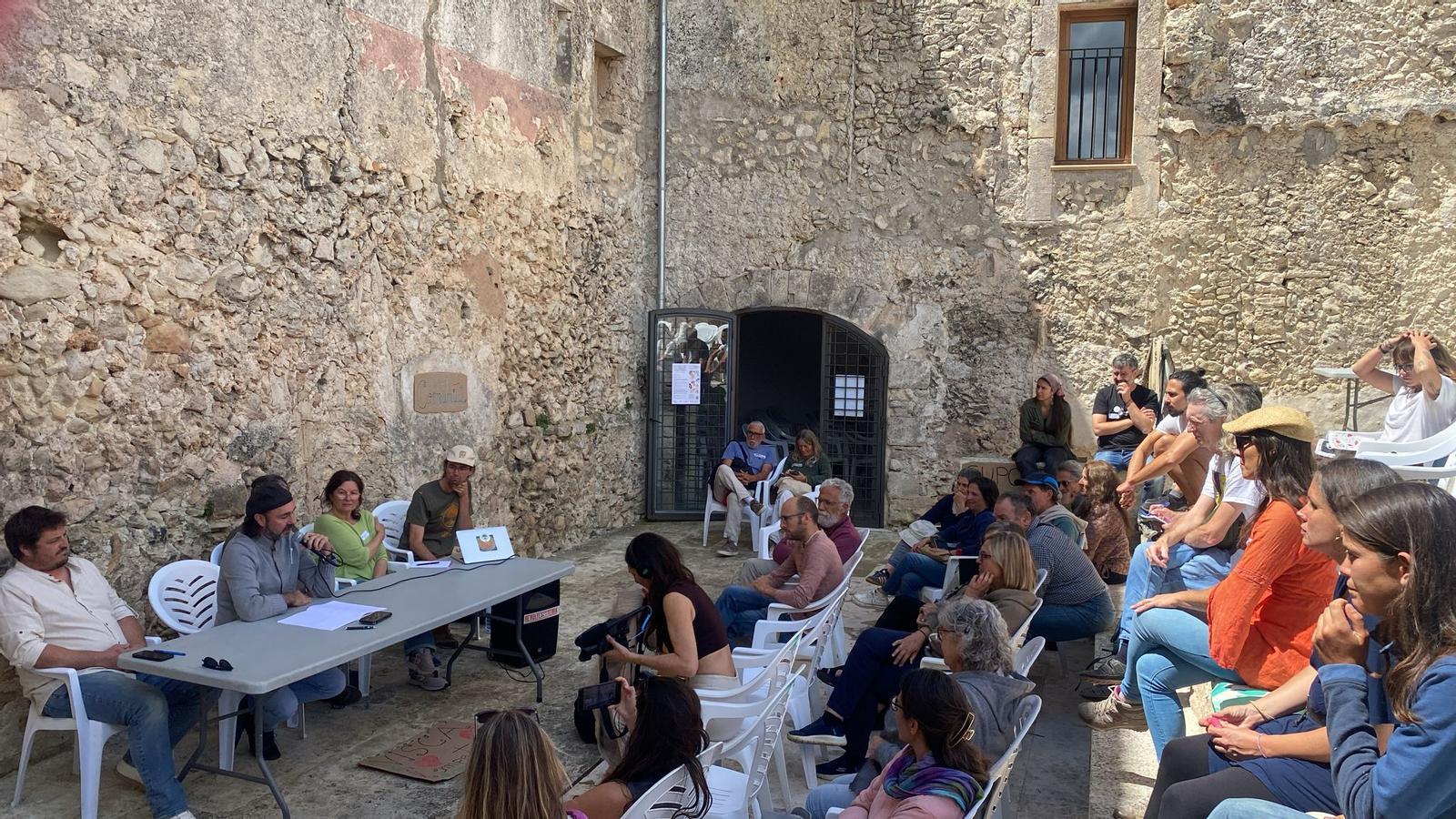
PalmMallorca's agricultural sector on Saturday in Lloret de Vista Alegre claimed its capacity to increase local food production and reduce the islands' external dependence, provided that obstacles are removed for the agricultural sector and there is a decisive commitment to food sovereignty.
This reflection took place within the framework of the Festival for Food Sovereignty, organized by Pla XXI, Permacultura Gran Giro, and the Spanish Society of Ecological and Agroecological Agriculture (SEAE), as part of the Climate Academy's activities. The event brought together farmers, researchers, activists, agroecological collectives, and citizens to discuss the future of Mallorca's agricultural sector in a context marked by climate, energy, and food crises.
One of the central debates revolved around Mallorca's real capacity to feed its population in the event of an emergency. The moderator of the panel, Daniel Quetglas, warned that the island currently produces only about 12% of the food it consumes and alerted to the fragility of a model "based on minimum stocks and absolute dependence on maritime transport."
Despite these figures, participants agreed that the problem is not so much productive capacity as the current economic and territorial model. "We live with our backs to farmers and fishermen, and if there were a food crisis, everyone would look to us," stated Toni Feliu, from sa Casa Pagesa. The farmer denounced that the sector is often accused of not being able to produce enough, when he believes the reality is different.
Feliu also criticized the lack of institutional support for local produce and questioned why hospitals, schools, or residences are not required to consume at least a significant portion of locally sourced food. As he pointed out, low wages and price pressure favor the purchase of cheaper imported products, which directly harms local agriculture.
Along the same lines, the general secretary of Unió de Pagesos, Sebastià Ordines, expressed that the sector could increase production if it had more commercial outlets. “It is not a production problem but a commercial one,” he stated. Ordines denounced the competition from foreign products and also warned about urban pressure on rural land. “It seems like farmers are a nuisance in the countryside,” he lamented, referring to the increase in construction on agricultural land.
The head of international projects and advocacy for SEAE, Aina Calafat, focused on the environmental impacts of the current production model. As she denounced, fertile soil “is being covered with cement and solar panels” while aquifers degrade due to the use of pesticides and contaminants.
Calafat defended organic farming as a tool for adaptation to climate change and future food and energy crises. In this regard, she highlighted that 20% of agricultural land is already dedicated to this type of production and that a good portion of organic farmers are young.
Nevertheless, she also warned of the difficulties facing generational renewal in the countryside, especially in the early years of activity, when income is low and access to aid is complicated. Among positive initiatives, she highlighted collective projects such as the shared workshop of Apaema, which facilitates access to common infrastructure for new producers.
The day combined discussion forums with educational and festive activities, such as micro-talks on regenerative agriculture, composting or biofertilizers, documentary screenings, seed exchanges, and an agroecological market.
