The heat advances the grape harvest in Mallorca, which already exceeds 1.5 million kilos of grapes
The harvest has begun two weeks earlier than usual and Vi de la Terra Mallorca foresees a production similar to that of 2025, during which 5.3 million kilos were harvested
-
CAT -
CAST -
DE
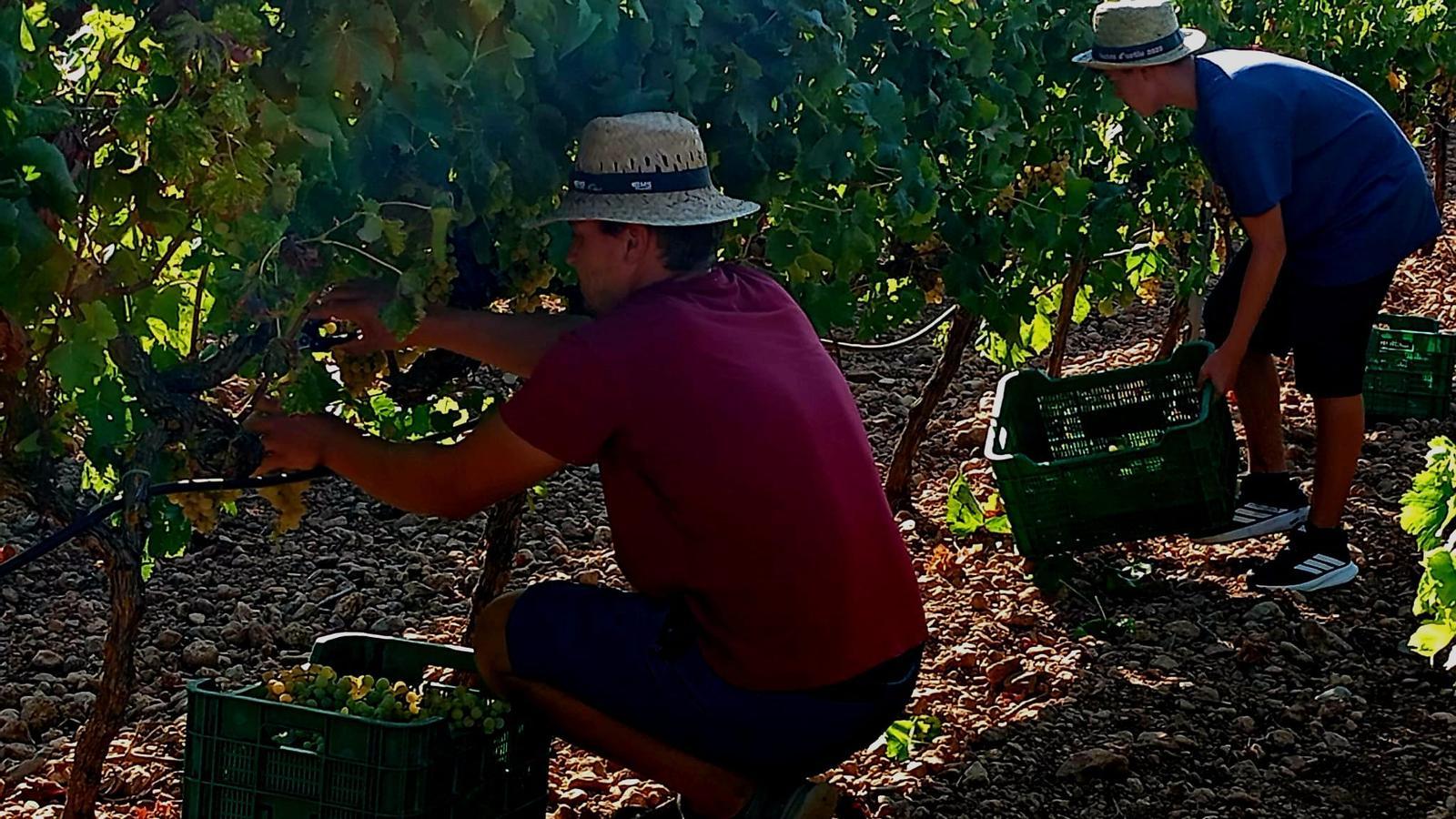
PalmaThe 2026 grape harvest in Mallorca has begun two weeks earlier than usual due to high temperatures recorded since the end of June. Wineries of the IGP Vi de la Terra Mallorca have already collected 1,582,915 kilograms of grapes, mainly white varieties, and forecasts indicate a final production similar to last year's, during which 5.3 million kilograms were brought in.
The campaign began on July 21, in a harvest marked by several heatwaves in recent weeks. The president of Vi de la Terra Mallorca, Mateu Morro, explained this Monday that, although it is still too early to make a definitive forecast, production could be at levels similar to those of 2025. “In terms of production, we will be at very similar levels to last year, it depends a lot on the varieties,” he pointed out during a harvest snack held among vineyards in Santa Maria, at the Bodegues Vidal Serra estate.
The varieties that have started to be harvested are mainly those that ripen earliest, such as Chardonnay, Giró Ros, and Sauvignon Blanc, followed by Malvasia and some black varieties, such as Merlot and Sirah, which are also used to complete the production of rosé wines.
Fresher grapes with less sugar
The high temperatures have also modified the characteristics of the grape. According to Morro, the potential alcohol levels are more moderate this year, especially in white varieties and those intended for rosé wines.
“You can tell that the alcohol levels are more moderate. The plant doesn't generate as many sugars,” he explained. The reason is the lack of thermal contrast between day and night, which is necessary for the plant to accumulate more sugars. “In terms of whites and rosés, we have much fresher grapes, with an alcohol content of 12 or 12.5 to make lighter wines,” he pointed out.
Now attention is focused on black varieties, which need more ripening time both to reach the appropriate alcohol level and to develop aromas. There is also anticipation for the evolution of Premsal white, one of the most widespread varieties in Mallorca and with a later ripening.
A grape "healthier than ever"
Despite the impact of the heat, the sector especially highlights the good sanitary state of the grapes arriving at the wineries. Morro assures that it is "healthier than ever", partly because the high temperatures have made it difficult for fungi to appear and also thanks to the preventive work and phytosanitary treatments applied during the campaign to combat pests such as the green bug, which in recent years had particularly affected Mallorcan vineyards.
The winter rainfall has also contributed to improving the situation of the plants after several campaigns marked by drought. "It is true that the plants have not yet fully recovered from the drought of two or three harvests ago, which was terrible. But this year, in addition to the farmers' contributions, it rained well in winter," explained Morro.
Thus, the vineyards have reached the harvest "in a more privileged situation than in other years". The differentiating factor, however, is the persistent heat. "A situation that the vines have not experienced before; that's why we are expectant to see how they will respond," he pointed out. For the moment, however, the assessment is positive: "The quality of the grapes coming in is exceptional".
The president of Vi de la Terra Mallorca stressed that this scenario forces wineries to progressively adapt their processes and productions to the new climatic conditions. "In the end, wineries have to adapt their productions to the changing climate we have," he concluded.
The PGI Vi de la Terra Mallorca currently groups 85 wineries and 350 winegrowers, with a surface area of 2,064 hectares of vineyard in production registered for the 2026-2027 campaign.
