The honor of becoming Joan Mas i Dragut
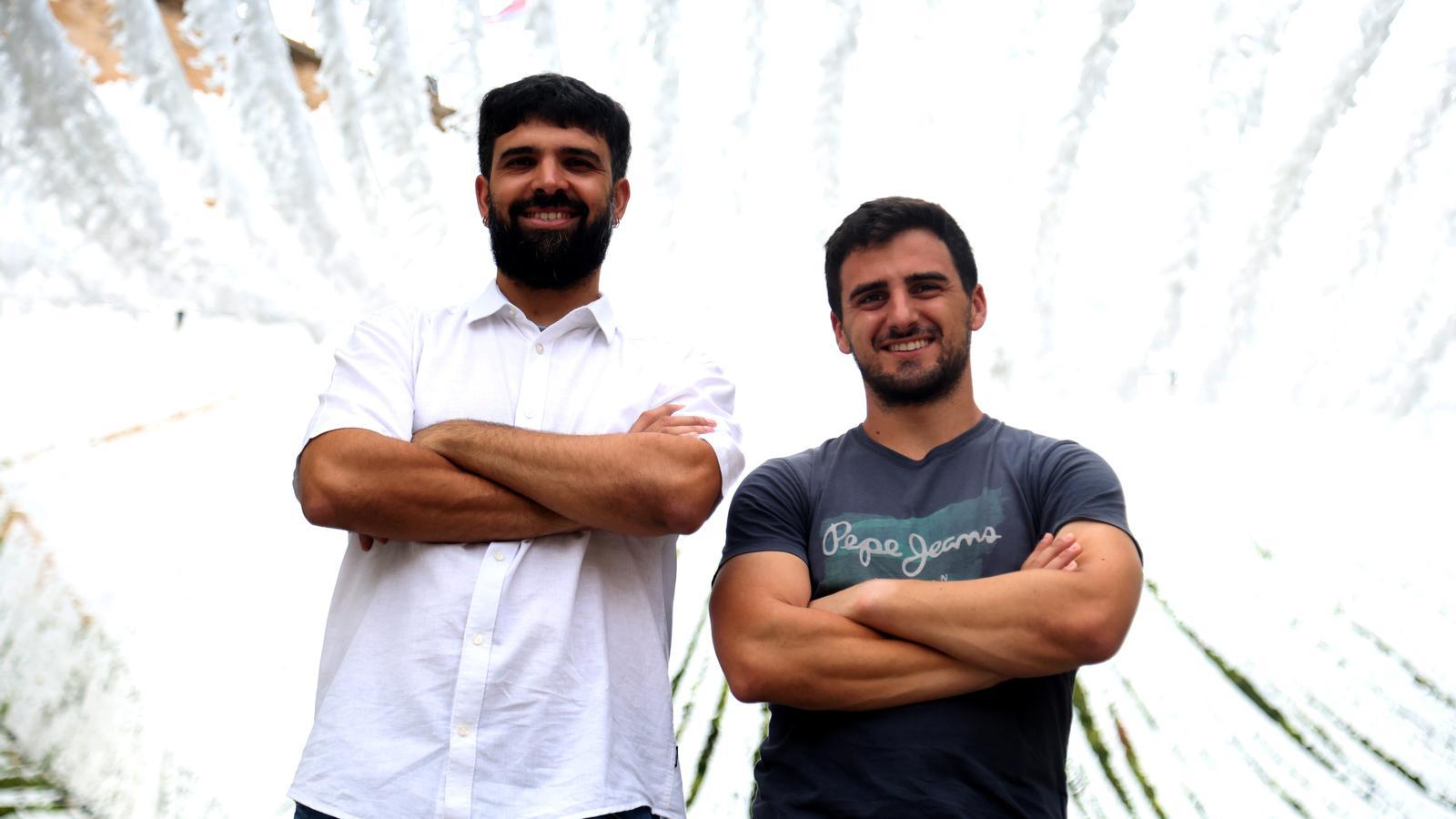
Daniel Pérez and Rafel Morro explain how they have lived the election as Joan Mas and Dragut and what it means to assume two of the most emblematic roles of the Mock Battle of Moors and Christians of Pollença

-
CAT -
CAST -
GER
PollençaEvery summer, before the Patron Saint's festivities begin, Pollença experiences another date marked on the calendar: the election of the characters for the Mock Battle of Moors and Christians. More than 4,300 people have participated this year in a vote that decides who will bring to life the most emblematic characters of the festival and which, over the years, has become much more than a simple ballot count. It is the moment when the town chooses who will take on the responsibility of representing one of its most cherished traditions.
In fact, the Joan March gardens were filled with candidates, family members, and neighbors watching a screen that updated the count live. The wait felt long, filled with nerves, hugs, and also a few jokes to ease the tension. Miquel Alfonsín – finally the standard-bearer – still remembers how he tried to bring a smile to the other candidates: “At least I hope the family has voted for us”.
Daniel Pérez followed the count with caution. Last year, he had been just six votes short of becoming Joan Mas and knew that any difference could be overturned until the end. “My friends told me it was a done deal, but I didn't quite believe it,” he recalls. He didn't start to assume it would be him until the result was practically irreversible.
A few meters away, Rafel Morro was experiencing a very different reality. For a good part of the night, he saw himself far from the first position. “We had already given up on it,” he admits. But the last ballots still had to decide everything. “It was a matter of five or ten seconds. Suddenly, you go from thinking it couldn't be to seeing your name at the top”.
When the count closed, Daniel Pérez was the new Joan Mas and Rafel Morro, the new Dragut. Two names that, from that moment on, would be united to this year's Patrona.
The second chance
For Daniel Pérez, the election had a special meaning. Last year's defeat left him with a bittersweet taste. Being only six votes away from the position was close enough to imagine and far enough to have to wait for another opportunity. But he did not give up on his goal. On the contrary. He decided to finish tailoring Joan Mas's suit even if he hadn't been elected. "I thought that if I got elected one year, at least I'd have it ready."
This year the result has been very different. With more than 1,300 votes, he has received much more support than last year, although he assures that even today he finds it hard to understand what has changed in just twelve months. What he is clear about is that these days he has discovered the extent to which his personal journey has also weighed on many people's decisions. He works in a small school and, when he returned after the elections, the children had prepared a surprise for him. There have also been former parents who have stopped him in the street to tell him that they had gone to vote because he had been a monitor for their children. "These are things you don't expect. They make you very happy," he says.
Rafel Morro also admits that he is still processing what it means to be Dragut. He explains that the moment he truly understood the dimension of the position was not during the count, but in the following days: "Elderly people stop you in the street just to congratulate you. That's when you realize the responsibility you have."
A campaign that lasts a lifetime
The campaign, in reality, begins long before the polls open. In Pollença, the campaign lasts a lifetime. Candidates do not just present themselves with a name and a photograph. They present themselves with a track record. With years shared with neighbors, work, organizations, friendships, or the generations of children they have seen grow up. "People have known you all your life," Morro summarizes.
Pérez agrees. He explains that many of the expressions of support received have less to do with an electoral campaign and more with relationships built over the years. When someone tells him that they voted for him because he was a monitor for their children or because they have known him forever, he understands that these elections go far beyond a candidacy. Perhaps this is the uniqueness of positions that would hardly be understood outside of Pollença. No one runs to be more of a protagonist than anyone else. They run because they love a festival they have experienced since childhood and because they aspire to represent it as faithfully as possible.
“In Pollença, we don’t dress up, we get dressed” is a phrase often repeated among the people of Pollença and it summarizes a way of understanding the festival. The outfit is not a costume. It is a piece that is part of the tradition and that many craft over months. Morro worked until the last moment on the final details of his, while Pérez had it practically finished since last year.
Daniel Pérez also debunks an idea that many outsiders have about the character of Joan Mas. He explains that his costume is exactly the same as that of any Christian participating in the Simulacre. “The only difference is that Joan Mas carries the sword and shield,” he points out. The prominence is not given by a different costume, but by the role he plays during the battle.
This year, the Reenactment also incorporates a replica of Joan Mas's shield and a new set of swords, created with the aim of preserving the original pieces without renouncing historical accuracy. These are small details that explain the extent to which Pollença cares for a representation it considers part of its heritage.
Together with Daniel Pérez and Rafel Morro, they also represent the festival Marc Llompart as lieutenant, Miquel Alfonsín as flag bearer, and Toni Cànaves Llobeta, Biel Bauzà Manresa, Martí Cladera Cifre, and Tolo Villareal Polar as Old Town Council. With the Reenactment finished, everyone expects to return to routine. But the positions will forever be tied to that edition of the Patron Saint's festival. Over the years, the people of Pollença not only remember the festival. They also remember who Joan Mas was, who Dragut was, and the people who, for a few hours, took on the responsibility of representing an entire town.
