The housing encampment in Palma strikes camp after more than a month of mobilizations
The activists have called an anti-repression workshop and a popular snack before putting an end to the protest at Plaça d'Espanya, which has been marked by the police eviction and the confrontation between Cort and the Government Delegation
-
CAT -
CAST
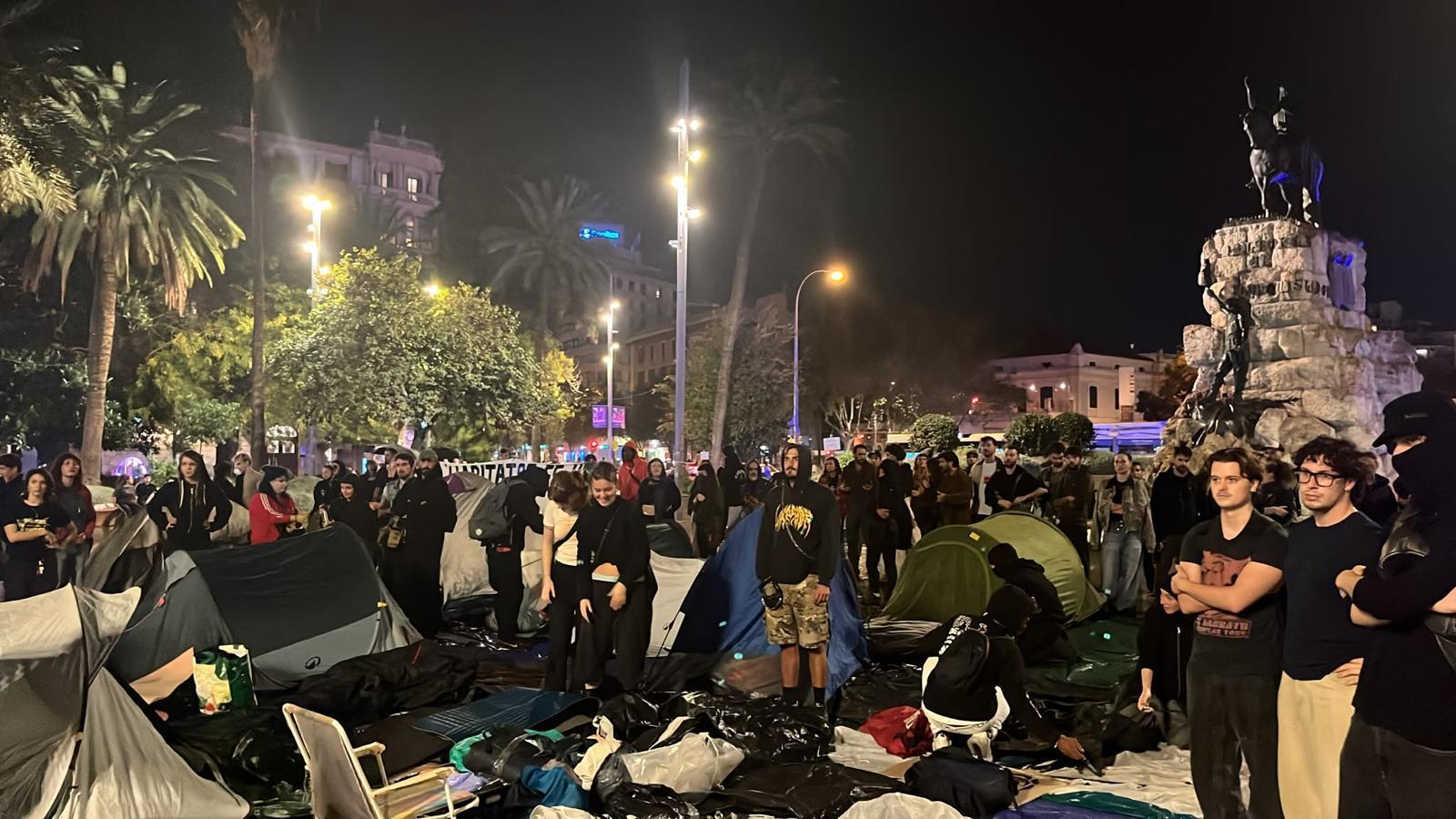
PalmaThe Housing Camp will end this Sunday the protest that has occupied Palma's Plaza de España for the last few weeks. The organizers have called for one last day of activities before definitively dismantling the camp, with an anti-repression workshop at 5 p.m. and a popular snack and closing ceremony at 6:30 p.m.
"We are leaving the square, but we will continue to organize ourselves," the collective announced through social media, where it presented this Sunday's event as a "day of breaking camp."
The protest began at the end of September, following mobilizations sparked by the eviction of Maricarmen Abascal, an 87-year-old woman who had lived for more than seven decades in the same apartment in Madrid. After a rally at the Plaza de Cort under the slogan "Not one more Maricarmen," about twenty activists spent the first night in tents in the Plaza de España. Over the days, the camp grew and was organized through assemblies, activities, and different working groups.


The mobilization continued after the death of Maricarmen on October 7th. The participants turned her case into one of the symbols of the protest and reiterated that they would maintain the encampment to demand measures against real estate speculation and in favor of access to decent housing.
The point of greatest tension arrived on November 4th, when the Local Police removed the tents and elements installed in the square by order of the Palma City Council. Cort defended the action based on municipal ordinances, while the Government Delegation maintained that the protest was protected by the right of assembly. The activists also questioned the municipal authority to execute the operation.
Just one day later, about twenty people spent the night in the square again, initially without tents or barriers. After the November 11th demonstration, the activists reinstalled tents and a hundred people resumed the encampment.
The new occupation reopened the institutional conflict. On Friday, the City Council filed a contentious-administrative appeal against the Government Delegation and requested immediate precautionary measures to prevent the encampment. The Court considers that the right of assembly cannot justify an indefinite occupation of public space, while the activists argue that their protest is protected by Article 21 of the Constitution.
This Sunday, however, the organizers themselves have decided to put an end to the encampment. The removal of the tents does not mean, as they have announced, the end of the movement: the collective assures that it will leave Plaça d'Espanya but will continue to organize itself to maintain its demands regarding housing.
