Villeroy is the pear
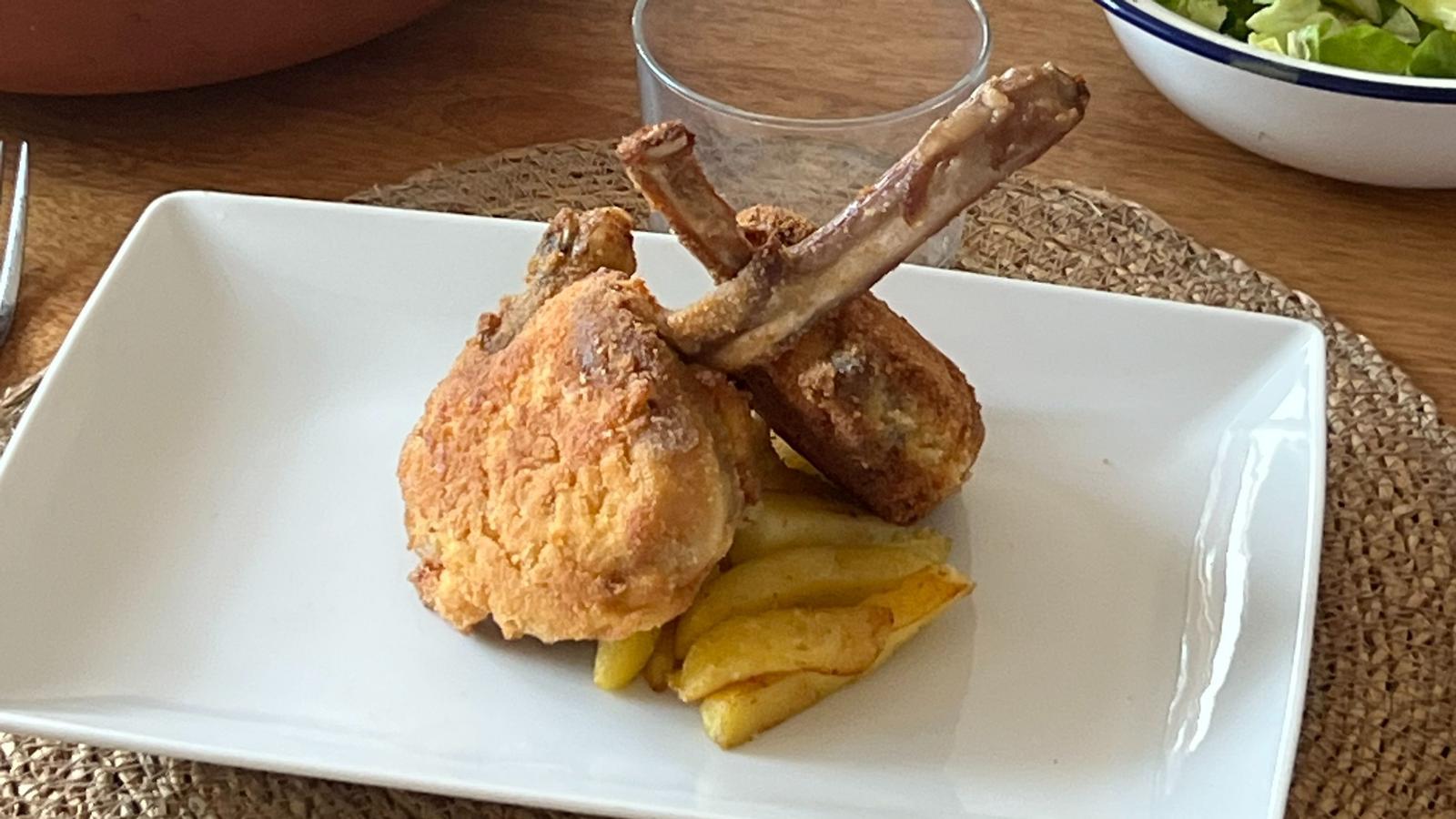
We explain to you how to prepare ribs with pear at home

-
CAT -
CAST -
DE
PalmaRibs are one of the most appreciated cuts of meat in our cookbooks, an esteem that is evident in the variety of preparations that feature them as protagonists. Among the most curious are 'pear ribs', a preparation that owes its name to the shape the pieces take once prepared. The meat is partially removed from the bone and curled upwards, so that it resembles the silhouette of this fruit. Afterwards, it is covered on all sides with a croquette batter, which may incorporate chopped ham or simply consist of a béchamel sauce thick enough to hold its shape. Finally, they are dipped in beaten egg and breadcrumbs before frying them until they acquire a golden and crispy crust.
This way of preparing meat reminds us of one of the most representative preparations of classic French cuisine: the escalope à la Villeroy. Both preparations share a technique that combines a piece of meat with a creamy coating, subsequently breaded and fried.
French court cuisine
The name Villeroy is traditionally associated with François de Neufville, Marshal and Duke of Villeroy (1644-1730), a prominent figure in the court of Louis XIV and tutor to the future Louis XV. The name likely arose within the environment of the French courtly kitchen, where it was customary to name dishes and sauces after nobles and influential figures. However, there is no documentary evidence to attribute the invention of the recipe to him. One of the first known printed references appears in Les Dons de Comus, by François Marin, published in 1758. There we find a preparation titled ‘Quarré de mouton à la Villeroy’, a rack of lamb with bacon, ham, and anchovies, grilled and served with a white Italian sauce. It is not yet, therefore, the Villeroy we know today, but it is an early testimony of the use of this name. The current technique is documented more clearly in the 19th century. Jules Gouffé, in Le Livre de cuisine (1867), includes a ‘Fricassée de poulets panés et frits, dite Villeroy’. The pieces of chicken, once cooked, are covered with a thickened velouté sauce bound with egg. After letting them cool, they are breaded with breadcrumbs, beaten egg, and a second layer of bread before frying them. Later, Auguste Escoffier incorporates this preparation into Le Guide Culinaire (1903), with the ‘Escalopes de ris de veau Villeroy’, made with veal sweetbreads. The pieces are covered with Villeroy sauce, allowed to cool, and breaded in the English style before frying them. The name already identifies by then a technique applicable to various ingredients, rather than a single recipe.
The resemblance to our ribs with pear is quite revealing. In both cases, the creamy coating is not a simple accompaniment, but rather transforms the texture and presentation of the meat. We cannot claim, however, that the Mallorcan preparation derives directly from the French recipe. In our case, the technique has practically no variations and it is usually cooked almost always with lamb ribs. We can indeed recognize the same way of doing things, enriching a piece of meat with a creamy preparation, giving it a particular shape and converting it, with the batter, into a dish with a certainly sophisticated crispy texture.
We will season the meat with lemon, salt, and black pepper and let it marinate for a couple of hours. We will push the meat down the rib bone. We will fry them until they are golden brown. We will let them drain on paper towels. We will shape the meat a little (I used a toothpick to help me). We will dip them in the béchamel sauce until they are well coated. Next, we will dip them in the beaten egg and then in the breadcrumbs. We will fry them in batches in very hot oil. We will place them back on paper towels to prevent them from being oily. We will serve them while they are still hot.
8 lamb chops
thick bechamel sauce
3 eggs
breadcrumbs
