Antoni Roig Rosselló: "I voluntarily submitted myself to electroshocks to 'cure' homosexuality, and I hit rock bottom"
Ex-priest and writer

-
CAT -
CAST -
DE
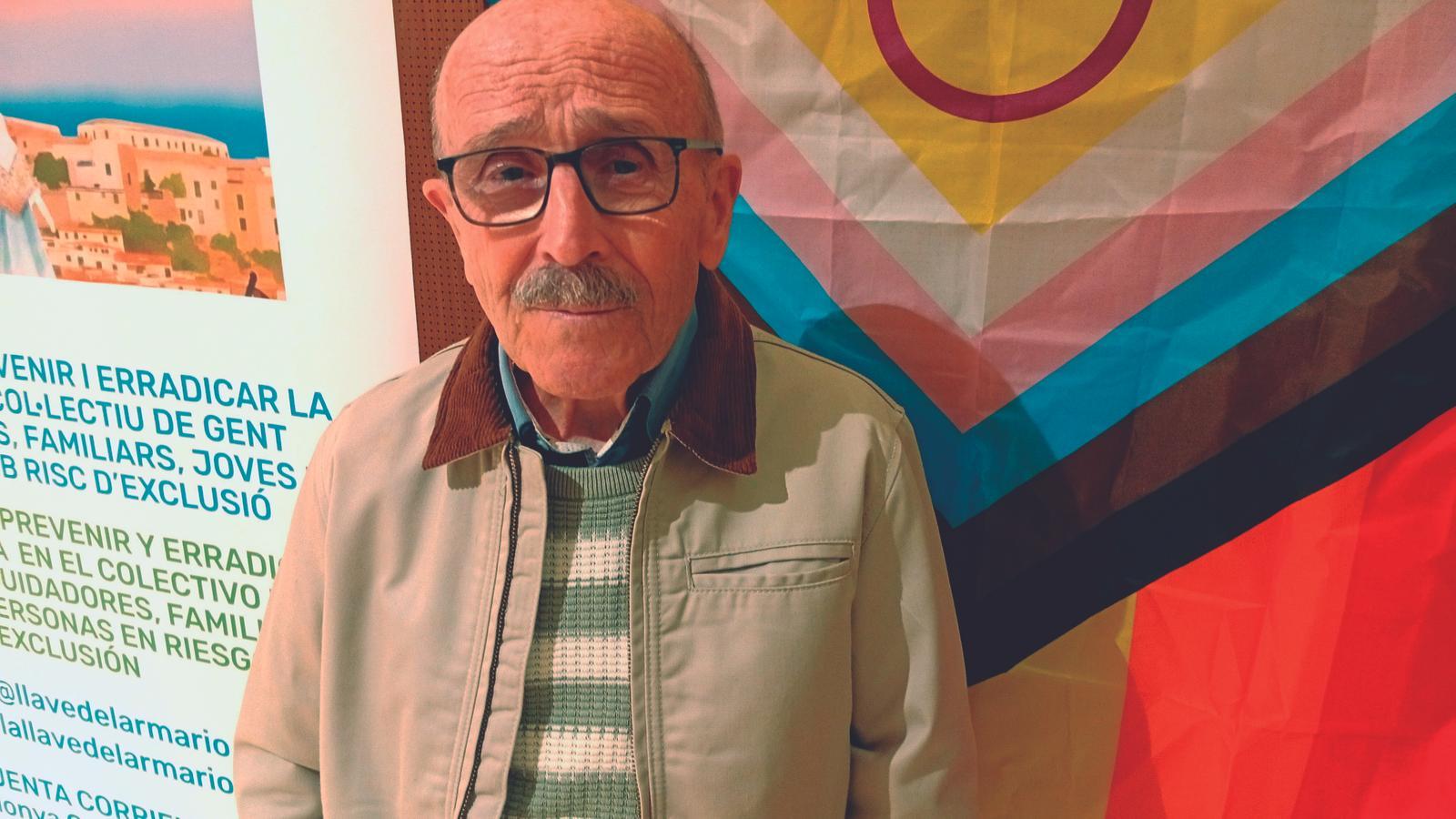
IbizaAntoni Roig Rosselló (La Marina, Ibiza, 1939) is a small man, with contained and gentle gestures, extremely kind. He is also a brave man. He is the first Spanish clergyman to come out of the closet; he did so with the publication of the novel Not all parks are a paradise, a finalist for the Planeta prize in 1976, 50 years ago now. The book was originally subtitled “Memoirs of a Priest”. It recounts the homosexual experiences of the protagonist during a long stay in London and his conflict between religious vocation and sexual orientation. It cost him suspension by the Archdiocese of Valencia and expulsion from the Carmelites. Franco had just died, but Francoism was still very much alive. Antoni Roig Rosselló was in Ibiza for the third edition of the awards organized by the association Sa Clau de s’Armari, which bear his name. It is there that we interview him. He begins to speak before being asked any questions.
— I wrote Todos los parques... on many occasions, crying. As if it were a purification, a catharsis. Other times I had to stop, because I was horrified by what I had written... And I would say: well, it doesn't matter, I will tear it up! In principle, I wrote the novel for myself. And that made it very sincere, because I was not thinking of publishing it. I finished the first draft in November 1975, during Franco's lifetime.
That was when you decided to show it.
— Yes, I thought that it could help someone, that I had to publish it. But I was alone, nobody had guided me in any way. I don't believe there is a book written with this sincerity and this... [search for the word] naivety. I realized that things had to change, but I was not part of any movement, I was really very naive, I was not influenced by anyone. A writer, David Vilaseca, wanted to write about Terenci Moix and about me; from Terenci he was interested in the erotic theme, but from me he highlighted the “political and revolutionary” aspects.
Wow.
— You see, it is really intense. I didn't see that. Of many things that have arrived since, I had an intuition about them.
You have been married to another man for a month. 50 years ago, did you think this could happen?
— I never would have thought I would get married, because I have always considered myself a priest. But lately I have thought: but what if they don't care about me! Why should I be concerned about what they do?
Are you referring to the Church? Do you still consider yourself a priest today?
— I did. I did not leave the Church of my own volition. I was expelled from the Carmelites. When the book was published, I was first suspended 'a divinis' by the Archbishop of Valencia, which means that as a priest you cannot practice; it is not an excommunication, but it is a very strong sanction. And, a few days later, the Carmelites expelled me.
What I was asking you before was whether you thought you would ever see the current progress in the rights of the LGTBIQ+ community.
— One of the most cited sentences from my book goes in this direction. I wrote that a day would come when homosexuals would have the same rights as everyone else, that there would be a very strong social change. But I thought that I would not see it, at that moment it was as if it were science fiction.
What would you say to people who are still homophobic?
— It seems incredible how the legal change translates into a change in customs. It has been a long time since anyone insulted us. No: we find respect. They don't dare. I see that there has been a very big change. Are there more to come? Probably. But, young people, we find them very changed, compared to 30 years ago. My partner and I are easily recognizable as homosexuals, because he is very loving, he likes to hold hands. And we don't have any problems. I give thanks for this social change.
Certainly the country has changed a lot. In the 70s, you were even subjected to electroshock, to try to 'cure' homosexuality. How did that happen?
— Yes. This must be the chapter of the book that has been referenced the most. I voluntarily underwent electroshocks to ‘cure’ homosexuality. That was the last thing I tried. I had assimilated the idea that I was sick, at that moment I accepted it.

What year was that?
— 1974. At that time I accepted it. I accepted the idea that I was ill. And as a sick person, they recommended that I try it. I went to Barcelona, to a hospital, and I found a very understanding doctor. He was not very enthusiastic about the treatment, it was I who asked him for it. And then he did it. He did it because I wanted him to.
What did the treatment consist of?
— He would put some electrodes on me, he would show me arousal magazines... The thing is that I am not very inclined; I am not very much of a voyeur, I am not.
Was he showing you homosexual pornography magazines?
— Yes. And the limit was what you said. The doctor told me: when you are excited is the time, you must be excited, the more excited you are, the better... And then he gave me electric shocks. I also set the limit. Yes: I remember that moment with great sadness. This was already at the end. That was when I hit rock bottom. I did it on recommendation. I also started from the idea that I was sick.
From then on you changed.
— Yes. I went to London again. And when I returned to Spain I thought: it is not me who has to change, it is society that has to change. That is why I started with the book, I wanted to show what homosexuality was.
Did you think you had a chance of winning the Planeta?
— I thought I would win. And in some way I did win, I was a finalist. The book is the foundation of my whole life. If I found a job it was thanks to the book, I was able to pay the down payment on an apartment with the royalties…
I want to ask you about politics. Are you afraid that there might be an involution, a regression in the rights of the collective?
— Look, the other day I went to a conference at a university and I found that there was fear that this change might happen, to the point of thinking that difficulties could be placed on homosexual marriage. Yes, there really is fear.
But what is your opinion?
— My personal opinion is that it would be... [takes a moment to think]. Look, when the Tejero coup d'état happened in '81, I can tell you that we didn't sleep that night until the king spoke, because we knew that, sooner or later, they would come after us. Well, I tell you the same now, I wouldn't like it at all if that were to happen, not at all. Sooner or later, this would have political consequences that would lead us to a difficult time.
Have you reconciled with the Church? Have you forgiven them, even though they cast you out?
— I think they are paying for their faults right now. They are like in a labyrinth. I watch it as a spectator and I almost feel sorry for them: they don't get out of their labyrinth, they don't know how to get out of it... An example of this is the moment when Pope Francis said that homosexual couples could receive a blessing, that they couldn't get married, but they could be blessed, and a good part of the Church thought he had gone too far. And it was only a blessing. I don't know, I have gotten married now... All of that is their problem now.
