Works begin to rehabilitate the cloister of Sant Vicenç de Manacor: What changes will there be?
The works will begin on April 7 and will last seven months to restore galleries, vaults and facade, and adapt access for people with reduced mobility
-
CAT -
CAST -
GER
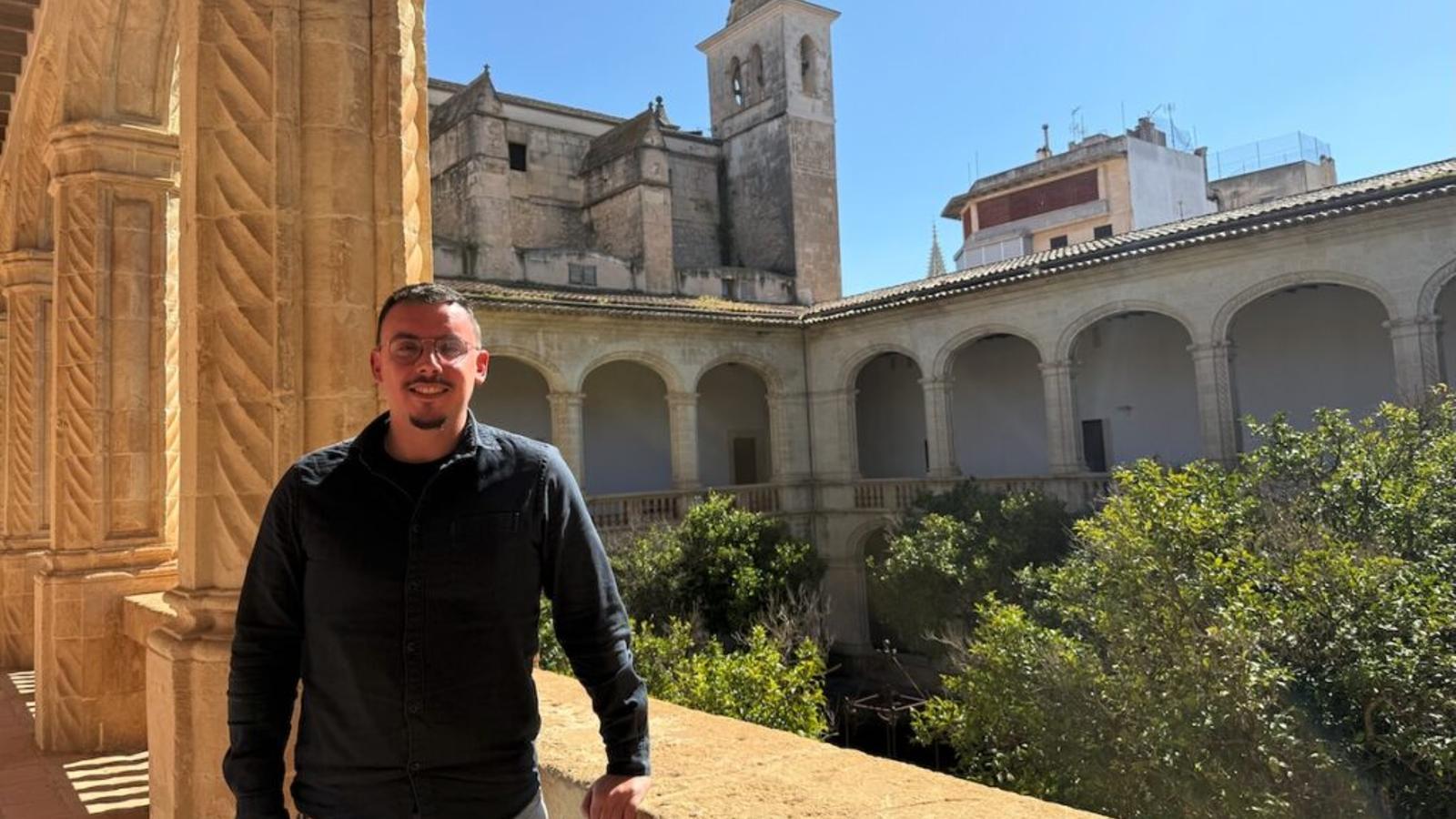
ManacorThe baroque cloister of Sant Vicenç Ferrer is undoubtedly the historical monument of greatest cultural value in the city of Manacor. A religious space, first, and later secularized to become civil, it has witnessed the urban and social transformation of the city since the 17th century. Now, and after 25 years have passed since the last renovation, it will undergo a comprehensive rehabilitation to correct the deficiencies that the passage of time and human intervention have accentuated.
"We could have started already, but we preferred to wait until after Easter, so the works will begin next April 7th," confirms the municipal delegate for Culture and Heritage, Ferran Montero, who adds that "the works will last 7 months, so everything will be ready for All Saints' Day." In total, managed by the specialized company Refoart and with an investment of half a million euros.
Maintenance and renovation works will begin with the interior galleries and vaults, in an intervention that aims to stop the damage to the marés stone and restore the affected parts. A first phase that is expected to end by mid-May. Immediately after, the works will continue with the current bathrooms in the library area, which will be made completely new so that they go from being for the staff who work there to being the main ones for the users.
By mid-June, work will begin on the staircase that goes from the cloister level to the first floor and the library, which is very affected and with parts that could directly compromise the structure if no action is taken.
The month of July will be dedicated to the facade facing the Convent square, which will be renovated from the first floor (which is not touched, nor the municipal balcony) downwards, which is the part that is already visibly most affected, with pieces that are about to fall. "In fact, a few years ago, some paste testimonials with dates were placed, to see if the endangered pieces moved... and indeed they did," recalls Montero, who in the last two weeks of the month, will also work in the lobby.
And it is that the ground-level entrance ramp to the cloister from the Convent square, does not comply with regulations, so it will have to be made flat again, without inclination, and a step will be added, in addition to enabling a new ramp, now lateral, and with a gentler inclination, for people with mobility problems. As for the roof, various problems with vegetation and dampness will be repaired. The galleries on the first floor will be the ones that require the least work: the areas of the stone caps will be restored and the wooden beams will be maintained.
New regulation
According to Ferran Montero: "It's not that the cloister had structural problems, but the deterioration was already very great, especially in the columns. That is why once the project is finished we will have to approve a new, more restrictive regulation for the use of the cloister, so that people do not sit directly on the walls or columns", with which the City Council is already thinking about placing benches or other deterrent structures yet to be decided.
It should be remembered that smoking is not allowed in the entire heritage site. And that the cloister has never been characterized by being a hotbed of social or security problems, although it maintains surveillance in the afternoons and closes at night (following the schedule of the municipal library). "Even so, we have detected problems with urine in the furthest parts".
Likewise, the councilor explains that "during the months that the work lasts, at no time is it planned to cut off the interior passage", and pedestrians who wish to cross will be able to do so without problems.
