They find in Mallorca burials from 3,500 years ago that reveal the rituals of the Bronze Age
The excavations at the Son Sunyer necropolis, in Palma, have located human remains and prehistoric ceramics in relatively well-preserved levels, a discovery that opens new paths to investigate the diets and diseases of the first communities on the island

-
CAT -
CAST -
DE
PalmaThe Son Sunyer necropolis, in S'Aranjassa, in Palma, has provided human remains and archaeological materials from approximately 3,500 years ago that will allow for deeper knowledge of Bronze Age funerary practices in Mallorca. This year's excavations have made it possible to identify relatively well-preserved prehistoric levels. A discovery that, according to the researchers, opens up new possibilities for studying how the deceased were buried and how the communities that inhabited the island were organized.
"It is the first time that more or less well-preserved Bronze Age levels have been found in a necropolis in Mallorca," explains Pau Sureda, researcher at the Spanish National Research Council (CSIC) and co-director of the campaign. Until now, the excavated hypogea had been disturbed and the preserved remains were scarce. The possibility of studying these levels with archaeological methodology will allow for investigating the time of use of the necropolis and the characteristics of the buried population.

"The jewel in the crown is the potential information that we can extract from the remains that we have found this year and also last year", highlights Sureda. The study of human remains could provide information about the pathologies, diets, and genetic heritage of these populations. Furthermore, researchers have already identified evidence of infant burials, an element that raises questions about the social organization and funerary practices of the era.
A hypogeum with intact remains
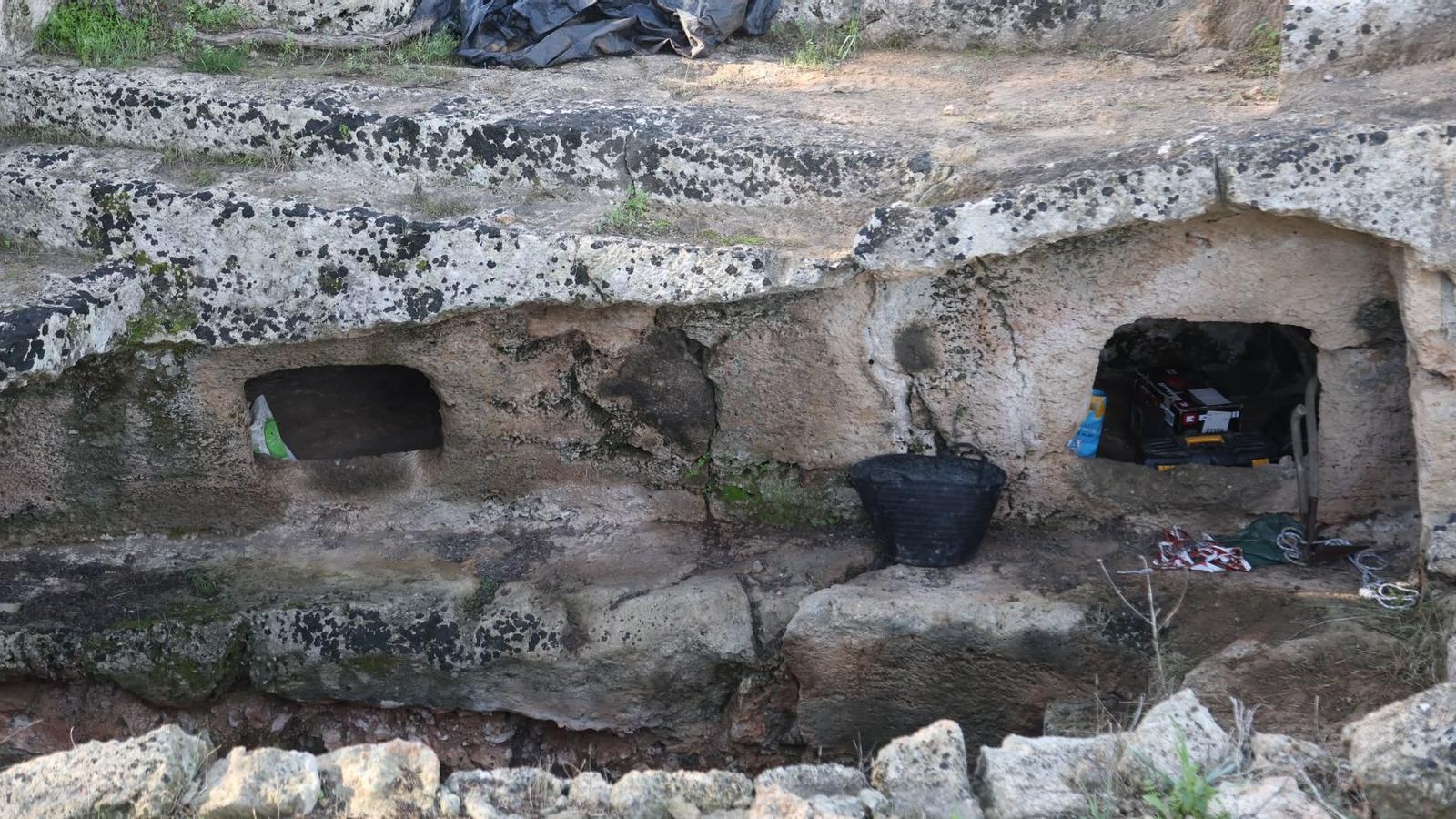
The works are focused on the SSU9 hypogeum, discovered in 2024 and studied since 2025. The necropolis is formed by nine artificial caves carved into the rock, used as burial spaces during the Bronze Age. Part of the complex was destroyed during the 16th and 17th centuries due to the extraction of marès sandstone. Last year, archaeologists reached a level dating back to the 13th century BC. The main question was whether later interventions had completely emptied the chambers and whether, therefore, the original funerary deposit had been lost.
This year, however, they have been able to verify that beneath the later levels, disarticulated human remains and prehistoric materials are still preserved. "This year we have been able to verify that, beneath the medieval levels, we are already entering prehistory and we are finding disarticulated human remains there," explains Jordi Hernández, director of the excavation campaign at Son Sunyer. Researchers believe that the central chambers of the necropolis could have functioned as ossuaries. The hypothesis is that the bodies were deposited on top of benches or inside niches and that, subsequently, the bones were moved to a central space. "We think that the bodies were deposited on top of the benches or inside the niches and that the central part served to carry out cleaning tasks," points out Hernández.

One of the most prominent elements of the intervention is the location of a niche situated under a bench, an arrangement that had not been documented in other known hypogea. The structure preserves a good part of its original layout, with two whole niches and the benches, although a part of the space was affected by the extraction of sandstone. A slab where the stone that closed the niche was fitted is also preserved there.
Necropolis far from the settlements
Son Sunyer is located in front of the Sant Jordi meadow, an ancient lagoon that was drained in the 19th century. While prehistoric settlements are documented in the surroundings of this area, funerary spaces have been identified in the area of Son Sunyer and closer to the sea. Researchers suggest that the people buried in the necropolis could have lived at a certain distance, approximately a kilometer further away. The funerary space would thus have occupied a location distinct from the habitat sites. The hypogea began to be excavated during the Bronze Age, in a period contemporary to that of the navetes.
In addition to the funerary remains, the site preserves materials that allow tracing the subsequent uses of the space, such as ceramics from the Talaiotic period. The combination of these findings will allow studying not only the initial moment of the necropolis but also the subsequent visits. The excavations are part of the archaeological campaign that the CSIC team is developing this October in Mallorca, under the direction of Pau Sureda, to delve into the knowledge of prehistoric societies. At Son Sunyer, the intervention gives continuity to a project initiated in 2020 and reinforced since 2024 with the collaboration of the Institute of Heritage Sciences (INCIPIT-CSIC) and researchers such as Hernández, from the Catalan Institute of Classical Archaeology (ICAC-CERCA).
The preservation of Bronze Age funerary levels now opens the possibility of going beyond the description of the structures and reconstructing aspects of the life and death of those communities. As Sureda summarizes, the findings raise "a whole series of new questions" that researchers now have the opportunity to investigate.
