Mercedes Febles: "When the children are older and life is full, many women begin to feel worse"
Head of Gynecology at Manacor Hospital
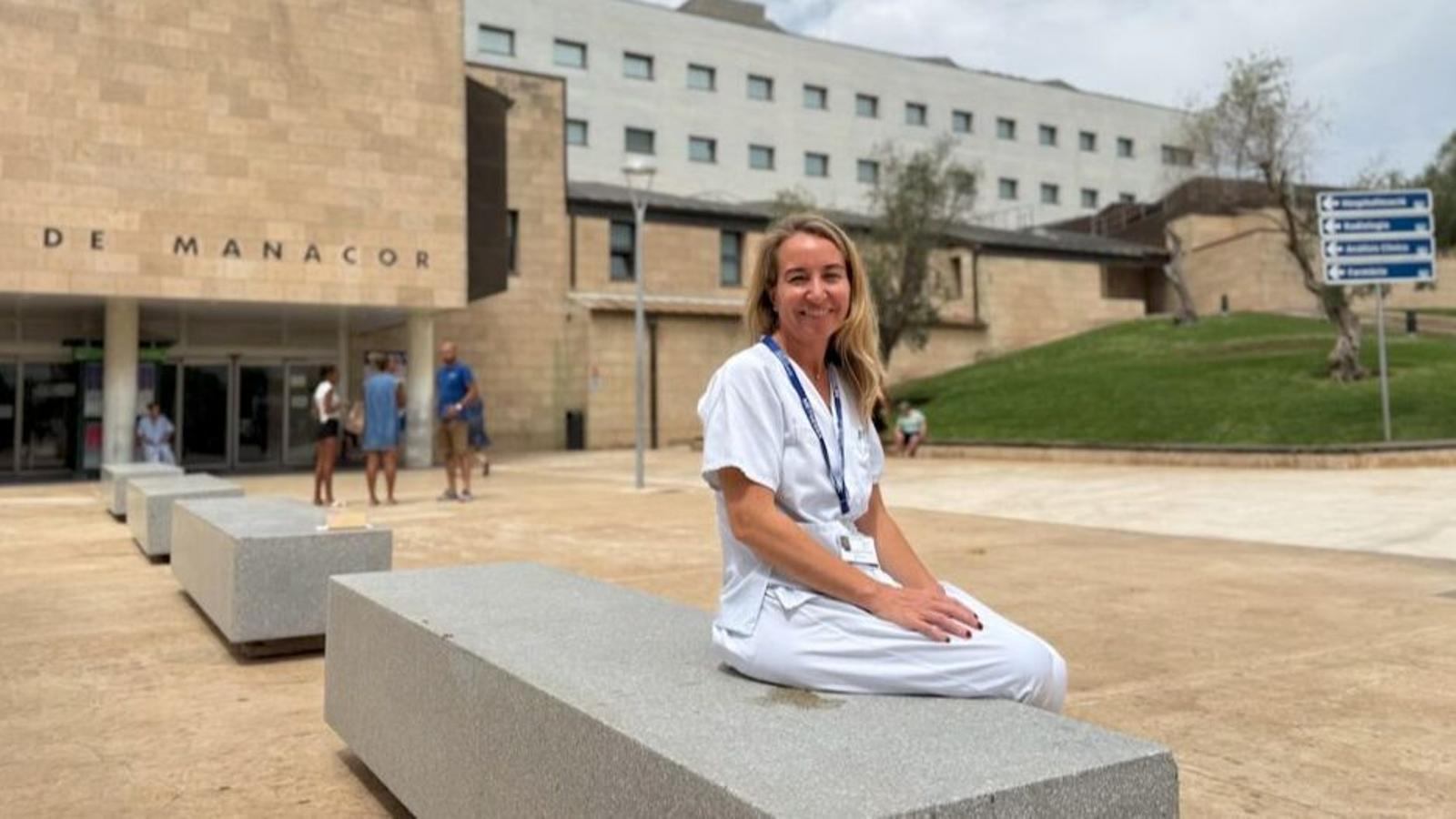
ManacorMercedes Febles is the head of Gynecology at Manacor Hospital. A few days ago, she presented the "Es Mujer" initiative in Madrid, a comprehensive state strategy for women's health, with the aim of addressing the different stages and physiological conditions of women in a unified way, such as menstruation, fertility, endometriosis or fibroids, and menopause. The presentation at the Congress of Deputies seeks to give visibility and institutional support to the project.
How was the project conceived?
— It is a state-level strategy that emerged from the Spanish Menopause Society. Several other scientific societies, some patient platforms with chronic diseases, and finally the industry and commercial companies that have specific products for women, soon joined it.
From what need?
— Women, throughout our lives, have different situations that we can call physiological: menstruation, pregnancy, fertility, and then menopause, which greatly worsens women's quality of life. This is a very different gap compared to men, who do not have these situations and whose quality of life does not change as much. From here, a strategy was developed, mainly focused on the quality of life that menopausal patients were losing, and then an attempt was made to integrate the rest of the situations to encompass all pathologies or all circumstances.
In what way will it be applied?
— Right now, there isn't an overnight solution. The idea is to give visibility to women in general. To achieve that specific pathologies are not seen, but a whole.
What phases does it address?
— The timeline more or less begins with when she gets her period and premenstrual syndrome. Breasts hurt more, the belly starts to bother... Then you have to include the part about fertility: patients who want to get pregnant or who get pregnant later and later because we work more and, therefore, there are more problems achieving it. Assisted reproduction techniques are increasingly used and it is lived with great anguish. Many patients fall into depression and need help, and the partner experiences it badly. Thus, this reproductive life also ends up being seen as pathological when, in essence, it is a normal thing.
Tell me about endometriosis and fibroids
— They are two pathologies that are very relevant: endometriosis, which causes a lot of chronic pain, and uterine fibroids, which are benign tumors that have no long-term repercussions, but which significantly increase bleeding. They are patients who end up anemic and it is a chronic pathology that, in a way, decreases when you enter menopause. That is why there are many therapies to reduce pain and also bleeding in both fibroids and endometriosis.
Is menopause the most traumatic stage?
— It becomes like a very important phase where patients start having hot flashes, they don't sleep, they have a decrease in libido... they notice it a lot. It's a problem, a big difference between men and women when they reach 50 years old, especially in relation to libido; patients experience it very badly and all this is due to the decrease in estrogen when they enter menopause.
At the best moment of their lives...
— Sure, when your children start to get a little older, you can work, you have a full life and suddenly you start to not sleep, to get disturbed, to have problems with your partner... Probably menopause is the stage that most deteriorates women's quality of life, because it takes many years until the patient accepts the situation a little: you lose estrogen, you start to gain weight and you can't lose it, you don't sleep because of hot flashes, you wake up at night and, therefore, during the day you have less concentration, you have mental fog, you forget things more, just when you are at your best, indeed.
Was it a minimized problem?
— Gynecologists, until now, saw it as just another part of a woman's life: "This is menopause, you have to endure it with a fan." But recently there have been many recommendations that have highlighted the benefits of administering hormones to menopausal women to improve hot flashes and quality of life. There are hormones that can be administered transdermally, for example. Patients are told that they can improve their quality of life and especially protect their bones, improve osteoporosis in the long term, and reduce cardiovascular risk. All of this can be improved by giving hormone therapy for a few years, before the age of 60. As I have explained to you, from when we get our period until it stops, this is where the strategy, the project of encompassing all of this, arises.
Has perception changed?
— I think two things are happening here: until very recently, almost 90% of gynecologists were men. Now, in the Medicine degree, it's the opposite, 90% are women. Therefore, I think that, on the one hand, women have started to become gynecologists and don't have exactly the same vision. And on the other hand, society has changed. We live longer, women are occupying more and more professional positions of responsibility and need to be much more active. Before, menopausal women were more at home and now they occupy high-level positions. I think these two things are happening: that the person attending you is a woman and understands it more, and that life has changed. I remember my mother at 50: she probably didn't do what women do today at 50. Also, there's a bit of Instagram culture. We all want to look great, we all see ourselves as cute, it seems like we're 30 and not 50. And everyone takes good care of themselves, takes many supplements, and that's why a 50-year-old woman is not the same as before.
How can all this be applied, in this case, to Manacor Hospital?
— Starting to set up some consultation that has a more comprehensive approach to women, not the myoma consultation, not the endometriosis consultation... because, in fact, now it happens that the patient who comes for reproduction, for example, has a myoma: so they keep asking for tests, then they pass her to the myoma consultation for me to treat the myoma, and so on. But, of course, we also forget that we want the best professional in each aspect. Starting to have slightly more integrated consultations that can cover all these physiological situations of women would be the first step. Probably also starting with menopause, which is what most affects quality of life. Right now we don't have a specific menopause consultation; there are other hospitals that are already starting to implement it. It's the sum of a lot of small things that improve your life: sleeping a little better, having fewer hot flashes, being able to go to work more calmly. All of this improves your quality of life.
Will it be a reality?
— I would like that very much. The problem is also that, as we know, we lack gynecologists. We have to cover 24-hour assistance, so we don't have enough capacity to do everything we would like, but probably having a menopause clinic to improve quality of life would be important. This would mean that if we focus more on the woman's quality of life in an integral way and not on her pain or her specific symptom, we would have a slightly more transversal clinic.
