Joan Miquel Mulet Aloy: "From a small town you can also live experiences that you would never have imagined"
Athlete
-
CAT -
CAST -
DE
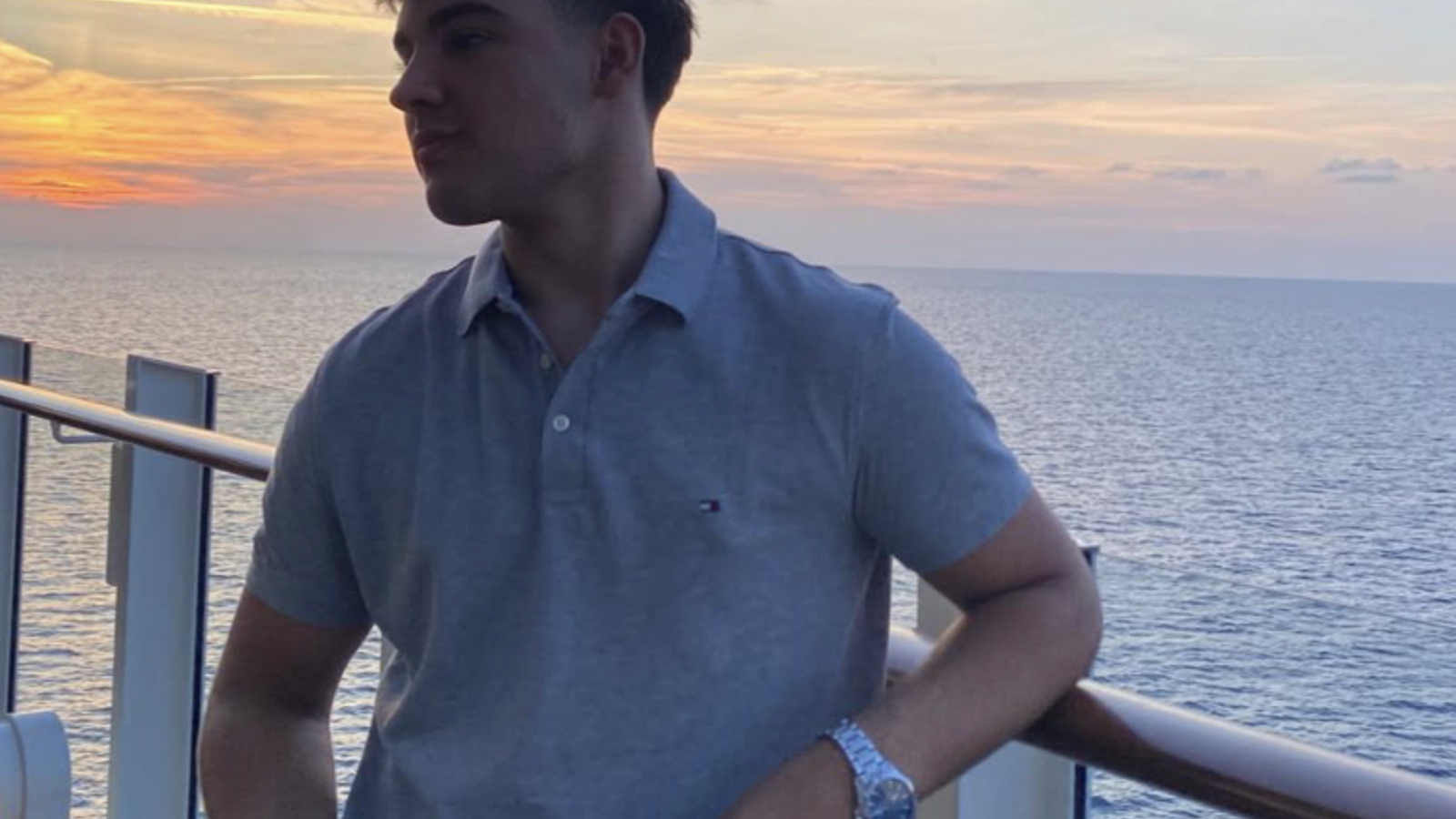
SencellesIt is not every day that one interviews a young man from El Pla with two consecutive Spanish runner-up medals, two-time European Cup champion, one-time European Cup runner-up, seventh in the World Cup on one occasion, seven-time Mallorca champion (counting both modalities), and seven-time Balearic Islands champion (counting both modalities). This is Joan Miquel Mulet Aloy (Sencelles, 2007). He has achieved all this success in artistic roller skating, a minority sport that too often remains on the sidelines of media attention and which also struggles to find sponsors to face its competitions. Mulet is also one of the benchmarks of the IES, in this case, of Sineu. With him, we talk about the institute and his sports career.
Linked to the world of artistic skating since he was very young, he started at the Patinatge Sencelles club, where he began as an extracurricular and leisure activity. Later he moved to the Rodes d'Or club, where he continues currently. This was where he began his sports career professionally. Currently, he competes in the artistic pairs category with Daniela García, representing the Spanish Federation in international competitions. As for his studies, he is currently pursuing a Higher Degree in Physical Conditioning Technician, a training, therefore, related to his sports experience.
What is your current occupation?
— Currently, I dedicate a large part of my time to my studies and artistic skating. I am taking the Higher Degree in Physical Conditioning and, in parallel, I continue training and competing at a national and international level with Daniela García in the artistic pairs category. I also work in the field of leisure and sports activities with children.
Joan Miquel, what is skating for you?
— For me, skating is much more than a sport. It is a very important part of my life, because I have dedicated many years, hours, efforts and sacrifices to it. It is a way to disconnect, express myself and constantly improve. It has taught me values such as discipline, perseverance, responsibility and, above all, that things are not achieved overnight. It has also given me the opportunity to travel, meet people and represent my club, my town and my country throughout Europe. It is something that has made me grow a lot as an athlete and as a person.
Recently, you won the European Cup partnering with Daniela García. How did you meet?
— We met at the club that we are both part of. I used to compete with another partner and, after she stopped skating, Daniela and I started skating together as an artistic couple. Even though we haven't been sharing the rink for that long, we have managed to build a very good sporting rapport. The artistic pairs category is very different from skating individually. In a pair, it is not enough for each person to have good technique, but it is essential to function as a team. With Daniela, we share jumps, spins, lifts, and various elements that require a lot of coordination and trust. You have to know the other person very well, know how they move, anticipate them, and understand each other even without speaking. Trust is fundamental, especially in the lifts and the more complicated elements, because you put your safety and that of your partner in the hands of the other person. In the end, it is not about being two good skaters, but about becoming a good couple.
What does this award mean?
— Winning the European Cup is an enormous satisfaction, because behind this result there are many hours of training, sacrifices, trips, and difficult moments. It is especially exciting to see that all this effort ends up bearing fruit in an international competition of this level. For us, it is a reward for the work done, but also a motivation to continue improving and to set ourselves new challenges.

Skating is a minority sport with little presence in the media. Has it been difficult to get there from Sencelles?
— Yes, I believe that reaching this level from a village like Sencelles has added merit. Figure skating is not a sport that has the same visibility or the same resources as other better-known sports. In Mallorca, furthermore, we have the constraint of insularity. To compete in Spain and internationally, we have to travel constantly, take planes, pay for accommodation, and organize many trips. This implies time, money, and significant logistics. I also believe that, many times, not enough visibility is given to the results that we athletes in this sport achieve. Even so, I am very proud to be able to represent Sencelles and to demonstrate that from a small village, it is also possible to reach the point of competing at the highest international level.
For example, you have also had to assume the cost of this last competition, haven't you?
— Yes, and this is one of the great drawbacks of our sport. Figure skating entails many expenses: federation licenses, training, equipment, costumes, choreography, travel, accommodation, and registration fees, among many others. In my case, the annual cost of practicing this sport competitively can reach approximately 15,000 euros, and depending on the international competitions in which we participate and the location where they are held, this amount can be even higher. Many times, despite representing the Spanish Federation in international competitions, we athletes ourselves have to assume all the expenses. For this reason, we also look for sponsors and financial aid that allow us to continue competing without the economic factor being an impediment. Even so, since it is a minority sport, it is not always easy to find this support. I believe it is important to give visibility to this reality, because behind every medal, every result, and every international participation there is also a very significant economic effort, which is often not seen.
How many hours a week do you dedicate to training, to preparing for a championship, for example?
— We train from Monday to Friday, usually between two and three hours each day, which means approximately between 10 and 15 hours per week. During these training sessions we work on both the technical and choreographic aspects, the individual elements and those specific to the pair. Preparing for a championship requires a lot of consistency and does not consist solely of repeating the entire program over and over again. With Daniela we work on the technical elements of the pair, the lifts, the jumps, the spins, the transitions, the choreography and the musical interpretation. It is also essential to prepare the physical part, working on aspects such as strength, endurance, flexibility and coordination. When a competition approaches, the intensity and demands of the training sessions increase considerably, as we need to arrive there with the programs well prepared, the technique as perfected as possible and, above all, with maximum safety and confidence. In addition, I currently also have to balance training with studies and other responsibilities, so time management and consistency are fundamental.

Finally, for those of us who are unfamiliar with this sport, what does it consist of? What must be done on the track to win the gold medal?
— Artistic roller skating consists of executing two choreographic programs on four-wheeled skates, combining technical elements with music, body expression, and artistic interpretation. The scores obtained in both programs are added together to determine the final ranking. In our case, we compete in the pairs skating category, in which two skaters execute two joint choreographies: a short program, of approximately 2 minutes and 55 seconds, and a long program, of about 4 minutes and 40 seconds. During these programs, we must execute various mandatory elements, such as jumps, spins, lifts, and pair figures, which require a lot of technique, coordination, and synchronization. To achieve the gold medal, it is not enough to execute the most difficult elements, but they must also be done correctly, with quality, control, fluidity, and good musical interpretation. The judges value both the difficulty and execution of the technical elements as well as the artistic components of each program. In the end, the goal is to present two programs as complete as possible, combining technical difficulty, precision, synchronization, and expressiveness to achieve the best possible score. It is a highly technical, precise, and very difficult sport.
What advice would you give to a girl or a boy who wants to start skating?
— I would tell them that, if they really like it, they should try it and above all enjoy it. At first, it might seem like a complicated sport, because it requires a lot of technique, balance, and coordination, but with patience and perseverance, one can achieve things that initially seem impossible. I would also tell them not to constantly compare themselves to others, that everyone has their own learning pace, and that they shouldn't give up when something doesn't go well. And above all, not to let anyone make them think they can't go far because they practice a minority sport or come from a small town. If they have enthusiasm, a willingness to work, and good goals, they can go much further than they imagine.
