Fuel takes the primary sector and families of the Balearic Islands to the limit
The escalation of diesel is situated between 89 and 100% for farmers and fishermen, while small businesses and citizens cut margins and projects to be able to resist

-
CAT -
CAST -
DE
PalmaIn January of this year, Joan Gaià, general secretary of the Farmers' Union (UP) and businessman, paid an average of 0.90 euros per litre for agricultural diesel. It was practically the same price as in August 2025. In May, however, it was already 1.24 euros. This week the figure has reached 1.70 euros. In nine months, one of the essential costs for running an agricultural holding has become 89% more expensive. Since May alone, the increase is close to 37%. "This is a very big blow for those of us who still believe in the countryside," laments Gaià.
"We provide food, everyone congratulates us, but right now we have reached an unsustainable situation. We cannot continue like this, and it seems that you say it and nothing happens. The administrations cannot allow the primary sector to collapse further," explains the general secretary of UP. The Department of Agriculture has approved a grant of 750,000 euros that compensates with ten cents per litre the agricultural diesel purchased between March 1 and June 30. The call is funded entirely with regional funds.
The problem is the calendar. The compensation covers a period prior to a part of the price hike that most worries producers now. Since June, fuel prices have skyrocketed again.

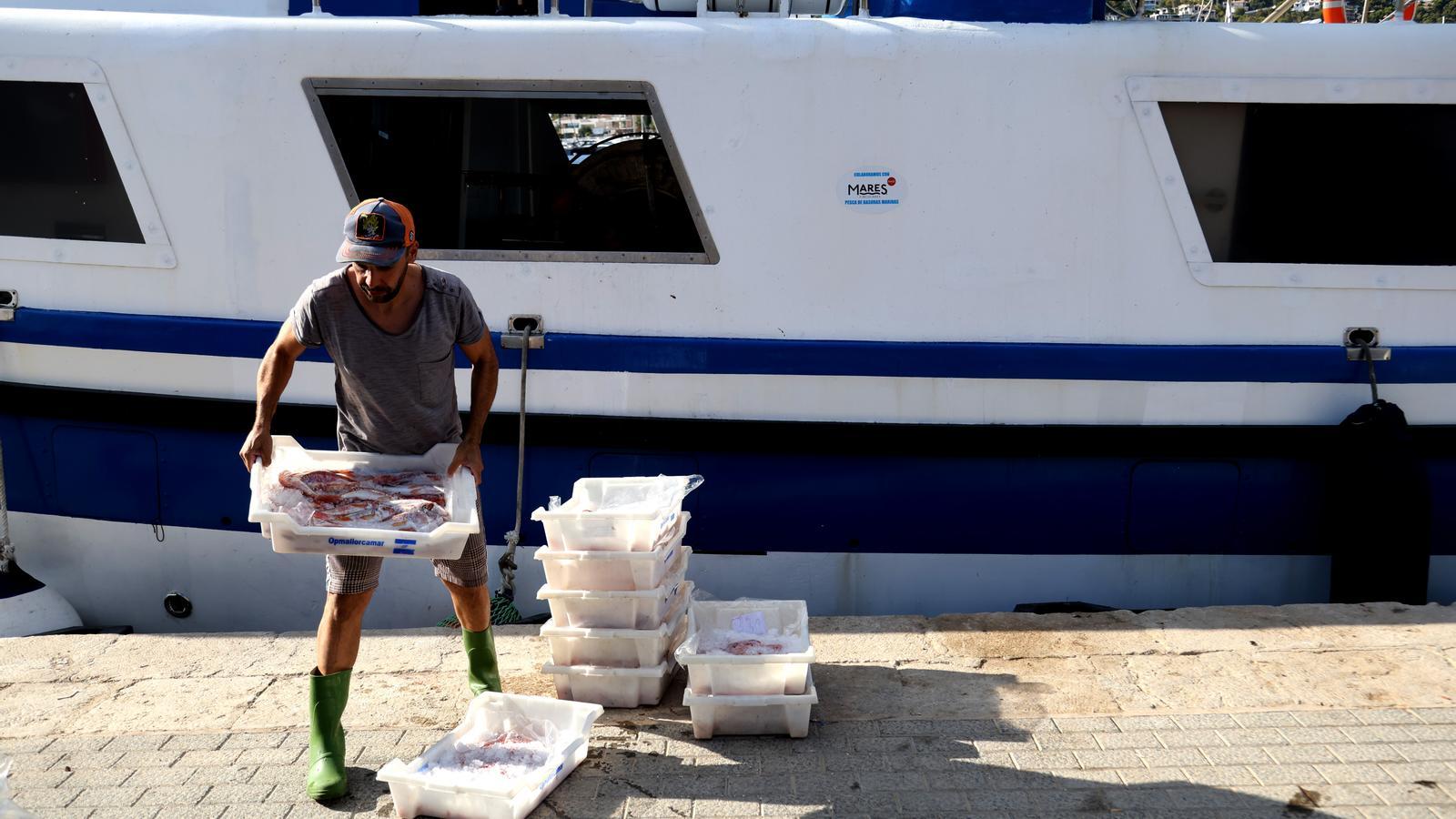
At sea, the story is very similar. Professional fishing diesel has reached 1.40 euros per litre this week in the Balearic Islands and already represents more than half of the direct operating costs for some vessels, as warned by the Balearic Federation of Fishermen's Guilds. The added difficulty is that a large part of the fleet cannot directly pass the price increase on to the client: fish is sold at auction and "it is the market that ends up setting the price," assures Miquel Alemany, secretary of the Port d'Andratx guild. They are grateful for the state aid, "which may have amounted to between 2,000 and 2,500 euros per boat," and the regional ones, but "the professional fishing sector is becoming more complicated due to costs," he warns.
The Executive has also approved a specific line of 750,000 euros for fishing diesel, intended for shipowners who were active between March 9 and June 14. The Government argues that the aid attempts to compensate for the extraordinary increase in fuel derived from the international crisis. A crisis that "is dragging on too long, right now with no hope of change in the short term," says Alemany, who recalls that "in June a first decrease began to be noticed after terrifying months and, of course, the regional aid ended." "But now, starting in August, it has been a disaster. We are already exceeding 1.40 euros per litre, despite having a protected price," he laments. The highest price the sector has ever paid.
Insufficient measures
The secretary of the guild remarks that both the Director General of Fisheries, Toni Grau, and the head skipper, Domingo Bonnín, have taken steps to seek formulas to compensate the sector. The Balearic Federation of Guilds values the measures adopted so far, but considers them insufficient in the face of current costs and demands new compensation mechanisms or fiscal measures.
The particularity of fishing also means that the bill ends up directly affecting wages. On many vessels, explains Alemany, the shipowner and sailors work with a system in which income and certain expenses are shared. When the boat spends more to go out, there is less left to distribute.

In Andratx there are currently four trawlers and six small-scale fishing boats, according to the guild. A figure that has done nothing but decrease over the last 20 years. The crews may arrive at four in the morning to prepare the boat, set off around five and return more than twelve hours later. There is still cleaning to be done, preparing the fish and transporting it. “It is very difficult for us to find people who want to take over and go out fishing this way. Right now, we are just surviving,” says Alemany.
Curiously, the reduction in trawling days imposed in recent years by European regulation has a different reading in this new scenario. Initially, the sector opposed it because in the case of the Islands, a significant abandonment of the activity had already taken place. “Now we are close to celebrating every cut in days,” says Alemany with irony. If going out to sea is becoming more and more expensive, concentrating the activity and ensuring that the catch fetches a better price can be more profitable than accumulating days with minimal margins.
A price increase that affects everyone
The rising cost of fuel and raw materials affects all productive sectors across the board. Matías Pomar, owner of the Can Pomar pastry shop, explains that the company has been accumulating years of generalized price increases. “We have suffered very large cumulative increases in energy and fuel prices, and now international conflicts have just made the situation very complicated for us.” Can Pomar has four points of sale in Mallorca. Pomar assures that this year they have not yet raised prices to compensate for the latest escalation. “We are absorbing the costs ourselves, but if fuel prices do not go down, it will be impossible to maintain current prices.”
In addition to energy costs, there is the salary increase derived from the new collective agreement. According to Pomar, both things are actually two sides of the same coin. “It is logical. Staff are asking for higher wages because they are facing unbearable costs,” he admits. When he compares the situation with that of ten years ago, he speaks of a change deeper than just a one-off increase in the bill. He recalls that his father “was able to grow the business, invest in it, and obtain a certain return.” “Now we only dedicate ourselves to resisting and holding on,” he explains.
The four establishments are currently open from seven in the morning to eight in the evening. Next year, he explains, they could start closing during some time slots. The decision is not only due to costs. There is also a lack of staff. “We cannot find local people to serve the public, but there are also no people coming to work for the season. It is not worth it for them.”
Inflation in the Balearic Islands reached 4.4% year-on-year in August, five tenths of a percentage point more than the previous month and the highest level since April 2023. Transport is 5.3% more expensive than a year ago, food and non-alcoholic beverages have risen by 3.2%, and restaurants and accommodation by 8.2%. The INE points precisely to fuels as one of the main factors responsible for the acceleration of prices during August.
This vortex of rising costs of living is pushing families to the limit. Marga Moll lives with her husband and two daughters on Carrer d'Aragó in Palma. Both of them work and own their apartment. When she hears about the difficulties of the restaurant industry, she says, she inevitably thinks about her household budget. “When those in the restaurant business complain, I think: have they considered that if I go to dinner with my two girls and my husband, we spend 120 euros without even ordering dessert? With the salaries that exist, what do they want, for us to go?”
Moll acknowledges that her family starts from a relatively favorable situation. "We own our apartment and we both work. And if it weren't for the fact that we don't pay rent, we simply couldn't live in Mallorca." To the damaged family economy, one must add "the daughters' activities, the usual bills, and any unforeseen expense. "The day comes to go to the dentist and you tremble. I don't know, living like this is very sad".
Mobilizations
The state and regional governments have tried to cushion the blow for those who have lately been suffering the most from the escalation in fuel costs, the agricultural and fishing sectors, and have announced more aid. But the unrest is enormous and the main agricultural organizations in the State, Asaja, COAG, and UPA, will return to the streets everywhere in the face of a rise in agricultural diesel prices, which they place at 48% year-on-year. Asaja Balears ensures that this figure is even higher in the Islands, and has warned that “the situation directly affects the profitability of agricultural holdings”.
