Two fisherman brothers from Andratx: “You no longer know who to cry to”
Owners of a trawler from the Port of Andratx explain how the rise in diesel has eaten up part of the daily wage: about 400 euros less per month for each fisherman
-
CAT -
CAST -
DE
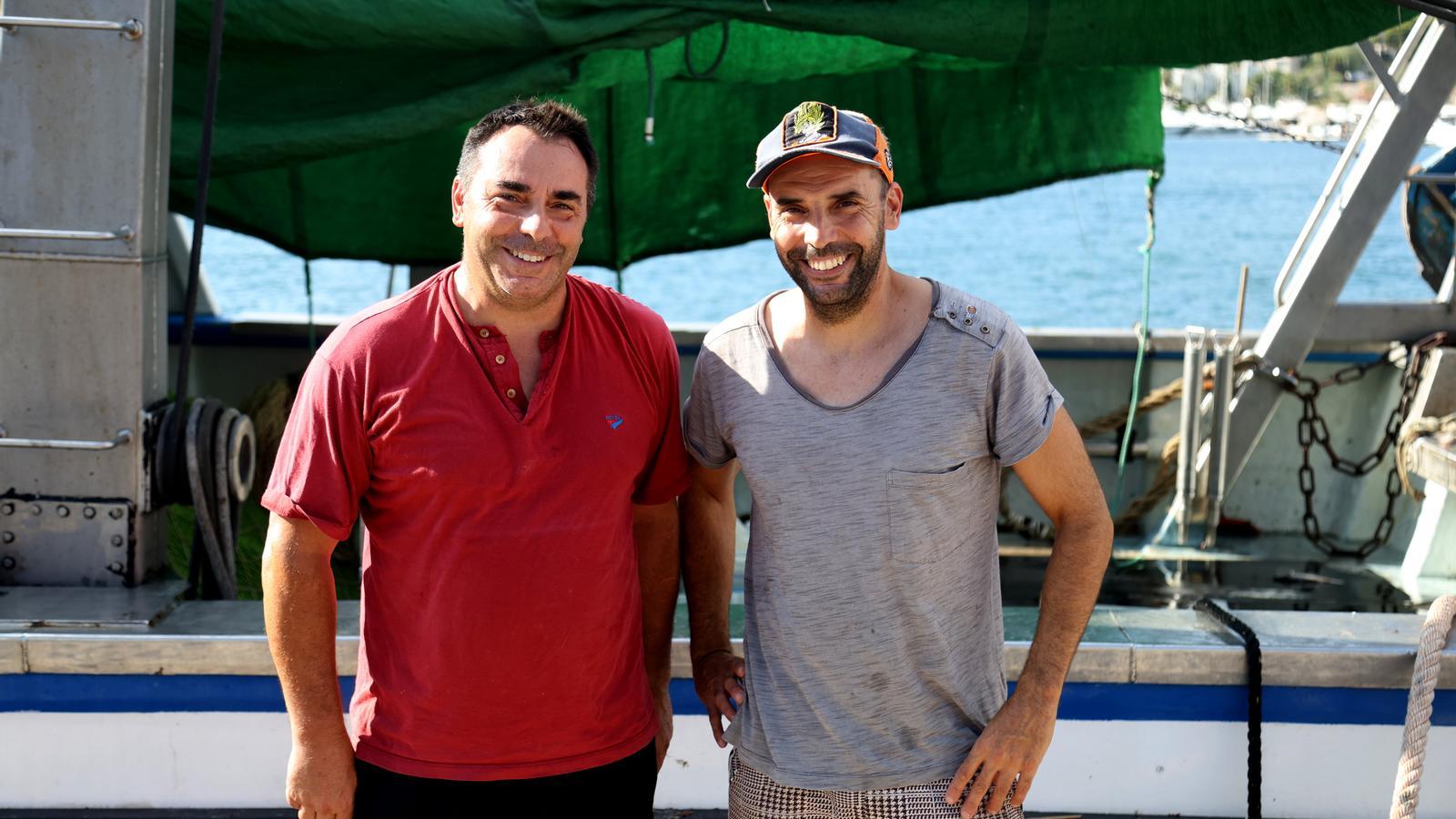
PalmaWhen Joan and Blai Ferrando arrive in Port d'Andratx on a Wednesday, they have already put in twelve hours of work. The crates are full of fish and a van is already waiting to load them. The largest part of the catch goes to Palma, where it will be sold at the fish market the next morning. A small part is reserved for the point of sale at the Port d'Andratx fishermen's guild itself, which opens for an hour or two each day.
They are boat owners, they have spent their whole lives at sea, and at this moment they are not in a hurry to tell great fishing stories. They are in a hurry to finish, get everything ready, and leave. "This has become impossible," summarizes Joan. Fuel is the focus of much of the conversation. "Not long ago we were paying 0.80 euros for it and now I have already paid 1.41. Where will we end up?" he wonders. Fishing diesel is already hovering around 1.40 euros per liter in the Balearic Islands, and the Balearic Federation of Fishermen's Guilds warns that on some boats it represents more than half of the direct operating expenses.
The rising cost does not only affect the boat owner. The Ferrandos share the boat's income and expenses with their workers, a model very common in the sector, so when diesel prices rise, the cut reaches the entire crew. According to Joan, with current fuel prices, "each of our fishermen, ourselves included, ends up earning about 400 euros less each month."
Theirs is one of the four trawlers remaining in Port d'Andratx, where the guild also has six small-scale fishing vessels, a fleet that has not stopped shrinking over the last 20 years. It is not that there is no work. Precisely, this is one of the things that despairs them the most. "It is a wonderful profession, but right now it hardly gives us any joy. Work is done, fish is moved, money is moved, and when you do the math, it makes you want to run away."
Blai reaffirms what his brother explains and makes it clear that the problem is not the effort. "We are not afraid of work; in fact, we like it a lot. The thing is that we have to be able to make a living from this and, if the current situation does not change, it is very difficult to be able to keep a boat running."
A price they do not decide
To the rising expense, another difficulty is added: they cannot freely decide how much they will charge for the product they bring to port. "We have fixed costs and we know what it costs us to go out. And we watch in despair as it rises week after week. But since we sell the fish at auction, others set the price," explains Joan. "Everyone sets the price for us for everything, for the costs and for the sales. It is hard to defend oneself."
Going out to sea means assuming the cost, seeing how it still rises, and not knowing what will be made from it. The income is not known until the fish goes through the auction: the crates that are loaded onto the van today will not have a price until dawn, at the Palma fish market. "It is not enough to endure long workdays, the bad weather in winter... Then you have to wait to see what the market wants to pay each day for your fish. This is not sustainable."
A protection that does not arrive
The fishermen's guilds have received aid from the State and the Government to compensate for part of the price increase. As the secretary of the Port d'Andratx guild, Miquel Alemany, explains to ARA Balears, the state aid may have amounted to between 2,000 and 2,500 euros per boat. The Ministry opened a call for 750,000 euros, but it compensates for activity between March 9 and June 14, that is, before the latest price hike. The price has risen sharply again after the summer and the fishermen fear being left behind by the escalation once again.
What the Ferrandos are demanding is a protection system that does not leave them so exposed to the price changes caused by international conflicts. They ask for it with the weariness of someone who works shifts of more than 12 hours and, on top of that, has to deal with sudden cost increases. "We endure everything as best we can, but we no longer even know who to protest to. Before, you would organize a bit of mobilization and it seemed to serve some purpose, they would listen to you, you had the feeling that you mattered to them. Now, between Europe, the State, and the autonomous communities, everything is a set of filters and bureaucracy, you don't even know who to complain to anymore," declares Joan.

