Mariantònia Oliver: "Dancing is doing politics; living is doing politics"
Choreographer and dancer
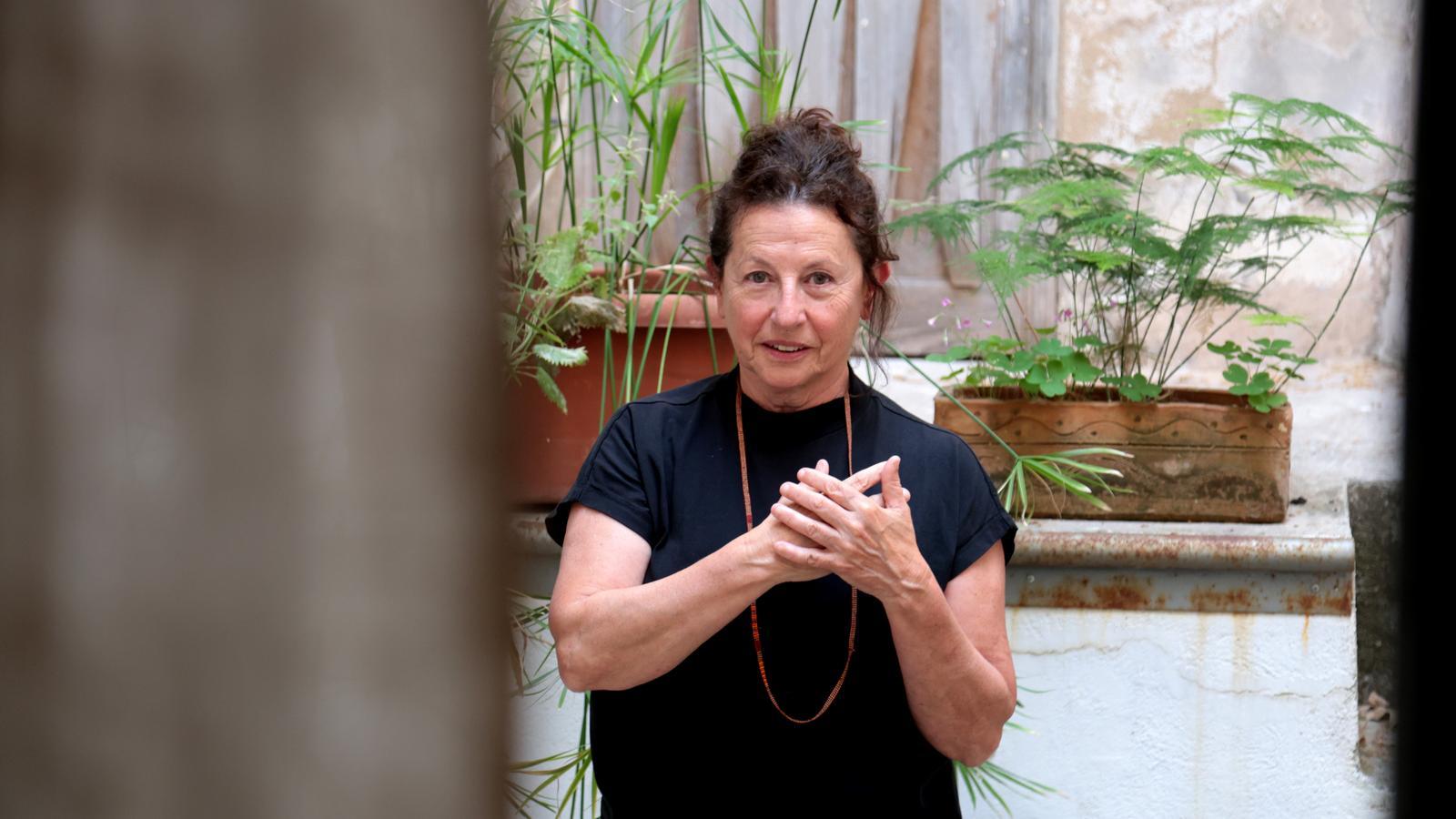

-
CAT -
CAST -
GER
PalmaThe Mariantònia Oliver Company has just received the Toni Catany ARA Balears Culture award, but the person it is named after has been paving the way through dance for over three decades, in the Balearics and abroad. Mariantònia Oliver, an essential choreographer and dancer, has turned the body into a language and dance into a tool for thought and social transformation.
What did you think when you heard you would receive an award from ARABalears in Toni Catany's name?
— I am very much of ARABalears. And the name Toni Catany already excites me in itself. I greatly admire the work that has been done since he left, which shows the generosity he had even without him being able to realize it. The Toni Catany Foundation, his legacy, is a space that breathes.
Does this award come at a special moment in your career? How would you define it?
— It comes at a time to put order, to reflect on where I've been, with whom I've shared my path, to realize who we are and to know what I can offer. I have never been an extraordinary dancer, but I vitally need to dance. I am a creator, an inventor, I create possibilities. I understand that creation is not production and that, moreover, it is interesting at a given moment to stop putting on shows. You know how to do them, but you don't always have something to say, and that is very respectful.
You must be plotting something now.
— I am working on the archive of the Mariantònia Oliver Company, which is a way to enter the past and see what future lies in this past. Furthermore, I am mapping the dance of the Balearic Islands, a job that also interests me to realize that there is very little dance programming here. The excuse of lack of audience is always given, but it is not true. Dance has an audience. But neither creation nor production is stimulated. There is also no Balearic Islands brand and, right now, external promotion does not exist. Besides, where do you go without a brand?

Awards tend to review the past. Do you still think mostly about the future?
— Now I want to be able to stop fighting to take on the burden. Creators are forced to be managers, and that cannot work. I want to get to know the forests, to dialogue through images, to start making short documentaries, to know what creators do, what people do, to observe what structures are being created. I continue to have a lot of curiosity about artistic creation. Everything has been built from our artistic anxiety.
When you founded the Mariantònia Oliver Company, did you imagine it would become a benchmark for contemporary dance in the Balearic Islands?
— We started in the 80s, so we were among the first to launch contemporary dance. We are historical figures, in the early 80s everything was to be done; in the 80s many things began. The best, however, is that we are still alive and I am still working.
What has changed most in your way of understanding dance in these four decades? The body, your gaze, or society?
— What has changed the most is diversity, the many ways of doing things. And also tolerance with the diverse ways of doing and respect for artistic contribution.
The Mariantònia Oliver Company has promoted dance projects with the elderly, with young people at risk of social exclusion, with people with disabilities. When did you discover that dance can also be a tool for social transformation?
— When I arrived in Mallorca. I thought it was vital to extend dance to everyone, restricting it made no sense. First I proposed doing dance at school. They told me to prepare a class, but I didn't think a sporadic lesson would have much effect. I ended up doing a lot of work within the schools. In any case, making people who never thought they would dance dance is very important. Doing politics is creating opportunities from listening. In fact, for me, dancing is doing politics; living is doing politics.
Are there still prejudices about who can dance and who cannot?
— Although we have removed many, there will always be some. Consider that we are talking about the body, and the body has always been observed. In any case, it depends on each space and each dance format. Each one must make their own place. But I believe that when we develop a respect for art, it means that we have managed to have a diverse perspective and can put each content in its place.
Do you think bodies are more liberated or more conditioned than 30 years ago?
— Both things. They are more liberated because there is more respect for diversity, but more conditioned by the digital dictatorship.
Can an international career be made from Mallorca or does it still imply swimming against the current?
— I have been able to do a lot of work in Mallorca. Also from Maria de la Salut. The EiMa creation center, in Maria, is already ten years old and has an important background. We also hold the EiMa Festival in Maria. The value of culture does not have to be in a big capital city, it is where it happens.
What structural deficits do you think the cultural sector in the Balearic Islands suffers from?
— Here, institutionally, there is a relationship with the product, but very little with the artist. I ask myself what commitment our territory has to its own artists. In fact, when I said there is no 'Illes Balears' brand, I would say there isn't one because we don't value our artists. If we valued them, we would better understand what infrastructure is missing.
What does the way a society cares for or neglects culture tell us?
— It is significant that now there is a lot of spectacle that is like a marketing operation. A shop window without criticism. There are openings and more openings of visual arts. Palma has an infinitesimal budget to program performing arts, with the amount of money they have spent on the candidacy for cultural capital.
Is dance also a way of thinking?
— It is clear that it is a way of thinking and committing oneself.
