Fabrizio Plessi, pioneer of video art who linked 30 years of his work to Mallorca, dies
The artist, who died at 86, established his residence in Santanyí and made the island one of the main starting points of his artistic career
-
CAT -
CAST -
DE
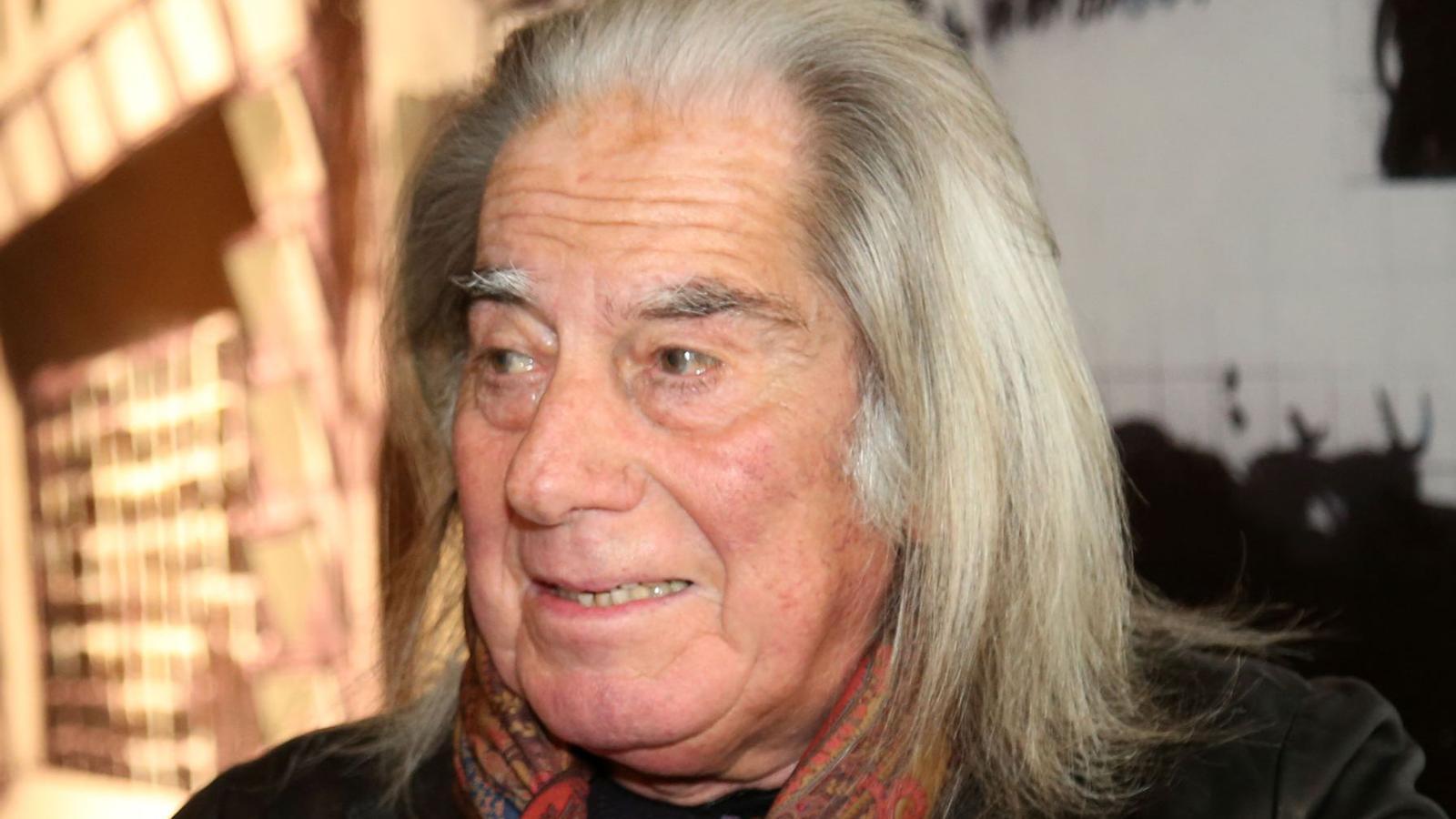
PalmaFabrizio Plessi, one of the great pioneers of video installations, has died at 86. The Italian artist, born in Reggio Emilia on April 3, 1940, died this Sunday in Venice, the city where he trained and which marked a good part of his career. But for three decades he also maintained a particularly close bond with Mallorca, to the point of establishing his residence in Santanyí and developing an important part of his work from the island.
Plessi's relationship with Mallorca began in 1989. That year he presented Videosal at the Palau Solleric in Palma, an exhibition that appears in the official chronology of his career. The experience with the island did not, however, end with that first exhibition. In the following years he returned recurrently, and the southeast of Mallorca became one of his places of residence and creation.
In 2019, Es Baluard made this relationship the focus of an exhibition, Fabrizio Plessi. 30 years in Mallorca. The museum then described Plessi as one of the pioneering creators of video installations and recalled that he had been linked to Mallorca for three decades. The exhibition reviewed the productions he had created from the island, presented as a place of projection and inspiration for his work.
Santanyí as a place of creation
The relationship with Santanyí was especially intense. At the exhibition in Es Baluard, one of the central elements was a book reviewing the 30 years Plessi had lived in the municipality. IB3 explained at the time that in Santanyí the artist had created 500 international exhibitions.
His house and studio, known as la Pedra, were part of this universe. In an interview published in 2006, Plessi described this space as a "great living sculpture" and explained that he lived there several months a year and prepared exhibitions there. He also spoke about the nature of Mallorca and its light and silence.
That connection with the landscape was not just personal. The relationship between nature and technology was one of the axes of his work. Plessi worked for decades with water, fire, stone, and other materials associated with nature; he combined them with screens, light, video, and other electronic devices. His language eventually placed video installations in a territory halfway between sculpture, architecture, and moving images.
From Solleric to Es Baluard
The first exhibition at Solleric opened a long relationship with Mallorca's cultural institutions. In 1991, for example, he presented Plessi in Mallorca at the Sa Nostra Cultural Centre in Palma.
Es Baluard hosted various initiatives related to the artist, leading up to the 2019 exhibition, which specifically focused on his connection with Mallorca. That exhibition did not aim to simply recover a trajectory, but rather to show how the island had functioned as a starting point for his artistic production.
The relationship with Santanyí even led to the creation of its own institutional project. The municipality promoted the creation of an audiovisual arts interpretation centre dedicated to Plessi at L'Abeurador. The project was intended to highlight his figure and his relationship with Mallorca, and Es Baluard was to participate in the scientific and curatorial fields.
A pioneer of video installations
Plessi began to focus his artistic research on water in the late 60s, when he experimented with videotape and performances and gradually incorporated electronic technology into his language. In 1986, he represented Italy at the Venice Biennale with Bronx, one of the works that consolidated his international recognition.
His career led him to institutions such as the Centre Pompidou in Paris and the Guggenheim in New York, as well as numerous international biennales and exhibitions. His work evolved at the same pace as the technologies he worked with: monitors, video, and later, LED screens and digital light became part of large-format installations.
But Mallorca held a unique place in this trajectory. It was not just one of the many international stages where Plessi presented his work. For 30 years, Santanyí was also the place from which he worked, prepared exhibitions, and continued to develop an artistic language that had turned technology into creative material.
The death of Fabrizio Plessi at 86 years old thus concludes an international career, but also leaves in Mallorca the legacy of an artist who, for three decades, made the island one of his main creative centers.
