The 3,500-year-old secret that Mallorca has just unearthed
The excavations at the necropolis of Son Sunyer have recovered human bones and prehistoric ceramics that will help to know better the funerary practices of the communities that inhabited the island
-
CAT -
CAST -
DE
PalmaA team from the Spanish National Research Council (CSIC) has documented human remains and archaeological materials from about 3,500 years ago at the Son Sunyer necropolis, in S'Aranjassa (Palma). The discovery will allow for a deeper understanding of the funeral rituals of the prehistoric communities of Mallorca.
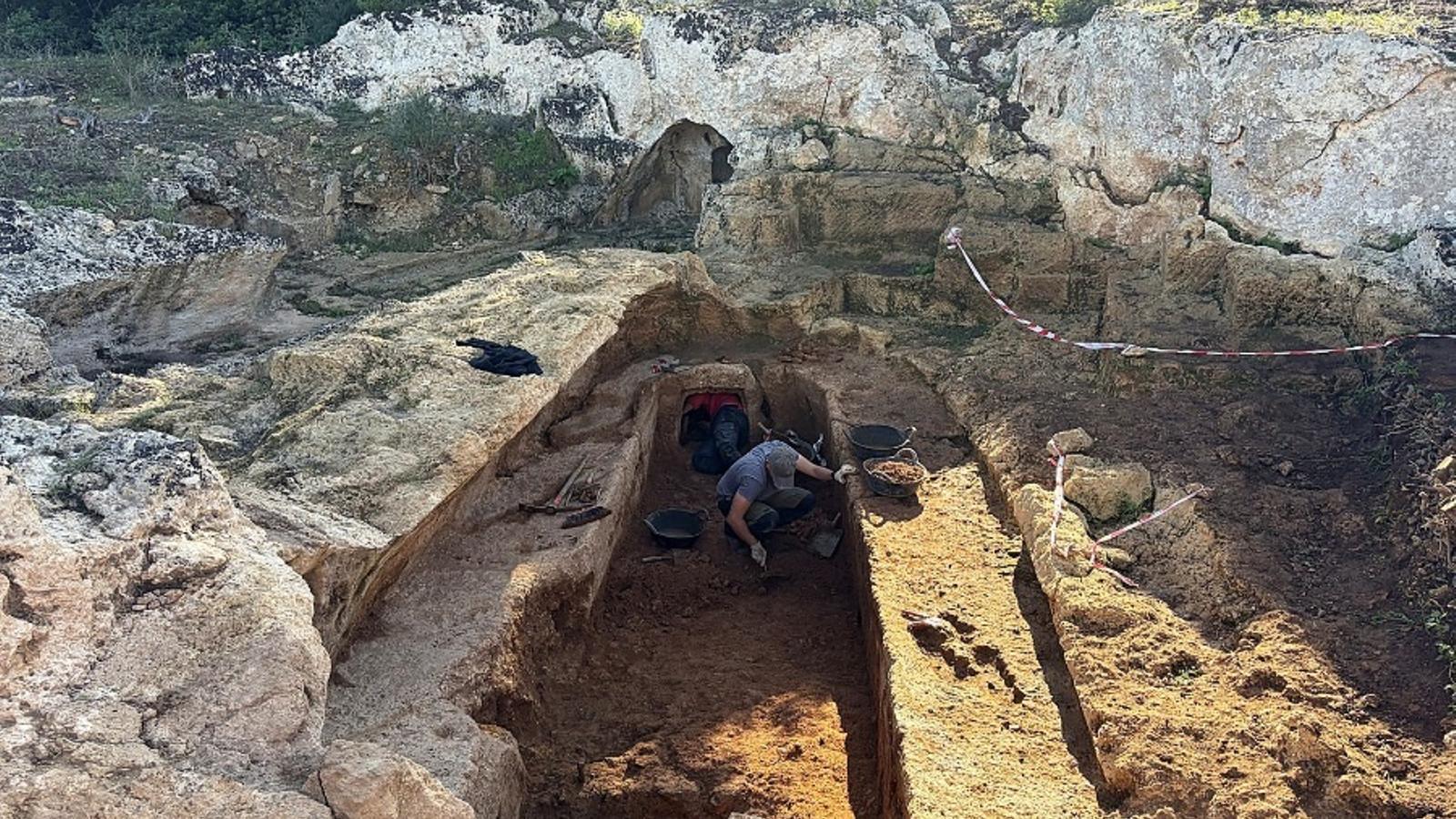
The excavations this October have focused on the SSU9 hypogeum, a funerary cave artificially excavated into the rock and discovered in 2024. Among the recovered remains are human bones, ceramic fragments, and evidence of infant burials.
The bones appear scattered and disarticulated, a fact that could indicate that the remains of the deceased were moved inside the cave to make room for new burials. The researchers suggest that some areas could have functioned as ossuaries, where the remains of previously buried people were kept.
The remains will allow for new analyses, such as carbon-14 dating and anthropological studies, to specify the age of the burials and obtain information about the age, diseases, diet, and genetic characteristics of the buried individuals.
The Son Sunyer necropolis is made up of nine hypogea used as funerary spaces during the Bronze Age. The structures present different configurations, with chambers, corridors, stone benches, and niches. The researchers have also identified a niche located under one of the benches, an unusual arrangement in other known funerary constructions in Mallorca.
Throughout the centuries, the necropolis had other uses that modified its original structure. Archaeologists have found materials from the Talayotic and medieval periods, in addition to indications that the site was exploited as a sandstone quarry during the 16th and 17th centuries. These transformations have made the study of the prehistoric burials difficult, which gives special value to the remains recovered in the current excavations.
