The women that James I used and left
We discover the not very exemplary private life of the most mythologized monarch, when 750 years of his death are completed
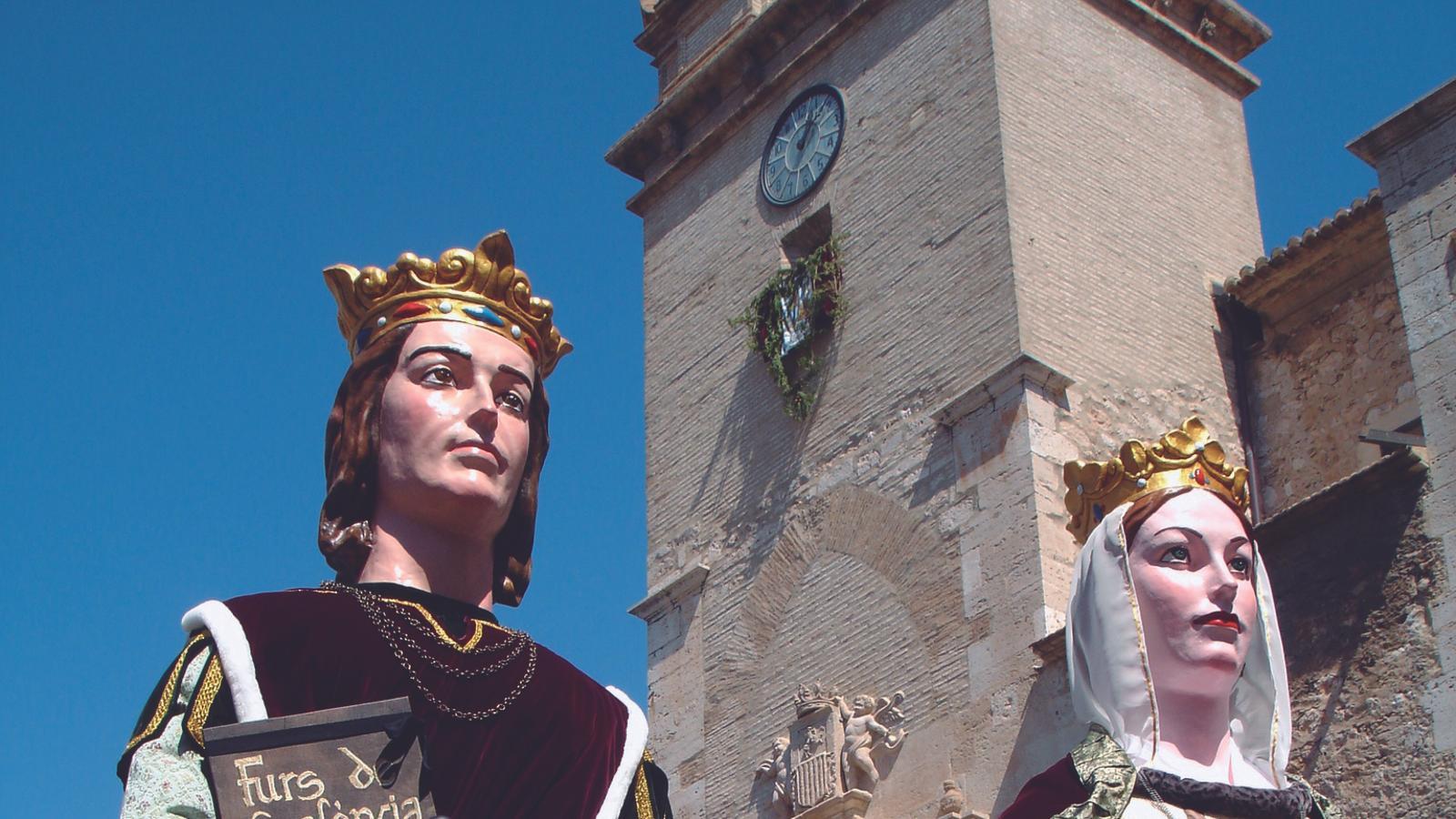

PalmaNo other monarch has been so mythologized, idealized, and glorified as James I the Conqueror –well, perhaps the emeritus king, in his good times–: knight king, warrior, valiant, sensible, wise, generous, good Christian... Of course, of all this, half of half, and more in reference to women, whom he used and abandoned when they no longer served his interests. We recall the private life of James I as the 750th anniversary of his death, in 1276, is being commemorated – on July 27th.
James I's good reputation was cultivated – a common practice at the time – by paid chroniclers. The monarch himself also did so in the Book of Deeds, an autobiography he wrote – or dictated – and where he presented himself with all the good image he wanted to project, hiding some facts and falsifying others. It is symptomatic that in this book women shine by their absence. He does record his first wedding, with Eleanor of Castile, as an episode of his youth. But not his second, with Yolanda of Hungary, the supposed companion of conquests. Nor the death of either of them.
There are indeed two women for whom James I felt veneration. One is the Virgin Mary, who supposedly appeared to him when he was only ten years old. The other is his mother, Maria de Montpellier, although, as Antoni J. Quintana and Rosa M. Calafat point out, she causes him "a certain distrust": not in vain, she had to devise a stratagem to get into bed with her husband, King Peter, who couldn't stand her, and thus conceive him. He must have considered her dangerously intelligent for a woman.
The wedding with Eleanor took place in 1221. In fact, he was still so young that it took some time for the marriage to be consummated. These were difficult times for the adolescent monarch, to the point that the young couple fell prisoner. He wanted them to escape with two ropes through a window, but she refused: a queen does not rappel down as if it were Star Wars, of course not.
The witches of Mallorca
Whether it was because of that episode or because Eleanor never quite suited him, the fact is that only four years later, they were no longer living together. James asked Pope Gregory IX for an annulment of the marriage, alleging that they were close relatives. Which, obviously, they already knew perfectly well when they married. The 'knight king' did not waste time; shortly after the wedding, a first mistress appeared: Elo Álvarez, a lady of the court.
The annulment occurred in 1229, the same year as the Mallorca campaign. In the sixteen Mallorcan tales featuring King James, there are practically no women. Only the mother, fleetingly, in one from when he was “going to school”. And some witches, of course very wicked, whose presence the new Christian settlers warned of, and whom the monarch managed to defeat with the sacred help of a couple of priests and a schoolboy: “Of those witches, no dust was seen nor news of them was had”.
The repudiated Eleanor retired to a convent, to her home: Las Huelgas, in Burgos, where she passed away in 1244. They had only had one son, Alfonso, who was the heir, but he died before his father. Suddenly, the king considered a new marriage: with Sancha, heiress of León. This would have meant that León and Aragon would be under the dominion of the same sovereign, leaving Castile sandwiched, like the ham in a sandwich. But the Leonese king died and his son, Ferdinand, inherited it, not Sancha.
Now the frustrated Leonese heiress no longer interested James I. Pope Gregory proposed two possible brides: the daughter of the Duke of Austria and the daughter of the King of Hungary. And James chose the second, for a very simple reason: she was the daughter of a king. That is, for status. He didn't even know what he was naming.
Between the first and second weddings, it seems that James I pledged to marry another woman: Teresa Gil de Vidaure. Maria del Carme Roca states that the king would have sworn it to her, as she made it a condition for going to bed with him, and he called a knight as a witness. When Teresa wanted to make it effective, it turned out that the knight – oh, coincidence – had died. If a written contract existed, it disappeared.
Violant is supposed to have been the faithful companion, a good advisor, who comforted the man in moments of discouragement and who gave him five daughters and four sons. Besides the legitimate children, James I had a handful of descendants with his mistresses, to whom he systematically assigned the names of his father, Peter, and his own. For some of the natural children, the mother is unknown, which is a symptom of the value given to women.

The truth, however, is that James I used Violant according to his interests: he had her attend the campaign of Valencia with a daughter of a few months and pregnant again, as a kind of encouragement for the soldiers: that was a guarantee for them that the warrior king would not give up the fight. When a wife appears in the Llibre dels fets it is because at that moment she is by his side: a whole exercise in egocentrism.
The Pope's reprimand to the Conqueror
On the other hand, his love for his wife, which was probably genuine, was no obstacle for the monarch to have relationships with other women. With two, more specifically: Blanca d’Antillón and Berenguela Ferrandis. Nor did he refrain from scolding his beloved wife: he did so when the nobles, terrified, dared not inform the king that the Muslims had conquered a few castles from him, but they did tell her. James I became angry because she had not told him. It was clear that marriage was not, by any means, the ideal civil status for the mythical monarch, who stated that governing tasks were preferable, even when at war, to domestic ones, which "embitter food and diminish sleep".
Violant was still alive when that famous story of the marriage promise made to Teresa Gil reappeared. The king would have revealed it, when confessing, to the bishop of Girona, and he would have brought it to the attention of the Holy See. That was an unmitigated disaster: if he was already married, the marriage to Violant was null and void, and the children illegitimate. That so sensible and wise king flew into a rage and ordered the bishop's tongue to be cut out, for being a blabbermouth. This cost him excommunication – a terrible penalty for a Christian sovereign – and he had to do penance until he was forgiven.
Violant died in 1251, so James I no longer had to hide his love affairs: he had another one, with Guillema de Cabrera. It was also around that time that James I resumed his relationship with Teresa Gil. They had two sons, whom, in the height of originality, they named James and Peter.
Of course, James I also got tired of her, so he initiated another separation process. He had found another woman he liked better: Berenguela Alfonso, from the family of the kings of Castile. That James and Teresa were married or that that marriage promise was perfectly valid is demonstrated by the fact that the monarch looked for an excuse: that she had contracted leprosy. As if that were not enough, he added that he had had relations with a relative of hers, in the purest Groucho Marx style: this is my argument, if you don't like it, I have others.
What perhaps the most Christian monarch did not expect was the phenomenal scolding that Pope Clement IV gave him, who reproached him for his "shamelessness" in making that "abominable and monstrous" request for nullity. If the king could not cohabit with Teresa due to her illness, he already knew what he had to do: remain chaste. And abstain from those "illicit relations" with Berenguela.
However, it was Teresa herself who, like Eleanor before, decided to get out of the way and enter a convent, that of Gratia Dei, in Zaidia (Valencia), just as Eleanor had done a few years before. She died around 1286. James survived, who passed away, in the same city, on July 27, 1276, 750 years ago.
Remorse for his sins took effect on the king, who, already over sixty years old, embarked on a –failed– crusade project, to the despair of his sons. Of course, since obligation and devotion are not incompatible, he brought Berenguela with him, whom the chronicler Bernat Desclot refers to as his wife, although Desclot – it must be said – was not very trustworthy.
Berenguela passed away in 1272, and James I still had one last lover: Sibila de Saga. She was the daughter-in-law of another past lover, Guillema de Cabrera. It seems that kinship, for extramarital relationships, did not count as it did for legitimate ones. It seems that not having been precisely an example, as far as behavior with half of the human race is concerned, is no obstacle to becoming a hero revered even today.
In a Book of Deeds with such a scarce female presence, curiously, one woman appears a lot: Countess Aurembiaix of Urgell. James I had not yet managed to annul his first marriage when, in 1228, that lady approached him asking for help to recover her county, which had been taken from her by a relative. The request was granted and she recovered it with the monarch's help.Both had been betrothed when they were still children – Urgell was a territory that the kings of Aragon wanted to incorporate into their crown – although that engagement had not materialized. This time they established a very strange pact, of concubinage: she ceded Urgell to him and he, in return, could not leave her, unless it was for a woman of superior rank.According to Maria Carme Roca, if the countess occupies so many pages it is because that enterprise – recovering Urgell for its legitimate holder – allowed the monarch to show off: young and valiant king helps helpless maiden and defeats her enemies. Honey. After all, what interested James I was not the countess, however well-endowed she was, which she seems to have been, but her county. Even when Aurembiaix died and her widower, Peter of Portugal, was left with Urgell, the king exchanged it, like trading cards, for a peripheral and newly conquered territory: Mallorca.
Information elaborated from texts by Maria Carme Roca, Eusèbia Rayó Ferrer, Stefano Maria Cingolani, Agnès i Robert Vinas, Antoni J. Quintana i Rosa M. Calafat i J. Ernest Martínez Ferrando.
