Pollença and the OSIB

-
CAT -
CAST -
GER
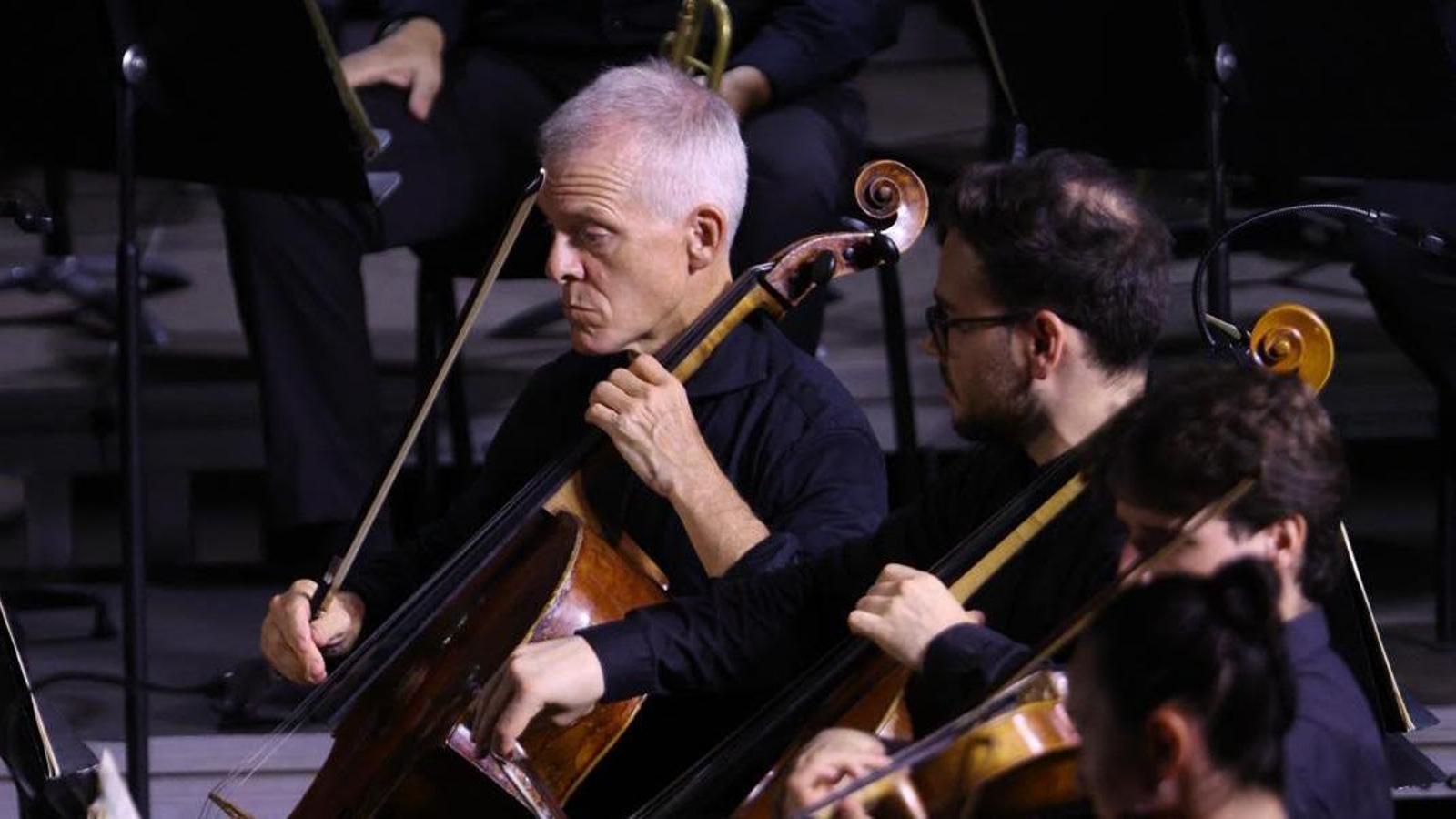
PalmaContinue the tradition. The Pollença Festival, more orchestral than ever this year, has once again incorporated the presence of the Balearic Islands Symphony Orchestra into its programming. It is the golden culmination of a always dense season, like a well-deserved gift of prestige. The occasion featured the direction of Patrick Hahn and the cellist Alban Gerhardt as soloist performing the "Cello Concerto in E minor Op. 85 by Edward Elgar. A mature work, his last orchestral piece, like a testament, that of an old and ill man who is figuring out the end of his existence and wants to explain his state with this intense and painful cry. Not a hint of enthusiasm from the initial lament of the solo instrument, which does nothing but foreshadow and confirm all that will follow, when the violas accompany him on this first, somber, and deep walk. A moderato adagio. Alban Gerhardt, a great protagonist, managed to draw out the immense melodic richness the composition holds from his instrument, with a very introspective reading that, in some way, brought fidelity to the spirit of the original. Patrick Hahn, the young Austrian conductor, on the one hand, and the Symphony, on the other, offered the essential balance and circumspection to achieve the ideal equilibrium of a score that concentrates beauty and sadness in equal measure. With a Prelude by Johann Sebastian Bach, Alban Gerhardt acted as if he had finished his performance.It wasn't like that. A detail that honors him, and it is not small. Significant. Alban Gerhardt joined the orchestra to perform the piece that crowned the function, the luminous Scheherazade op. 35 by Nikolai Rimsky-Korsakov, based on some of the tales of The Arabian Nights, which the protagonist who gives title to the composition recounted to Sultan Shahriar to appease his anger. But that is another story. The composition is a whole display of delicacies with which some of the instruments show off their best virtues. Thus, Spahiu, Bleuse, Miralles, Arnal and Fortea —violin, cello, flute and oboe— displayed many of their skills in a small great wonder that, being so colorful, never ceases to shine, just as it happened in this second concert of the Festival de Pollença. A second concert that began with a Prelude of Tristan and Isolde, which, in a way, suffered from the ailment of references, but which in any case served as a good prologue to the piece by the British. A German, a British, and a Russian... offered us another good concert of the level and prestige of the event that concerns us and will concern us all month of August.
