The Mallorcan woman who recovers the writers sidelined by prejudices and sexism
Maria Martorell promotes Veus Pròpies, a publishing house that recovers in Catalan works by female writers of the 19th and 20th centuries that were left out of the canon

-
CAT -
CAST -
GER
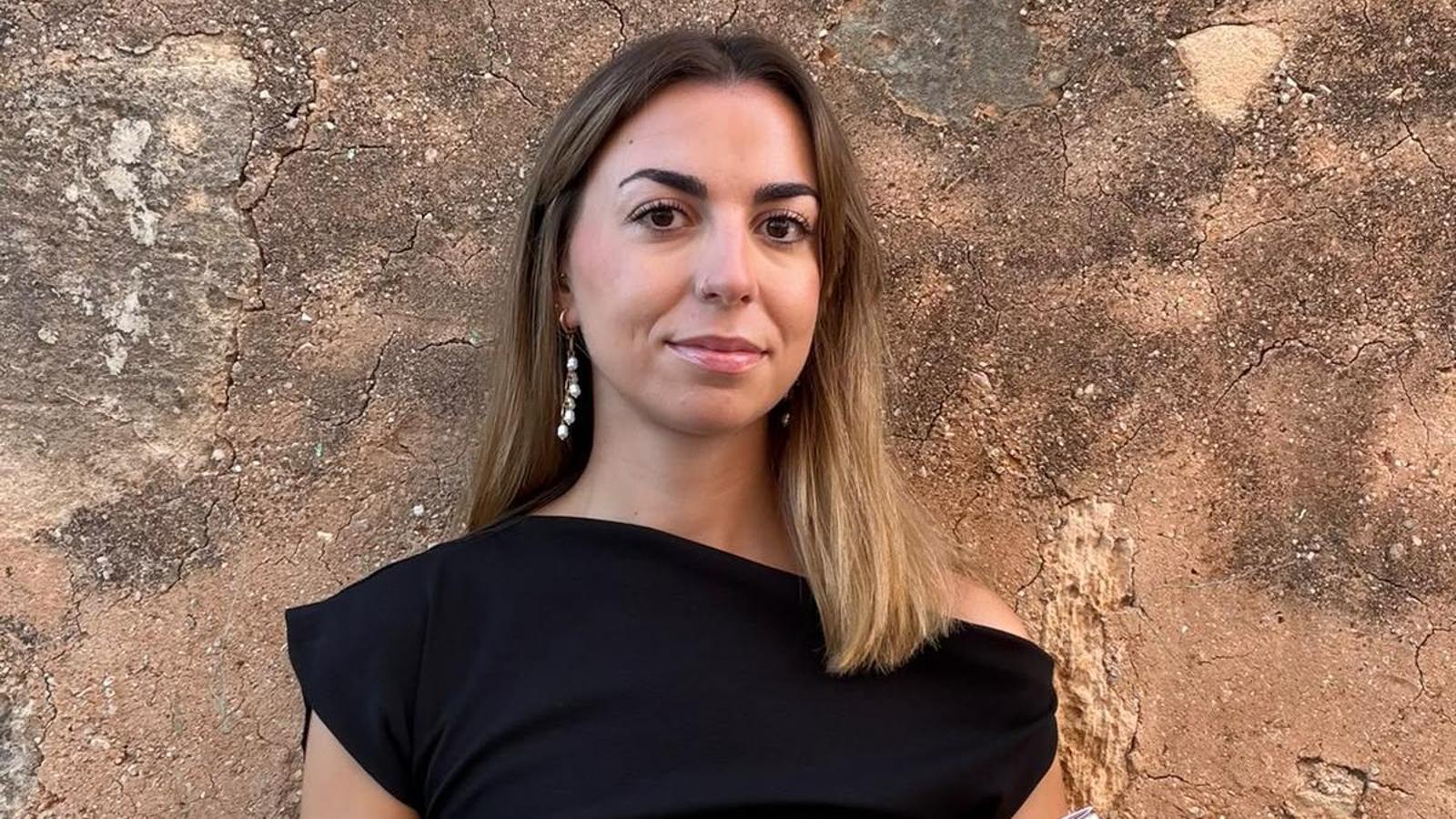
PalmaMaria Martorell thought the problem would be running out of writers. When she imagined Veus Pròpies, a publishing house dedicated to recovering in Catalan authors from the 19th and 20th centuries who had been left on the margins of the canon, she calculated that she might have material for three or four years. Now she knows she was wrong. “There is material for many years,” she says. The more she searches, the more names appear.
The Majorcan, born in Palma in 1999, has turned that question into a publishing house together with Bernat Lleixà. The goal is not only to put hard-to-find books back into circulation, but to ask a more uncomfortable question: why did so many authors disappear from literary history? “The amount of literature we have lost due to the canon, prejudices, and sexism is brutal,” she states.
“Women have been ignored, silenced, and considered second-tier in the world of literature for centuries, and we have lost great writers because of prejudices,” argues Martorell. This is one of the ideas that Veus Pròpies upholds: to recover books, but also to review the mechanisms that decided which voices deserved to endure.
“One of the goals is for these authors to be accessible, for everyone to be able to read them, but the other is to rethink why they were forgotten,” she explains. The question began to haunt her while she was studying. “When they told us at university that there were no women or that they were not worth it, I thought: how can it be that there are none?”.
The research, which began during her Master's in Publishing, has confirmed that intuition for her. “There are so many unknown women who did very good things and who simply did not enter the canon because it was decided that they were not important,” she comments. That initial fear of running out of authors has disappeared: now the problem is deciding which ones to recover first.
An idea that arose at university
Martorell studied Political Science and then Humanities at Pompeu Fabra University, before completing a master's degree in Publishing. The final project already contained the embryo of Veus Pròpies: a publishing house dedicated to publishing in Catalan authors from the 19th and 20th centuries who had been left out of the usual reading circuits.
During that process, she met Bernat Lleixà, who would end up becoming her partner. With a third person who later abandoned the project, they decided to turn that theoretical proposal into a real publishing house.
The first obstacle was finding the resources. “The main difficulty was the financing. We had to take out a loan to be able to start,” explains Martorell. Veus Pròpies is still a small publishing house and its promoters cannot dedicate themselves to it full-time: she is a secondary school teacher and Lleixà works as a consultant. “We don’t live off the publishing house,” she summarizes.
Balancing both jobs has forced them to divide up the responsibilities. Martorell is mainly in charge of manuscripts, corrections, translators, or layout, while Lleixà takes on a good part of the financial and bureaucratic issues. But in such a small structure, the boundaries do not last long. “Everyone does a bit of everything. One day you are making a financial plan and the next you are making an Instagram post”.

Revisiting the canon
Veus Pròpies [Own Voices] is born, in large part, from an absence: that of all those women who hardly appear when the history of literature is studied at school, high school, or university. Martorell does not believe this absence is accidental. “Many of these authors were surrounded by prejudices. It was said that they wrote women's literature, that it was second-rate literature,” she explains. A label that, as she argues, conditioned the way they were read and the possibility that their works would reach subsequent generations.
“We must put these authors back into the canon and remove the prejudices that weigh upon them,” she says. This perspective also points to the academy. Martorell believes that universities should review which authors are studied. “Not because one canon must be substituted for another, but so that the canon itself may be questioned,” she argues.
For the editor, part of the problem is also material. “There are authors who are very good and who have not been studied, have not been read, have not been known simply because they could not be accessed.” This is where editorial work comes in: reprinting, translating, or making available to readers texts that had disappeared from bookstores.
How is it decided which voices to recover?
The work of Veus Pròpies begins long before a book reaches a bookstore. First, one must find the authors and the works, read them, and assess whether they still have something to say to the current reader.
“Not everything we recover we publish. There are works that no longer hold as much interest for the current reader,” explains Martorell. The project does not aim to build an indiscriminate archive of forgotten authors, but a catalog with its own criteria. “We don’t want to publish them just because they are women. We want to publish them because they have something to say.”
One of the first bets has been Cròniques d’un mig estiu, by Maria Antònia Oliver. In just over two weeks, the stock has sold out and the publisher is already expecting a new printing. Another of the first titles is Algú en la distància, by British author Dorothy Whipple, which is also approaching a reprint.
The response from readers confirms one of the project's intuitions: recovering works from the past does not mean turning them into museum pieces, but rather placing them back before readers and checking if they still work.
There is another decision that Martorell considers inseparable from Veus Pròpies: publishing everything in Catalan. “We publish in Catalan because it is also a way to defend the language, our culture, and reading in Catalan,” she explains. The desire is for the books to circulate both in the Balearic Islands as well as in Catalonia and the Valencian Country.
For Martorell, recovering these authors is not just looking back either. “The world has changed, but not that much. Sexism continues to exist, as well as the prejudices that determine what we consider important, what we study, and what we remember,” she states.
Martorell has left behind that initial fear of running out of writers. Now she knows the problem is just the opposite. “There is material for many years.” Behind every book appears another name, another work, and another author who for decades had been out of circulation. Veus Pròpies has just begun to open this door.
