The Government lets the Muro Museum reform die with investments closed four years ago
The Ministry of Tourism, Sports and Culture still does not have the basic project for an infrastructure marked by institutional irresponsibility and the entanglement of responsibilities.

-
CAT -
DE
PalmIt was February 18, 2022, when the then Ministry of European Funds, University and Culture, headed by Miquel Company, announced an investment of more than 8 million euros by the Ministry of Culture and Sport in the reforms of different state-owned museums and cultural institutions in the Balearic Islands. Among them was the “integral architectural and museographic rehabilitation” of the Ethnological Museum of Muro, which for years had suffered from significant deficiencies that hindered its operation. “At this time, the drafting of the architectural project has already been put out to tender, with works scheduled to begin in 2023”, it was stated in the press release published on the Govern's website on that same day in 2022, that is, more than four years ago.
As of today, the works have not begun, nor do the institutions clarify when they will start. The Govern is letting the reform of the Muro Museum die, despite the investments announced four years ago, while the building deteriorates.
The management of the works
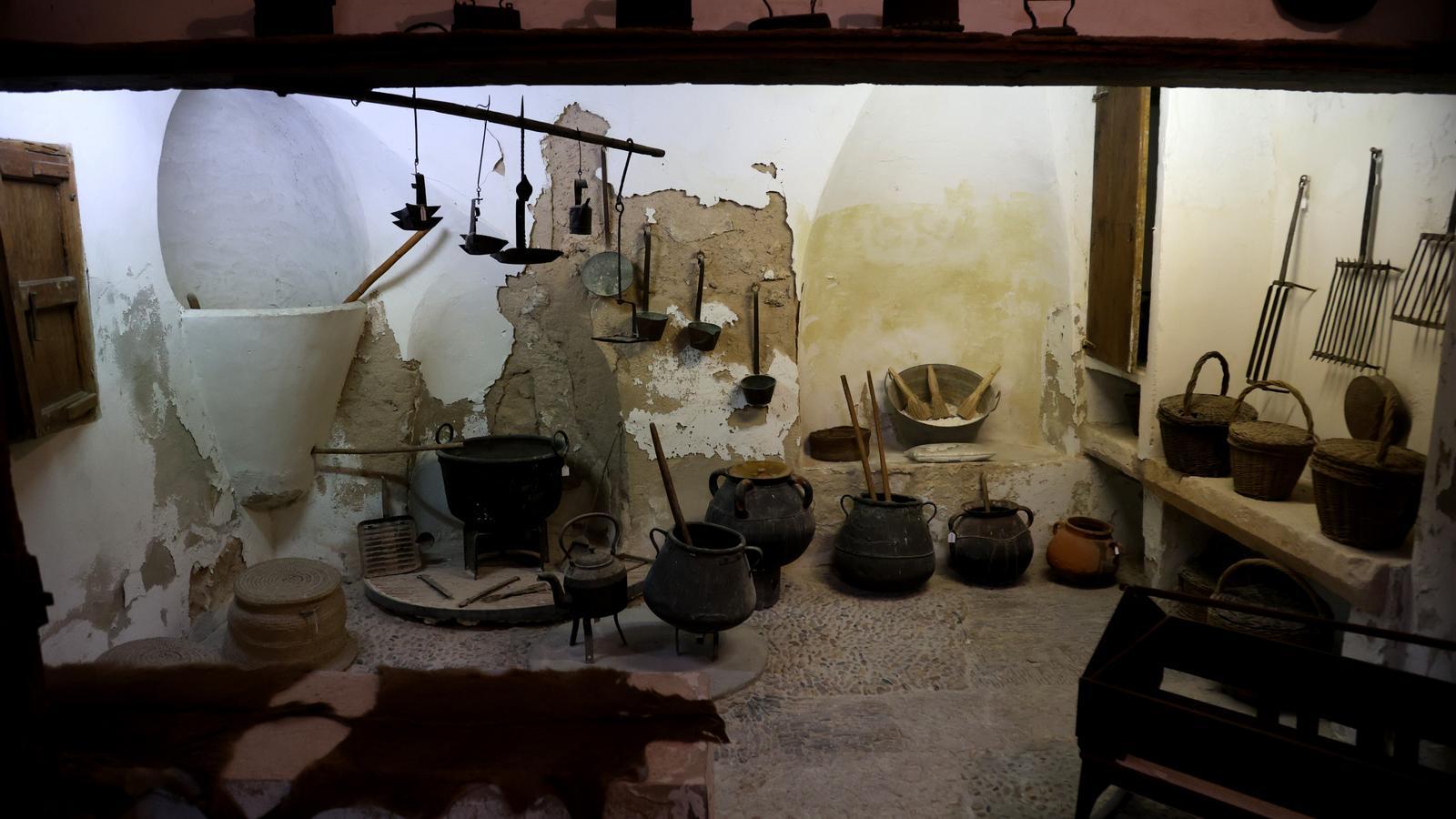
The building that houses the Ethnological Museum of Muro dates back to the year 1670 and has about a thousand square meters of exhibition space. For more than a decade, urgent and profound intervention has been called for from different sectors to adapt it to its functions: the electrical supply is old and deficient, various rooms are closed due to not having the minimum conditions for conservation and visits, and it is a building that does not meet basic accessibility requirements, to name just a few of the reasons that make structural reform essential and urgent.
However, up to four institutions are involved, to varying degrees, in the management of this reform: the Ministry, the Government, the Consell de Mallorca, and the Muro Town Council. Although it was the Government that announced the reform during the previous legislature, the current response from the Ministry of Tourism, Sports and Culture to any request regarding the Muro Ethnological Museum is that "management has been transferred to the Consell de Mallorca, which is responsible for the execution of the works".
However, according to the Law on delegation of powers of the Museum of Mallorca –the Muro Museum is a section of it– published in the BOIB in February 2019, “the investments that are made in the aforementioned buildings and facilities, and that do not involve mere conservation and maintenance, must be programmed by the State administration and by the Administration of the autonomous community of the Balearic Islands (...) on the initiative of either of these administrations or of the Consell insular de Mallorca, and always with prior consultation of the competent bodies of this insular institution”. Even so, sources from the Conselleria insist that the management of the renovation depends on the Consell and that the Government only has powers over personnel. “We have a follow-up meeting every quarter”, share sources from the Conselleria, without offering further details.
Since last November, ARA Balears has tried to obtain information on the status of these works, and on the real situation of the Museum, from the Culture area of the Consell de Mallorca, led by the insular vice-president Antònia Roca. The request has been made up to ten times, and has either received no response or has been postponed with the excuse of being “a decision away from Heritage”. In fact, the different people consulted on this matter agree that all information passes through the direction of the Museum of Mallorca, which, although it has agreed to attend to ARA Balears, depended on the authorization of the Consell de Mallorca. Three months later, it has still not arrived.

“The situation is complicated”
The current state of the museum, which was recognized as the best European museum in 1981, has been valued by the mayor of Muro, Miquel Porquer. According to him, the City Council is currently awaiting the basic project for the works. A project that, he says, they have been waiting to receive for more than six months and which depends on the Ministry, as Porquer assures. “The preliminary studies have been done, for the humidity issues and for the archaeological surveys that had to be carried out and which delayed the entire process of the works”, he explains. “But now we are waiting to have the basic project that will have to be authorized by both the Consell and the City Council. We have wanted to avoid the same thing happening as with the Museum of Mallorca, where many rooms have had to be closed after the renovation because problems have arisen”, Porquer continues, “and that is why we already have preliminary studies and actions carried out. However, the next steps depend on the State, because no matter how much the manager is the Consell de Mallorca, the owner, who provides the money and is responsible for everything, is the State. When Gabriel Alomar gave the building, he did not give it to the City Council or the Government, he gave it to National Heritage, so everything depends on them”.
In addition to the renovation of the building, the project presented four years ago included the cataloging of the exhibited items, which was intended to redesign the future of the museum. In May 2024, the purchase of the house adjacent to the museum was formalized, with the intention of depositing all the material it contains there while the works last and then converting it into part of the museum. However, the mayor confirms that neither the transfer of the material nor its definitive inventory has been initiated. That said, the museum is open today, Miquel Porquer clarifies. “The situation is complicated and everything is deteriorated, but we committed to keeping it open until the works begin and we will do so. And we will do everything we can to speed them up. When we receive the basic project, we will approve it as soon as possible and we will try to start without further waiting. Because if we have to wait again, it could be a couple more years before we start”.
