Time for monographs
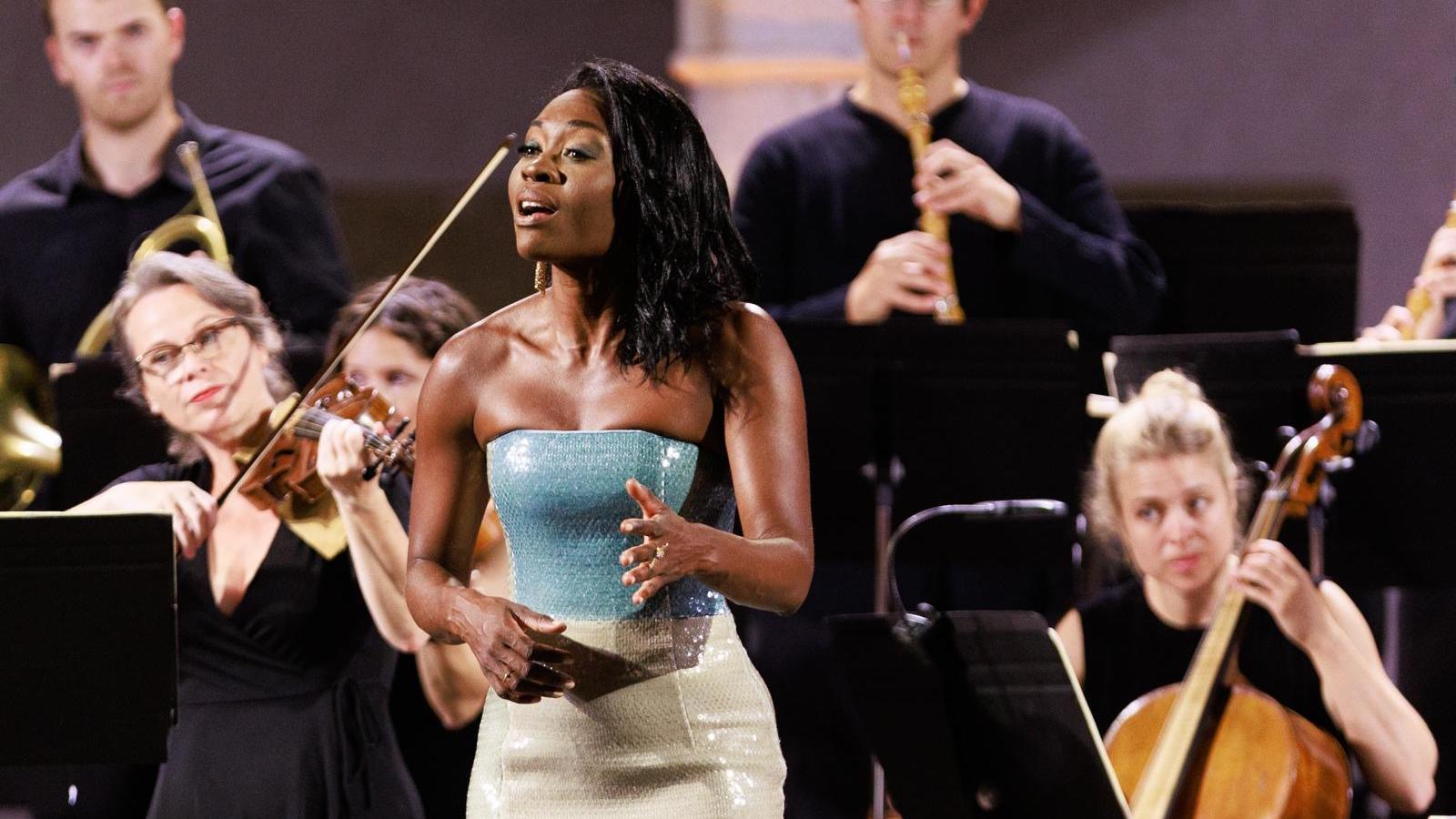
The Freiburger Barockorchester dedicated a monograph to Wolfgang Amadeus Mozart on Saturday as part of the Pollença Festival

-
CAT -
CAST -
DE
PollençaPollença, the festival, is experiencing a time of monographic tributes. It was the case with the Ébène Quartet's dedication to Ludwig van Beethoven. It will be the case with Les Muffati-Brussels Baroque Orchestra's tribute to Johann Sebastian Bach. And it was the case with the Freiburger Barokorchester's performance on Saturday, exclusively featuring pieces by Wolfgang Amadeus Mozart. Three composers who share a common denominator: they are unfathomable. One could dedicate infinite monographic concerts to any of them and they would never cease to be of maximum interest. The one we are concerned with is not an exception, but rather a small, great selection that demonstrates the versatility of someone who made music almost unintentionally. Thus, the chamber orchestra, with twenty-four musicians, conducted by Éva Borhl on violin, began the task with the overture of The gardener's trick, early work, simple, with a lot of rhythm and prioritizing melody, where a gem arises from almost nothing. It was a prelude that in some way became a declaration of principles of what the concert would be, in which, once again, the cloister of Sant Domingo presented an unbeatable appearance, or what is the same, a full house.
Following this succession of light arpeggios and pleasant, austere scales, came a peculiar combination: the interpretation of a selection of movements in which the genius from Salzburg gave full prominence to instruments that are not usually soloists. First, Thomas Meraner performed the Adagio from the Oboe concerto in C major K. 314; Daniela Lieb, the Rondo of the Concerto for flute and orchestra K. 314, and Eyal Streett, the third movement of the Concerto for bassoon and orchestra in B flat major K. 191. A heterogeneous carousel that somehow honored some of the orchestra's components with such festive scores, all in a major key, which is quite indicative, and with the corresponding cadenza to further showcase their skills, even if a little out of context. At the very least, a suggestive prologue.
The versatile musical enjoyment continued with soprano Jeanine de Bique, who made her appearance singing the cheerful motet Rejoice, be glad K. 165, a piece without great difficulty, but many are the skills that this compendium of ornate modulations that the protagonist exhibited with extreme delicacy requires. She was also the one who began the second part of the evening with two arias, less light, more reflective, such as Deh, if you want to please me, of The clemency of Titus, and If the father loses, of Idomeneus. A demonstration of tuning, color, and tessitura. Everything balanced, everything in just the right measure.
The end of the party, so much so that the movements of the Symphony No. 41, in C major K.551 are one Allegro vivace, Andante cantabile, Menuetto-Allegretto and Molto Allegro, which makes clear the character of the very basic compositional materials, even though they are refined with genius and skill to become a structurally exemplary piece, demonstrating the talent and grace of a formation that enthralled the audience.
