Joan Muntaner: “Xanguito hits harder than ever”
Singer of Xanguito
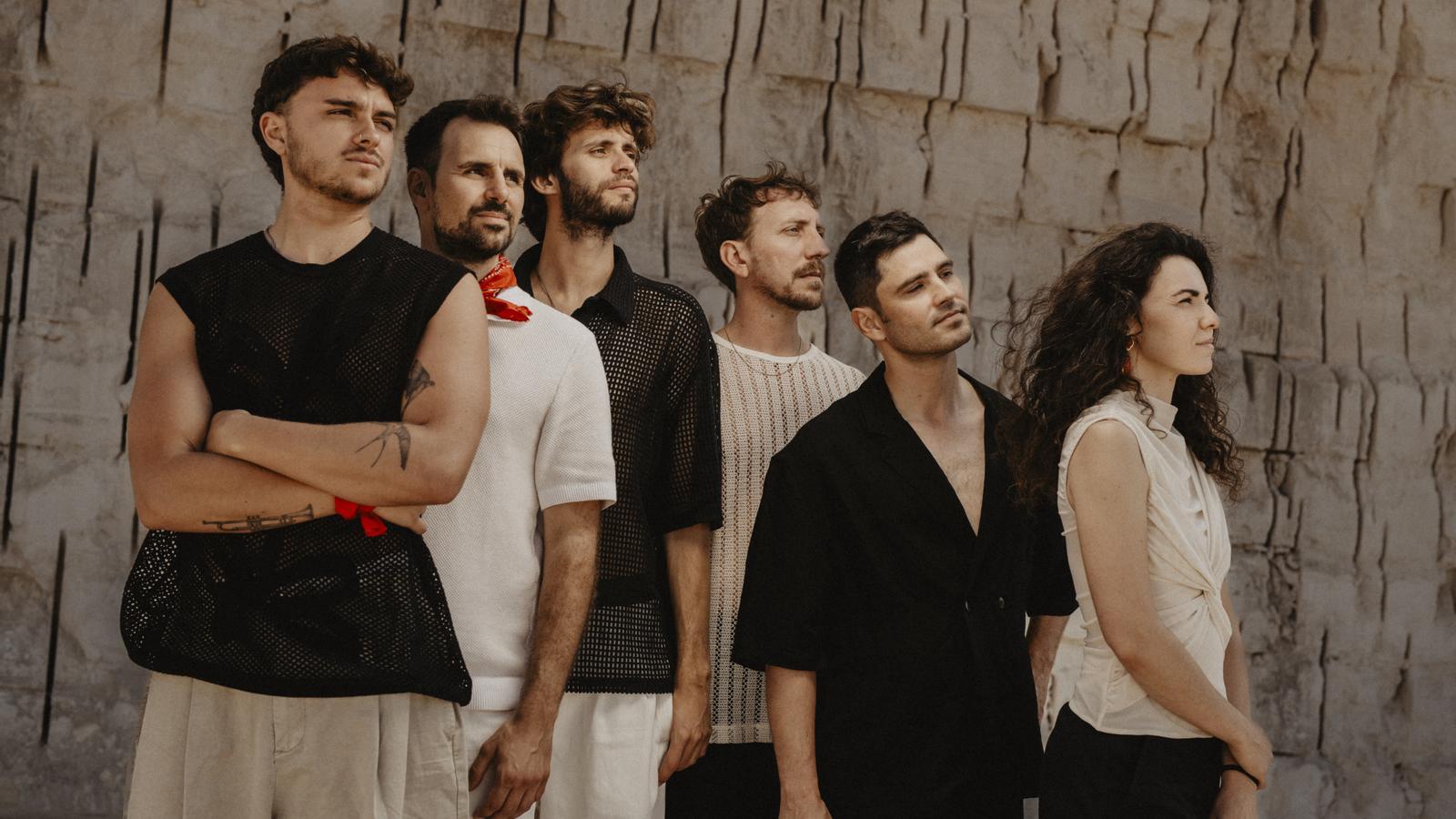

PalmaXanguito has just released Batecs, a new EP of five songs with which the group opens a riskier, more intimate and mature stage in its trajectory. After almost a decade on stage, the Mallorcan band reaffirms its identity with a work that focuses on intensity and attention to every detail.
In this interview, singer Joan Muntaner reviews the evolution of the project from its beginnings to the present day, recalls the moments of crisis that tested him personally and professionally, and reflects on what it means to sing in Catalan today. He also talks about the relationship with the audience, how songs end up becoming collective heritage, and the dreams and challenges that still remain to be fulfilled in the group's future.
Batecs is a very vital and emotional album. What does this moment represent for Xanguito?
— It's a new stage. We've spent two years touring with the third album, Bon Rotllo, and this new EP, Batecs, is like a leap forward. It only has five songs, it's like half an album, but we've dedicated the time of two or three to each song. There are fewer songs, but they are made with more care and also with more risk.
Why this name? What is beating within the group right now?
— We named it Batecs because the band is more alive than ever, it beats more than ever. We have been together for almost nine years and, despite having gone through different formations, now we feel that the band is more connected than ever. Each song is a different beat: there are spiritual ones, sentimental ones, party ones, and ones of human connection. The beat is the first thing you need for something to be considered alive, and that is exactly what we want to convey.

What will people find on this album that they haven't found on previous ones?
— Above all, a renewed sound and new styles we had never touched before, like dance and techno. There is also greater maturity when it comes to writing and constructing songs. The message remains the same, but the way to get there is more elaborate. We wanted to do less, but better.
Would you say it's your most mature album?
— Yes. The letters continue to have that simplicity and naturalness typical of Xanguito, but now each phrase and each word is there for a reason. Everything has more weight within the whole.
Looking back, what remains of that first Xanguito and what has completely changed?
— It continues to be the same group in essence: the same message, the same identity. That is the most important thing. But clearly we have evolved. We started playing at beach bars, in pubs, they even asked us to do covers because they didn't know our songs. Now the stages are different, the lineup has also changed, but the core is the same: trying to positively impact people's lives with our music.
At what point did you feel this stopped being a project between friends and became a reality?
— When we decided to really bet on ourselves. It was risky. During the first few years we did many different formats: me alone, trio, quartet or full band. A moment came when we said: "What if we stopped doing the small formats and only did the big format?". We risked going from 40 gigs a year to only doing five. But it turned out well.
Was it here when everything changed?
— Yes. It coincided with Milions d'estrelles and also with the end of the pandemic. We went from playing in any old way to giving more serious concerts, with technical equipment, rider and conditions that really allowed us to show what Xanguito was.
Have there been moments of crisis or thinking of giving up?
— Yes. Every musical career has it. In my case, 2022 was especially hard. Personally, I was doing very badly: family losses, economic problems, a lot of weight on my shoulders. Even though Xanguito was doing very well, I didn't see myself with the energy to sustain it all.
Did it cross your mind to leave it?
— Yes. There were moments I considered it. But talking with my partner, with friends, and with the group, I understood it was a process. In 2023 I started to recover, I regained strength and also took back the leadership of the group.
What does singing in Catalan mean to you? Is it a natural, cultural, or also a political choice?
— It came out without thinking. It's a totally natural choice. We sing like this because it's our way of speaking, phrasing, and expressing ourselves. It's not something forced.
But over time has it also taken on another dimension?
— Yes. If this helps people to reinforce their identity, even better. For us it has never been a problem to sing in Catalan, on the contrary. We have seen that it awakens things within people and that makes us very satisfied.
Do you feel that making music in Catalan still implies resistance?
— Yes, because there are people who put negative labels on you for the simple fact of singing in Catalan. But we don't care. It's our language and defending it will always be a pride.
Xanguito has created a very loyal community. How is this bond with the public explained?
— Because we are very much ourselves. The songs are made with sincerity and with the intention of positively impacting people's lives.
When does a song stop being yours?
— When people make it their own. When they sing it and live it. This has happened with Milions d'estrelles, Fem voltes per Palma and Viatjar. It reaches a point where they are no longer Xanguito's songs, but the people's.
If you could go back, would you change any important decisions?
— No. Everything is part of learning. I like to resolve conflicts and enjoy the process. Falling and getting up is part of growing as a group. If we had done things differently, maybe we would be another type of band. But this path is what has made us who we are. If we had done things differently, perhaps in two years we would have achieved what we have now in almost ten, but we are not interested, we love what we have and how we have achieved it.
What scares you most about the future: losing your passion, repeating yourself, or stopping?
— I'm not afraid. I try to adapt to what's coming. If one day Xanguito ends, it's okay. I'll find other ways to feel fulfilled. I have many projects and many ideas, inside and outside the group.
Where do you see Xanguito in ten years?
— I don't like making predictions because they create expectations. But I do see it as a consolidated project, part of people's lives. I would like that in ten years' time we have released five more albums and that we continue to be faithful to our essence, to who we are.
Is there any specific dream?
— Yes: playing a concert at Palma Arena. I had never thought of it, I say it now because you made me think about it, but it would be brutal.
What is the group's big dream today?
— Keep us where we are and grow a little more. Without obsessing. The dream is to continue improving as a project, but above all as people.
And if one day Xanguito ends, how would you like people to remember it?
— As a group that did things right. That was faithful to its essence, to its message, and that did not sell itself to fit into the industry. That did things naturally, transparently, and honestly.
