43.6% of Medicine students at the UIB rank among the best in the MIR
The faculty, which this year celebrates ten years, highlights the improvement in results and that 78% of the new students are from the Balearic Islands
-
CAT -
CAST -
GER
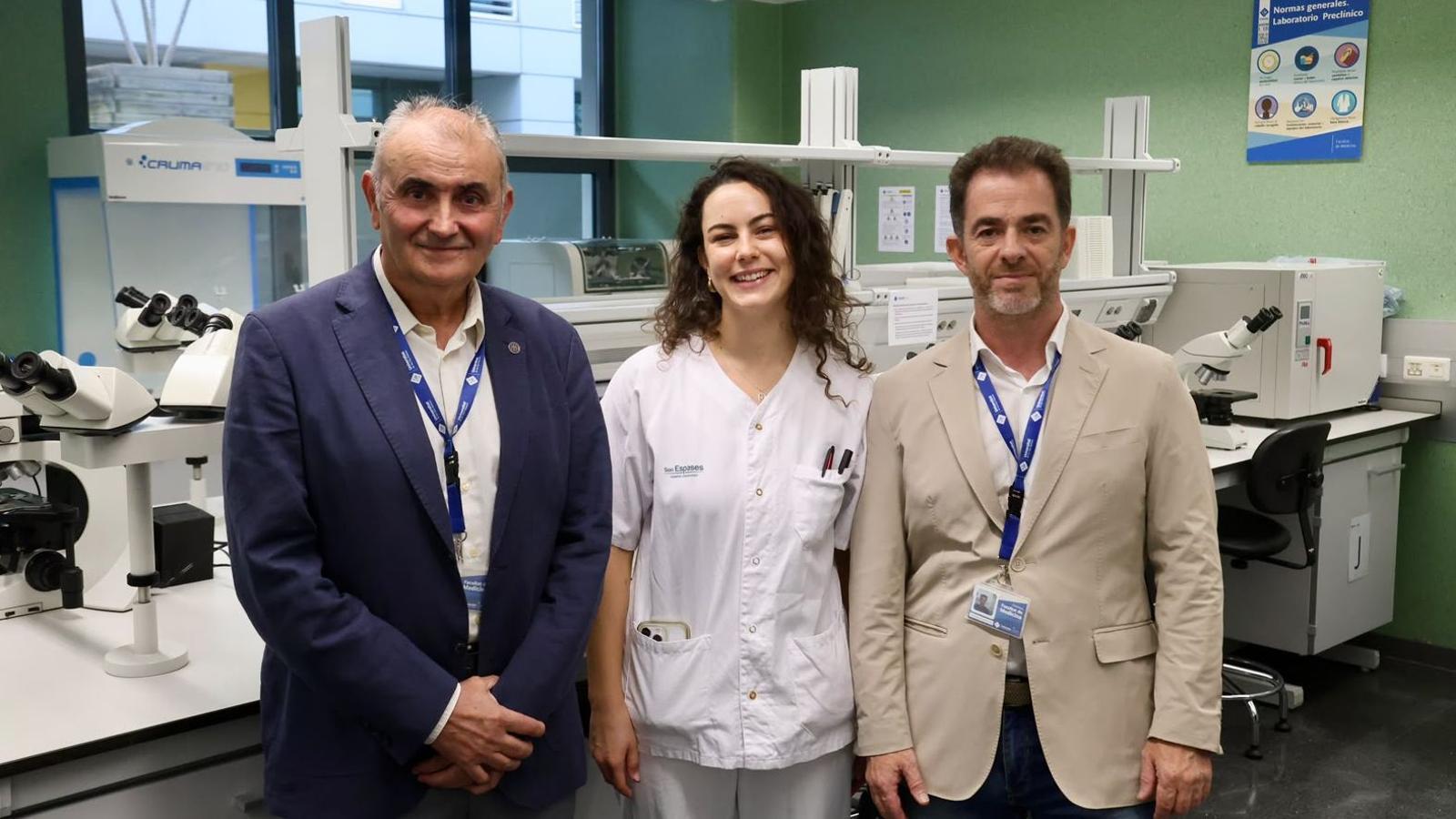
Palma43.6% (24) of the 55 students from the UIB Faculty of Medicine who took the 2026 MIR exam placed within the top tier of the ranking, among the 27% with the best results out of the nearly 15,000 candidates who took the test, with seven graduates (12%) in the top 10%. The faculty highlighted these figures this Wednesday, coinciding with the tenth anniversary of Medicine studies at UIB. The dean, Antoni Bennàsar, remarked that results have improved progressively in recent graduating classes. The percentage of students placed in this top tier was 30% in the first class, rose to 40% subsequently, and last year it stood at 41.6%. "The level of the students is good," he defended.

In contrast, only 3.6% of UIB students were placed in the final section of the MIR classification. Bennàsar claimed that the data show a positive evolution of the faculty's results, which this year has five graduated classes. Those responsible for the center also focused on the faculty's ability to retain its graduates on the Islands. More than 17 of the 55 students from the last graduating class have secured a position within the Balearic public health system, although the faculty does not have complete data on the students' subsequent path.
“We don't know exactly why, because since 2021 we have not been told where the students go,” explained Bennàsar, who pointed out that one of the faculty's goals is to achieve greater “loyalty” from graduates. The vice-dean, Príam Villalonga, recalled that a significant portion of the students from the first graduating classes came from the Peninsula and that many have subsequently returned to their home communities. For this reason, he considers the evolution of the new students' profile particularly relevant. Currently, 78% of the students who started Medicine at the UIB this year are from the Balearic Islands. According to Bennàsar, this represents a change compared to the early years, when approximately 80% of the students were Balearic, in a context where the faculty has also been consolidating its graduating classes.
Ten years of Medicine at the UIB
The Faculty of Medicine celebrates this year ten years since the start of its studies, the 2016-2017 academic year. Villalonga recalled that the implementation of the degree was preceded by a social debate and a parliamentary mandate and defended that the center has met its initial objectives “with flying colors”. The vice-dean also highlighted the UIB's position in the BBVA Foundation and Ivie ranking, in which it appears among the top ten of the 50 Spanish universities analyzed, as a particularly significant fact due to it being a young university.
Villalonga also highlighted the faculty's reduced ratios. “Teaching quality is linked to ratios. If you have 200 students, it is very complicated,” he pointed out. As he explained, there are subjects with groups of 25 students. Bennàsar also defended this model of proximity. “In this faculty we are not a number, there is personal treatment. Here they see the dean, the vice-dean, and the professors every day, and that is positive,” he stated.
Regarding the cut-off grade, this year it has dropped to 12.1 points, compared to 12.3 last year. The dean considers that this drop is not indicative of a worsening in the students' level and argues that it allows more students to access a place in the first assignments. The faculty thus faces its tenth anniversary with five classes already graduated and with the challenge of consolidating the MIR results and increasing the number of professionals trained in the Islands who subsequently develop their healthcare career in the Balearic Islands.
