Education limits interim teachers to guarantee Catalan: teaching and subject positions will not go through the urgent procedure
The change occurs in the midst of the debate on the linguistic requirement and the agreement between PP and Vox that opens the door to teachers without knowledge of Catalan in the public service
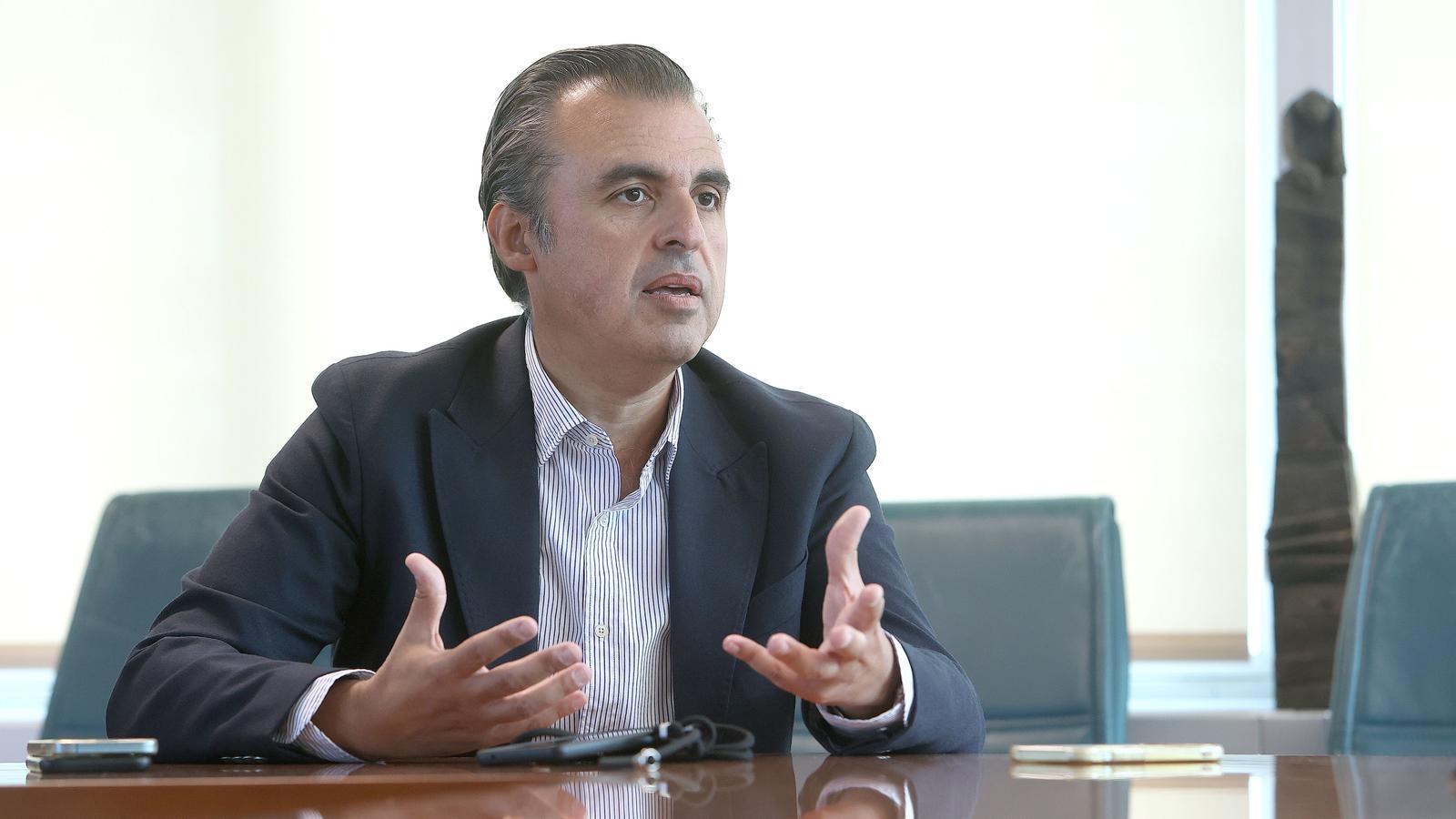

PalmaThe Department of Education has announced that positions for teachers and so-called "field" positions will not be able to go through the urgent interim process and that, from now on, they will only be processed through the weekly ordinary procedure. As explained by the counselor Antoni Vera in a parliamentary commission, this is "the only way" to guarantee the control of the Catalan requirement, since the urgent system does not allow verification of the linguistic competence of the applicants. "A position for a teacher or a field position that does not have the Catalan requirement will not be given again," stated the counselor. In the words of a union representative, the urgent procedure "is a sieve" for people who do not master the language.

Places “by areas” are those in which the teacher does not teach a single subject, but several subjects grouped within the same block. It is a common model, especially in ESO, and can include, for example, the scientific-technological area (mathematics, physics and chemistry, biology and technology) or the sociolinguistic area (Catalan, Spanish and geography and history), with the aim of working on different disciplines in a more integrated way.
The issue was raised following a question from the MÉS per Mallorca deputy, Maria Ramon, in the Parliament's plenary session two weeks ago, who denounced cases of teachers without command of Catalan occupying positions of responsibility in educational centers. Ramon cited examples such as a substitution in Formentera of a Catalan teacher by a teacher without sufficient accreditation, tutoring in Ibiza and Formentera with professionals without knowledge of the language, or institute counselors who cannot work with documentation in Catalan.
In his response, the Minister of Education, Antoni Vera, defended that the case presented by the opposition did not correspond to an ordinary Catalan position, but to a position reconfigured by areas. According to his defense, this change eliminated the specific requirement of Catalan philology in accordance with current regulations: “In that position, the center's management changed the configuration to areas, and when it is configured by areas (...) it no longer has the requirement of Catalan philology”.
Vera later admitted that the system needed to be corrected and announced instructions to the centers to avoid similar situations. “I consider it was a mistake because, even if it is by subject area, I believe there must be a minimum of Catalan”, he said, adding that positions for teachers and by subject areas can only be awarded through the ordinary weekly procedure to ensure compliance with the linguistic requirement.
Multiple attacks on the language
Although the PP has reiterated throughout the legislature that it would not modify the Law of Linguistic Normalization, the agreement reached with Vox within the omnibus law will allow, in practice, teachers to access public office without proving knowledge of Catalan. The norm, approved with the votes of the Popular Party and the far-right, exempts professors who opt for positions of very difficult coverage from the linguistic requirement.
within the framework of the judicial proceeding against the programThe agreement also incorporates another amendment so that students temporarily displaced to the Islands are exempt from being evaluated in Catalan. The Law on Linguistic Normalization already contemplated similar exceptions, but limited to a maximum of three years of residence. Several experts consulted consider that, in this case, the current linguistic regulations would prevail because they are the ones that specify these exceptions in more detail.
A linguistic segregation plan that only interests the subsidized private sector
The decisions mentioned are added to other initiatives promoted by the PP and Vox Government that educational entities, unions, and organizations in defense of the language interpret as a new offensive against Catalan in schools. Among them, the pilot plan for linguistic segregation stands out, which this academic year already reaches more than 5,800 students in 20 subsidized centers and has tripled the public budget allocated to the program, going from 1.1 to 3.7 million euros.
The first academic data from the plan indicate that the level of Catalan of the students from the 11 adhering centers in the 2024-2025 academic year is low and lower than that of Spanish. This is reported by a report from the Ministry of Education provided to STEI, which had requested the documentation within the framework of the judicial proceeding against the program. According to this data, in the fourth-grade Primary tests, Catalan obtained an average of 38 points out of 100, while Spanish reached 58 points, a difference of 20 points. The minister Antoni Vera defends, however, that the results are similar to those of the rest of the centers and that it will be in the final evaluation of the plan, scheduled for next academic year, when the real evolution of the students' linguistic competence can be analyzed.
