The families of CEIP Son Pisà do not keep their children at school until they meet with the Ministry
This Wednesday, 40% of the student body was absent and the children who came to class "are nervous" because the situation is affecting coexistence
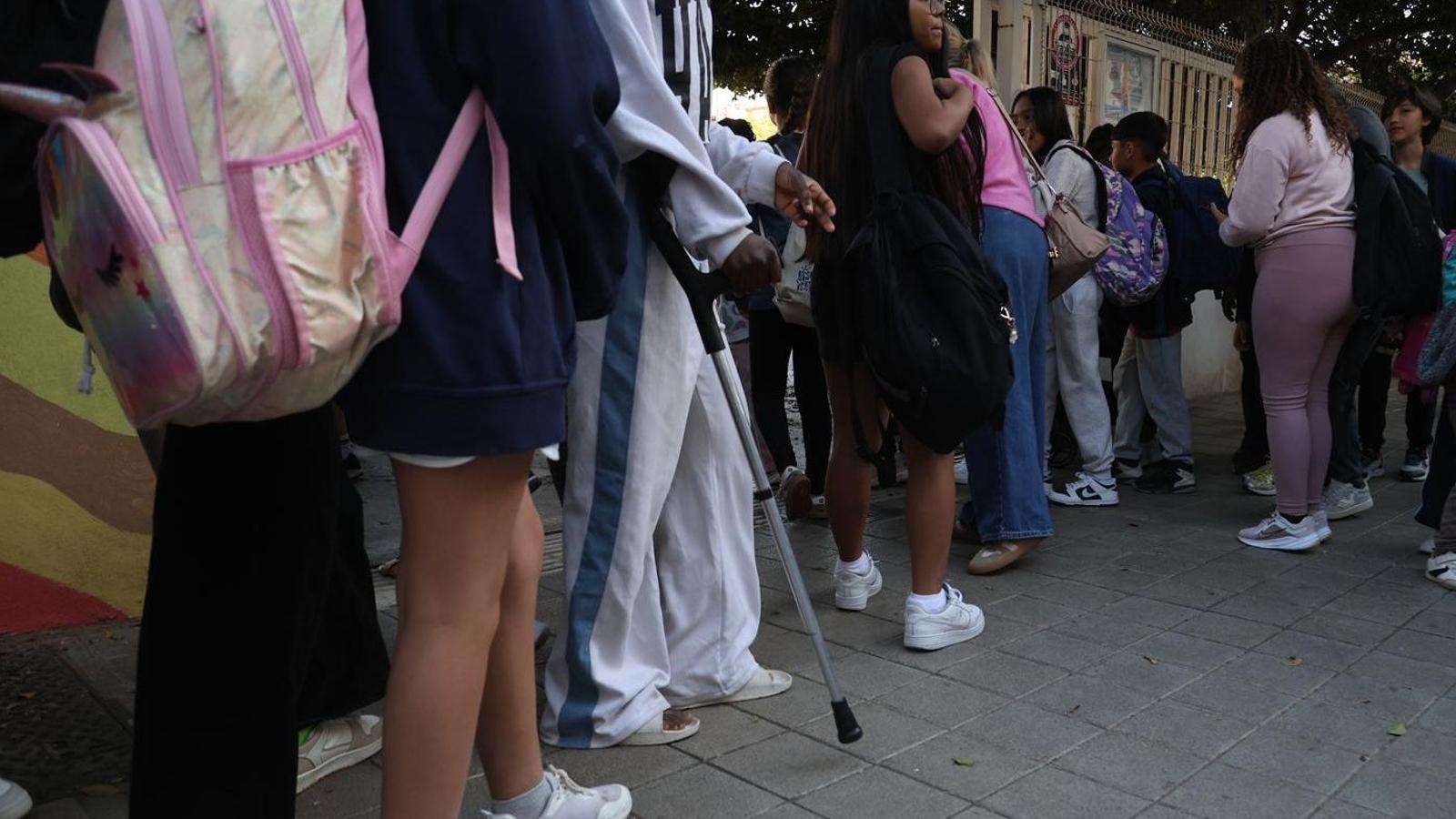
PalmaThe families of CEIP Son Pisà have agreed not to take their children to school until they meet with the Ministry of Education as a protest measure against the incorporation into the center of the teacher Miquel Roldán, convicted of harassment of minors. The decision was made after a meeting of the educational community with more than 200 families, in which parents evaluated different response options to the situation.
During the meeting, the director of the center explained that this Wednesday, improvisedly, 40% of the students were absent and the children who came to class "are nervous" because the situation is affecting coexistence.
For now, the teacher has a confirmed position until April 28, although it is very likely that the leave of the person replacing him will be extended. The protest measure is part of a pressure strategy that was already carried out at the beginning of the course at CEIP Maria Antònia Salvà in Son Sardina, where the same teacher had been assigned and where families staged a sustained mobilization in rejection of his presence. In that case, for the first 11 days of the course, no classes were held.

The educational community of Son Pisà considers that the incorporation of Roldán is not an isolated event, but the continuation of a problem that has already been experienced in other centers (Son Sardina and previously at CEIP Gabrie Janer i Manila) and that has not been resolved structurally. In this sense, they express that the transfer of the teacher from one center to another is not an effective solution, but rather a measure that simply displaces the conflict without guaranteeing the protection of the students or responding to the concerns of the families.
For this reason, they call on Education to assume responsibilities and establish clear and definitive measures that prevent similar situations in the future. They insist that the priority must be to guarantee a safe environment for children and that the regulatory framework must be reviewed so that cases like this cannot be repeated within the educational system.
Without disqualification
The case of Miquel Roldán originates from a one-year prison sentence for the offense of harassing a minor ex-student, a sentence confirmed by the Court. Nevertheless, the court did not decree disqualification from practicing teaching, understanding that the facts were not directly linked to professional activity, a point that has kept the legal, educational, and social debate open on the limits of teaching practice in these cases.
In his previous post, in Son Sardina, his incorporation triggered a conflict of great intensity within the educational community. Families expressed outright rejection of his presence in classrooms and reported previous episodes they described as “much unpleasant”. The tension led to sustained mobilizations and a parents' strike that kept the children out of school for eleven days, with a strong impact on the center's functioning.
During that episode, more than 70 family associations and more than 300 teachers showed support for the affected families. The pressure led the Department and the unions to propose a psychiatric study to assess the teacher's suitability for working with minors, but the medical leave halted its execution and the procedure was eventually left without continuity.
Subsequently, the Department of Education withdrew the evaluation proposal, leaving the case without specific preventive measures beyond the usual administrative framework. This decision has reopened the debate on the need to review regulations in situations of convictions for crimes related to minors without express judicial disqualification. In parallel, the case has reached Parliament, where legislative initiatives have been proposed to restrict teaching in certain cases. The debate remains open and has turned the Roldán case into a point of friction between judicial decisions, administrative management, and social pressure within the educational system.
