The Government likes to look inside the houses of the poor
-
CAT -
CAST -
DE
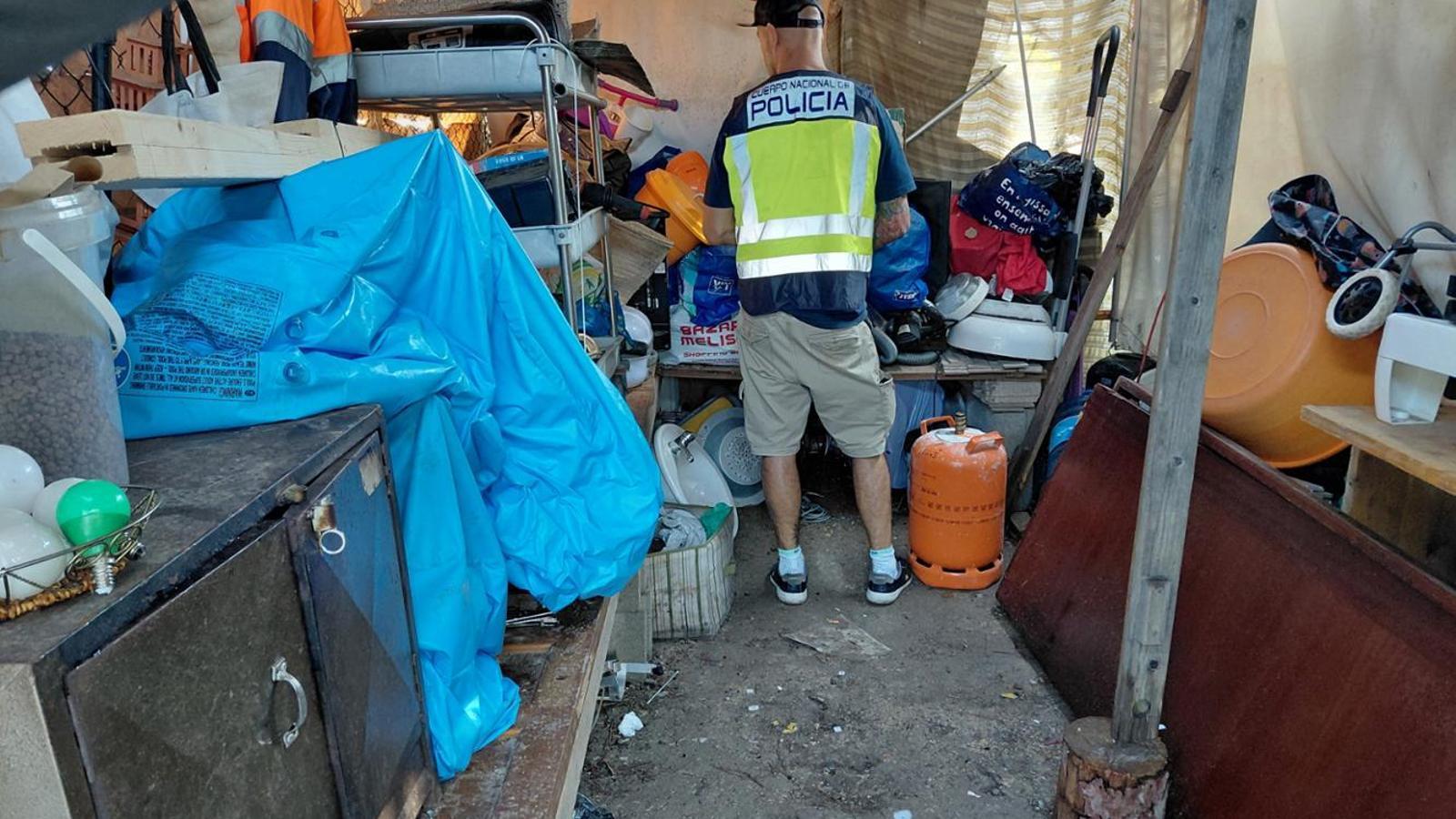
PalmaA thin rope tied between two supports holding up the arches of a porch that opens onto a yard serves as a clothesline. A towel peeks out like a curtain from a window without glass and, surely, has been placed there to provide privacy to whoever is inside the room. Unmade beds with blankets and rumpled sheets in the middle of hallways and common areas without a single centimeter to spare.
There is, in the images released by the Ministry of Housing and the National Police of the latest operation (what a surgical and cold word) against substandard housing in Manacor, a certain feeling of shamelessness. Seeing the shame of the poor provokes a certain morbid curiosity in us. The philosopher Edmund Burke said that when something evokes pain, danger, or terror strongly enough to move us, but without the threat affecting us immediately, that is when the sublime arises. The English aesthete linked the sublime with terror or danger contemplated at a distance that prevents it from affecting us directly. Looking at tragedy from a safe situation is not the same as living it firsthand. That is why I imagine those responsible for the Ministry of Housing as the architects of a catalog of photographs of homes of the very poor who have to take turns in hot beds to be able to rest for a few hours between work shifts and who provoke in us, while on the sofa, the aesthetic experience of feeling very fortunate not to have to live like that.
In Mallorca, this legislative term the Government of the Balearic Islands has made three inspections public, with a specific location: Manacor. This September, it announced a plan that includes inspections of substandard housing, without specifying if they would also be carried out in other municipalities beyond the capital of the Llevant, which apparently has for the moment concentrated all the efforts of the political leaders of the Housing portfolio to highlight the overcrowding and the poor conditions in which the poor live.
In September 2025, the Government's Housing Inspection service and the National Police made their debut in the noble task of disseminating images of how those excluded from the system live in dire straits. Eleven shacks being rented out as housing had been located. They did not meet the health conditions or basic supplies that a dwelling must have. The images showed a shed with piled-up kitchen utensils and, in the same space demarcated by sheets used as room dividers, a butane gas cylinder and a deflated inflatable beach mattress. Sanctioning procedures were announced.
A year later, in September 2026, a joint inspection was carried out again in Manacor and the Spanish police agents detected seven people living in an unfinished dwelling that did not meet the necessary safety conditions. They themselves warned that there had been as many as thirty of them at some point.
The latest news about the joint inspections by the Government and the National Police arrived at the end of this October, a few days ago. The inspection detected nine people and 24 beds, some in the hallways, in a house without a toilet and with serious deficiencies in hygiene and habitability. The occupants claimed that at some point up to thirty people were staying there, paying between 100 and 200 euros per bed. The Government once again announced possible sanctions.
Beyond the Executive's effort to announce the inspections carried out in Manacor, we must assume that these are not the only internal inspections by the Housing Inspection service.
There is also, in the dissemination of this graphic material, a blaming backdrop. The narrative and public discourse of the Administration focuses on sanctions against those who profit from and promote the conversion of certain properties into homes without meeting any minimum conditions of habitability, surface area, health, or safety. In no case, however, is there any talk of whether the people whom the legitimate government inspections have once again left homeless will be relocated, nor what housing solution will be provided to desperate people who have to resort to paying those who profit from their misfortune just to avoid sleeping in the open.
Many pages, many words and many arguments have already been written about the housing emergency and the constitutional right to have a place to live. And here, we will not repeat ourselves. What I do miss is the same transparency when communicating the inspections that, for example, the tourism services of the Council of Mallorca carry out on illegal tourist offerings. We can enter the homes of the poor, stripped of all dignity, right into the kitchen they don't even have, and air out the shame of their wretched living and their misfortune. However, for large property holders or those with tourism businesses, we must safeguard their privacy.
I have not seen a single image of what the inside of an illegal mansion on rustic land destined for tourist rental looks like when sealed off. Nor have I seen any hotel room caught engaging in overcapacity. Perhaps I haven't known how to look for it, perhaps I am not well enough informed, but you tell me if you have seen many images of inspections carried out on tourist establishments sealed off by Health or Tourism Inspection.
The miseries of the poor make us feel secure. The shame of the rich must be protected, because apart from the fact that they have more rights, they could file a lawsuit.
