The always challenge of the left: to build society or to manage society
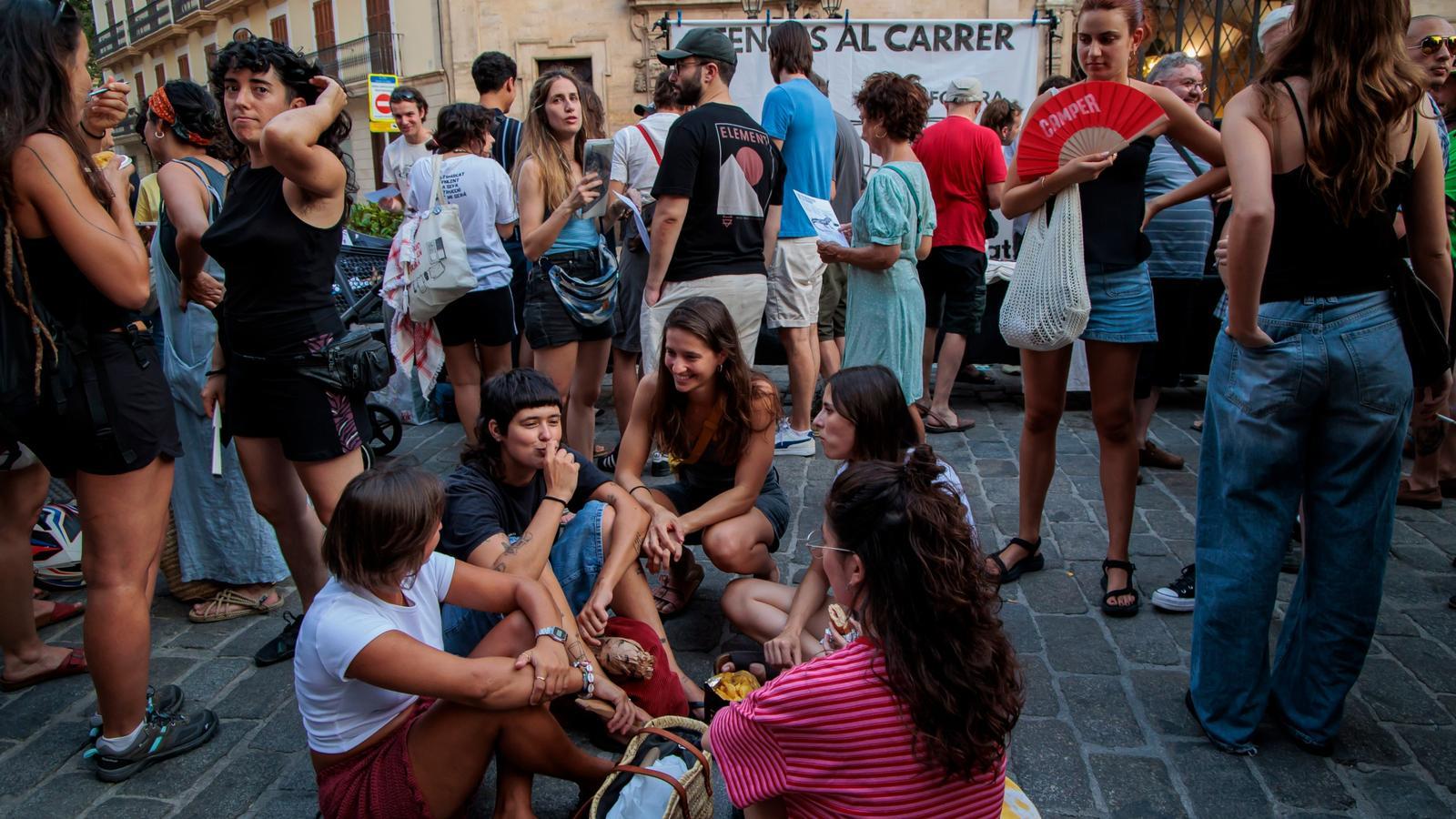
The author of the article, Salvador Martínez, left us on the 3rd. We are therefore faced with a posthumous text. His political testament, which he wanted to publish in ARA_Balears, a medium to which he was a subscriber and with which he maintained permanent contact as an activist and facilitator, as well as president of ATTAC. This writing is published in the hope that it will be a source of debate, that it will illuminate perspectives of peace and social justice, and also encourage transformative thought and action.I completely agree with the analysis that Juan Torres, economist and member of the scientific committee of ATTAC Spain, published in Globalter on May 28th under the title: ‘The left that no longer serves. Ideas to regain the north’ and I want to focus my reflection and proposals on four key lines that are developed in his article.
Where we start from:
Torres argues that the left stopped being transformative when it abandoned the construction of society and proposed to replace social counter-power with mere institutional occupation; the aim was to combat neoliberalism using the same cultural, economic, and communicative structures that neoliberalism already controlled. Furthermore, we must not forget that the historical left was not only the expression of workers' parties and unions, but also defended forms of shared life (neighborhoods, residents' associations, cooperatives, public schools, cultural centers, collective spaces, etc.). The left was not only shared ideas, it was also proposals for living conditions arising from those same ideas.
Liberalism represented a civilizing transformation, an anthropological and cultural operation: to transform the way people think, feel, and live; to manufacture a new type of human adapted to market logic–Homo economicus. Industrial centers are destroyed and work is precarious. Parties and unions (the organizational elements of the working class) are attacked and discredited, public services are privatized, all life is commodified, community spaces that sustained social bonds are destroyed, and a new morality is imposed: individual freedom is the supreme value. Success is personal merit and failure is individual responsibility. What is public is useless and the market is the best guarantee of our well-being.
Within the third driving force that Torres develops in his article, the idea is defended that the right uses politics to consolidate the power it already holds over society. It does not need to transform it; it already belongs to it. Economic, media, financial power, large corporations, investment funds... All of this is theirs before any electoral campaign begins. Politics, for the right, is not an instrument of change; it is the instrument for the conservation and consolidation of its power. When the right comes to government, it only needs to defend the world it finds, expand it, and shield it from any threat, and for this, institutional power is enough, because the rest of the power, the real power, it already has.
The left, on the other hand, has none of these powers, and the world it wants to build does not exist, or only exists in the cracks of the system. This is why the left suffocates and fails when it wants to transform society by doing politics as the right does, acting primarily in government and institutions.
From these last two lines of analysis arises a conclusion that seems to me quite a challenge to rethink the long-term objectives of the left: “The left has tried to use politics to transform society, when its real task is exactly the reverse: to transform society to change politics”.
Where do we want to go?
Today, in our time, it is more necessary than ever to elaborate a new civilizing narrative, a new common narrative, that recovers the great causes of social struggles that seduce all kinds of people; to recover and rename the universal values that have always made sense: the common good, freedom, justice, human rights, democracy.
We must recover the pillars of human and social development, put the person back at the center of life: public healthcare, public education, decent housing, environmentally friendly mobility; recover the balance with nature, accept that we are on a finite planet with finite resources, redirect our gaze to the agroecological field and implement a way of life, distribution of time and care from an ecofeminist perspective and realization.
Finally, we must reopen the entire community sphere to more communal participation at the neighborhood and town level, and invent new forms of involvement for everyone to live democracy from a close perspective. All this and more is building society, creating a new common narrative.
What role could ATTAC play?
ATTAC is an international, alter-globalist and left-wing organization whose motto is ‘Another world is possible’. We are a movement opposed to the current capitalist-financial system and, as a consequence, we advocate for an economy at the service of the person, for a society that has the common good, social justice, and Peace among peoples at its center. We are an anti-capitalist organization that defends economic and social justice on a global scale.
We have made an obvious and coherent choice for environmentalism as a form of balance between all living beings with nature and the Earth, while also denouncing colonialism and patriarchy. For this reason, we believe we can offer a meeting place, mutual recognition, and joint development of alternatives. To participate in the “cultural battle” to develop a common alternative narrative, and to contribute our effort, commitment, and time to fight against the hegemony of the neoliberal discourse and its values: individualism, competitiveness, and accumulation of wealth.
In this struggle for a new world, we must work hand in hand with other organizations, collectives, and individuals who join the common task in their individual capacity. We must recover a common alternative narrative, as well as the values of justice, fraternity, the common good, cooperation, empathy, mutual care, while fostering a culture of peace and unity. This could be our small contribution to the creation of community fabric and the struggle for a true transformation of people and society.
And, finally, how can we do it?
Taking advantage of our ability to move wherever there is associative fabric –neighborhood associations, cultural centers, towns– to connect and relate alternative experiences: putting in contact experiences of alternative consumption, production, cooperativism, social and solidarity economy, care, types of alternative housing, community and forms of democratic participation, among others, and holding meetings of these experiences from time to time.
It would also be important to hold explanatory workshops of these experiences –it would be about making visible and connecting these other ways of living. Nothing more and nothing less, it would be about visualizing that Utopia is possible, that Utopia is already being done, but that it is concretized in many scattered and uncoordinated experiences.
As a summary, I think that beyond the electoral calls that we will periodically have and to which, inexorably, the left must present itself as united as possible, the true long-term project that it should not renounce for electoral short-termism is, precisely, to walk with a long-term vision hand in hand with the maximum number of agents towards the transformation of this capitalist society, origin of all the social, personal, environmental and survival evils that Humanity suffers, starting from the first and most horrifying and inhuman of all, which is War.
If we live values that are truly human, we will be building an authentic new world.
