The invisible cost of tourists

-
CAT -
CAST -
DE
It is not an easy debate. Talking about the cost of healthcare for tourists forces us to walk a fine and delicate border line. On the one hand, the principle of universality of healthcare, which guarantees that anyone who needs it must be treated; on the other hand, the obligation of whoever has to assume the cost of that care.
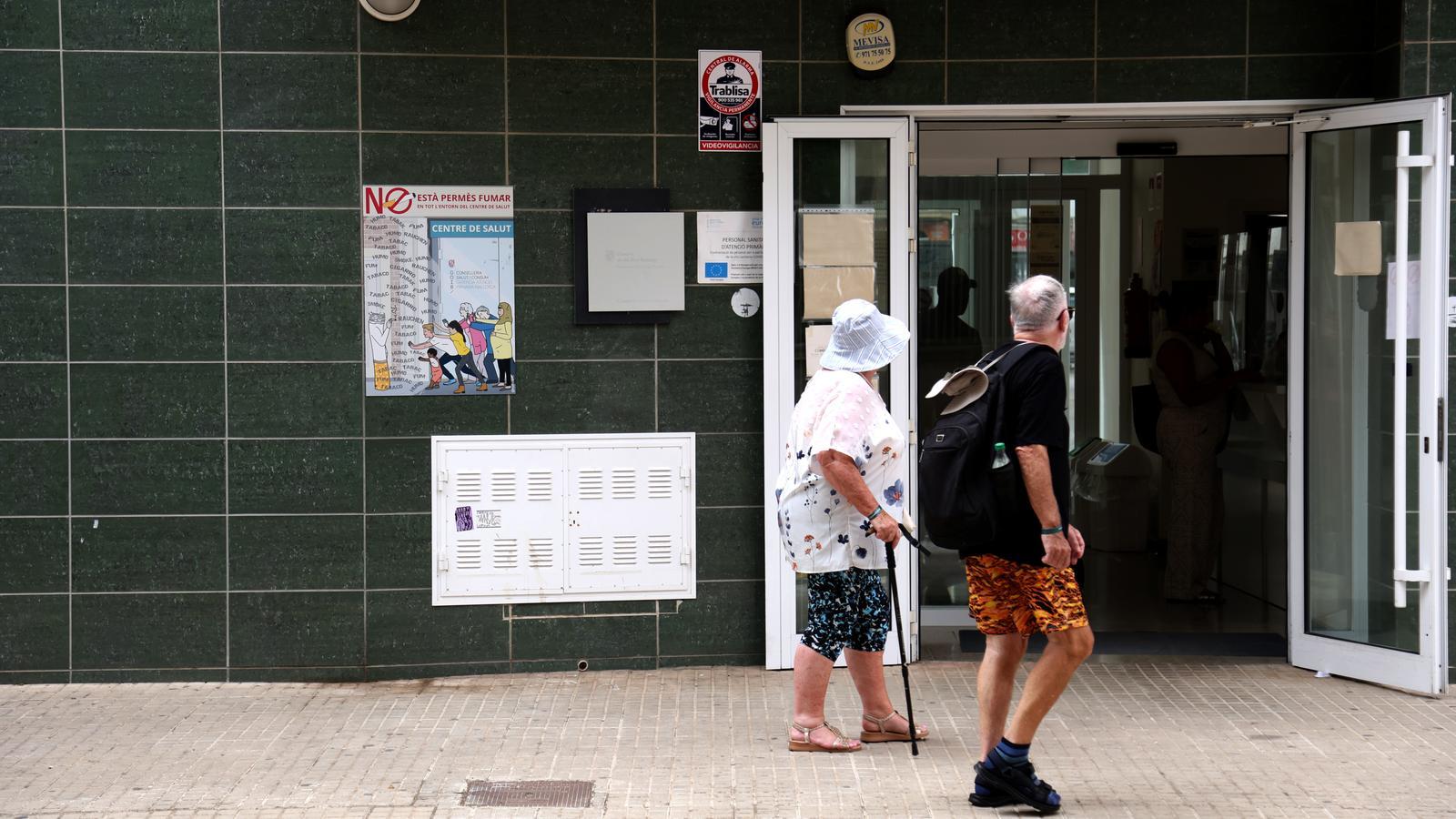
In the Balearic Islands, IB-Salut acknowledges that between January and July this year tourists have generated a debt of 2.6 million euros with public healthcare. These are services that should have been paid for and are difficult to recover. The figure, significant enough, may not explain the dimension of the problem. Because the debt that is billed and registered is only the visible part of an invisible hole. There are also services that do not get billed. Healthcare professionals explain that, especially outside of normal working hours, they have to attend to tourists who arrive without documentation or without a health card, and they do not have the means or the necessary tools to identify them and process the payment. Some patients end up leaving without the service being registered. And what is not registered cannot be charged either.
This has a double consequence: on the one hand, it generates insecurity among professionals whose priority is to attend to the patient and not to carry out administrative tasks that do not concern them. On the other hand, it makes the cost that the autonomous administration ends up assuming indeterminate. This is money that stops being collected by a system that requires more professionals, more resources, and more capacity to respond to growing demand.

IB-Salut assures that "the majority" of invoices end up being collected. But it does not specify what the "majority" is nor can it quantify what is not invoiced because the visit has not been registered. And this, in islands that live eminently from tourism, is not acceptable. Not because the right of any person to receive assistance should be questioned, but because this right requires a well-organized system that allows it to be guaranteed without making a part of the costs invisible. We need to know what healthcare for visitors costs. And clear protocols must be established, including for night on-call duties, so that professionals know what to do.
The case of the Barcelona resident detained in a hospital in Thailand until he pays the 65,000 euros for the surgery he underwent is another, extreme, side of this issue. It is not about importing a model that could compromise universal care, but about understanding that health systems must also have mechanisms to ensure that costs corresponding to third parties do not end up diluted in public accounts. The Balearic Islands cannot afford for the health cost of tourism to be an unknown. If tourism is an essential economic activity, it must also be essential to know what it costs society as a whole. What is not recorded does not disappear, we simply all pay for it.
