Things I have learned while sailing
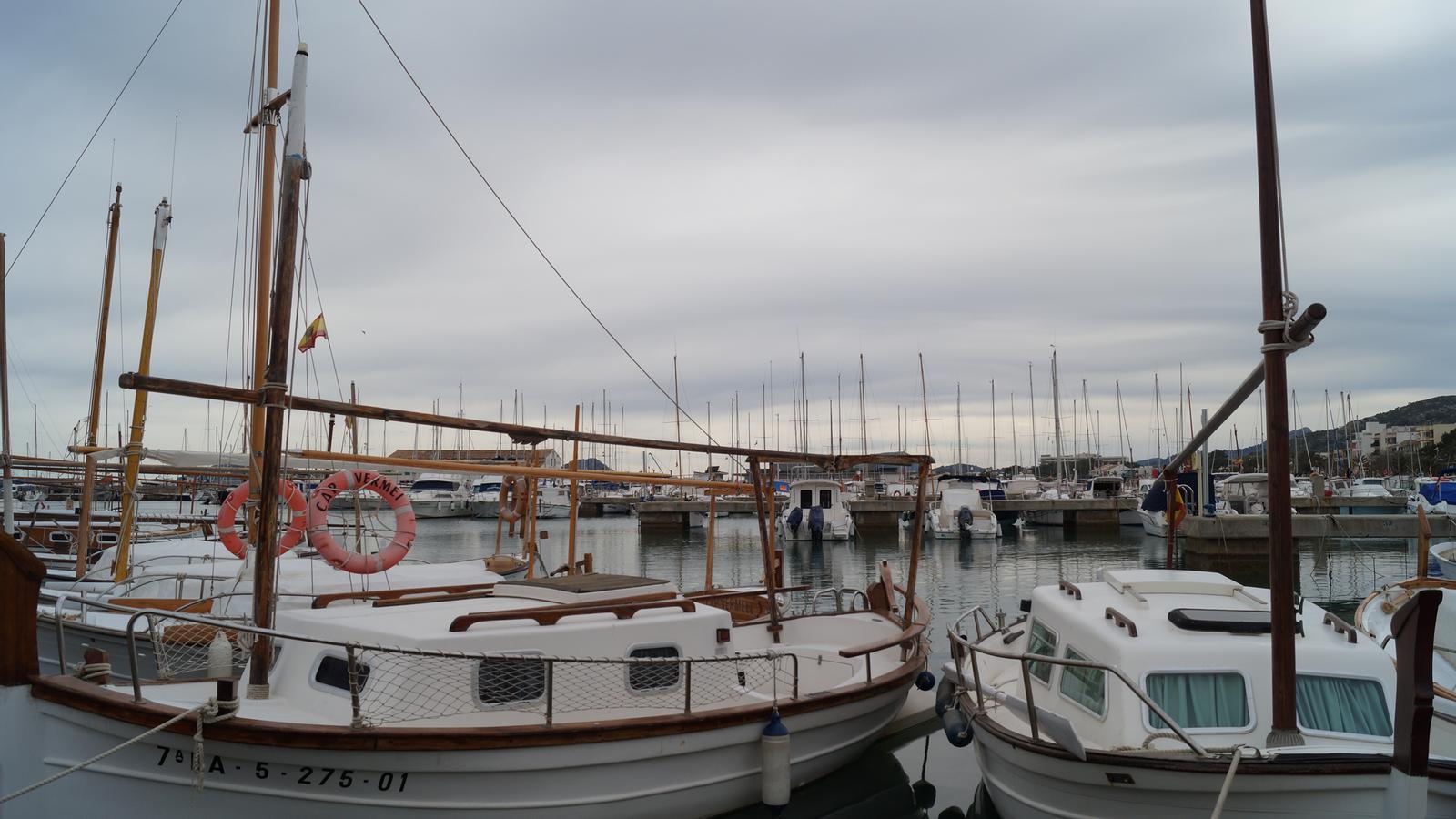

Every time I take the boat I think: “Oh grandfather, if only you could see me”.
I remember his tanned hand on the tiller, trembling gently to the rhythm of the engine, his hat tied with a rope, the basket where he carried the fishing gear, the cockpit dirty with squid ink. My grandparents had a boat when this was not a tool for ostentation and for a mooring one did not pay the savage price of today. Thanks to this, we now have a 36-foot 'llaüt' that we bought second-hand after many vicissitudes and after selling the previous boat, as has always been done: I can say the names of the boats that have passed through our home since the fifties of the last century: la Troya, n’Albatros, en Patufet, en David, na Cèlia, na Xula, el Darrer Blau, el Xaloc and finally na Petrus, which is the one we have now. From this list we have only chosen one name, all the others are inherited: it is well known that you should not change the name of any boat, as it brings bad luck.
Yes, at sea we are very superstitious. Because we are very far from remedies, and any accident that on land is a trifle, out there in the middle can be very serious. We have had few emergencies, and the biggest one was on a boat that was not ours and which, thank God, was able to take us to port very quickly.
When you go by boat, no matter how prudent you are, there are accidents: one day something happens to you and you realize that life is a fragile miracle, a lucky chance for which you must give thanks. You relativize, you understand the luck you have had all the times things have gone well and you go back out to sea.
To learn more.
And the lessons of the sea are infinite. I have learned, for example, that we must turn the other cheek to the waves. It is useless to run from them, and besides, trying could put the boat in a worse position. Nor should we go head-on, it is uncomfortable and I would say a bit dangerous. The old folks used to say “turn the other cheek to the sea”.
In the same way, problems must be faced. Not by confronting them openly, but not by turning your back on them either, because the great waves of life always end up catching you. It is better to turn the other cheek. With a light touch and determination.
If we have the weather against us, we must tack, zig-zagging to get where we want to go. And the fact is that living in permanent confrontation is wasting energy uselessly. The sea always wins, and as in life, the fastest path is not always a straight line.
Thus, it is better to have a clear course and accept the inevitable tacks, knowing they are necessary to reach the destination. I will be able to rest, I will be able to wait for more favorable winds, I will be able to anchor in some cove waiting for the best moment. But I must be very clear about where my port is, and not give up on it.
I have never been attracted to fast boats, and I have the theory that those of us who truly love the sea sail slowly, savoring the moment, the conversation, observing the water, looking to see if there are dolphins or cormorants. I think I would only trade the llaüt for a sailboat. It is another one of those lifelong dreams. Just imagining it brings me pleasure, I know it is quite difficult to come to have one, but thinking about it makes me happy already.
Sailboats teach us something else: they have a mast... and they have a centerboard. To be tall, they need to be deep. Offering the sail to the wind requires height, and to not heel over with the first gust of wind you need depth.
And the fact is that you cannot go up without having your feet firmly planted on the ground. Whether at sea or on land, we must be well-balanced, we must have a foundation (spiritual and physical) that allows us to take the jolts without capsizing.
As our anthem says, 'the trunk climbs higher the deeper it can take root'.
While sailing, you become aware of the luxury of small things. How good a simple trempó with Inca crackers is, running out of fresh water, feeling a bit cold when it gets dark, chatting with friends cradled by the swaying.
The sea teaches you that there are few essential things, and the most valuable ones (company, nature, luck) cannot be bought with money.
You cannot sail without getting splashed. Perhaps we could get on the boat, go into the cabin and not come out. It is a bad option: we would not suffer, but we would not have any fun either. Splashes are annoying (especially if you wear glasses) but the pleasure of feeling like you are riding the waves is well worth it.
It is the same with life, I suppose. Taking risks, getting our hair messed up, being uncomfortable. Sometimes it is the price we pay for living intensely.
And it is worth it.
I cannot fit everything I have learned here, but I want to say one last thing: when you are on a boat, a gust of wind, a wave, or a distraction can make something fall into the water. And it is almost never recovered, and we have to accept that.
On a boat, as in life, with certain things it is better not to risk it: it is better not to put what you love in danger, as we must be clear that there are things that are lost forever.
It is hard, but it makes us appreciate what we have, which is so much, and be aware that everything is fleeting, even ourselves.
