Javier Gil: "If tourist apartments returned to the residential market, the supply would skyrocket"
Researcher at CSIC and Doctor of Sociology from UNED
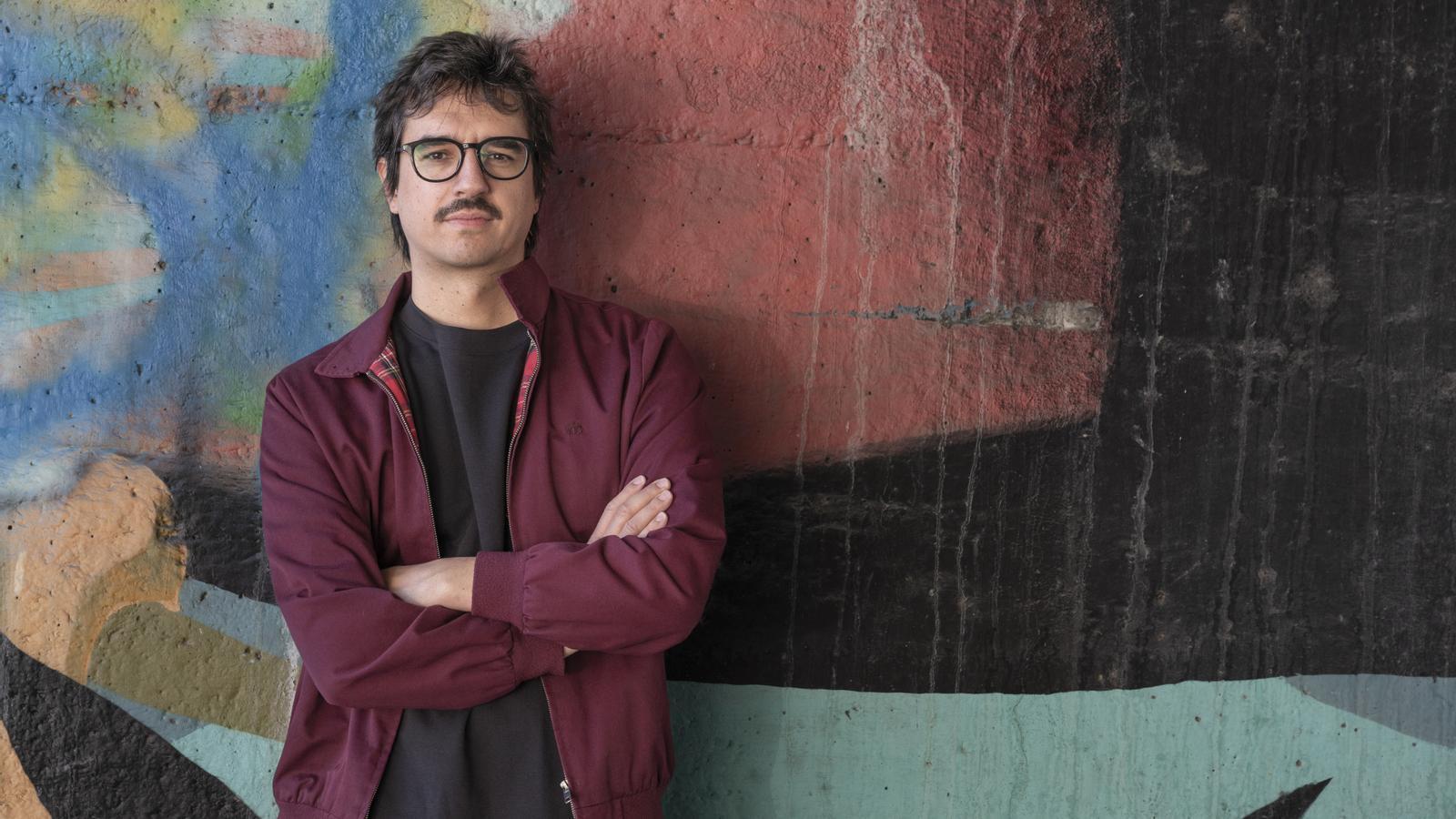

PalmRenting has become synonymous with impoverishment and constant insecurity. Exorbitant housing prices are increasingly out of reach for workers' economic capacity. CSIC researcher and Doctor of Sociology Javier Gil analyzes the consequences of this trend, which threatens the social model, in his latest book, Tenant Generation (Capitán Swing, 2026).
What is the tenant generation?
— It is the population that cannot access home ownership. They are excluded from this possibility. But living on rent means precariousness, impoverishment, and instability. And they do not live on rent by their own will, but because housing prices have become disconnected from the real economy and from households. Salaries can no longer pay for housing prices. This is connected to the fact that, since 2008, there has been a speculative non-residential demand that buys homes as an investment. It invests in housing to obtain the profitability it does not obtain elsewhere. This is the cause of the price increase.
What do you call workers who, like in the Islands, are forced to live in slums, caravans, or even tents?
— In the book, they call this population 'liquid tenants'. It is this part of the tenant generation that can no longer even live in something that is considered a home, with rights recognized under the Urban Leases Law. Even with a job, they cannot afford rent and have to live in seasonal apartments, caravans, storage rooms, etc. I give the example of workers who live in capsule hotels in Madrid.

How can it be that housing prices keep rising, if people can't afford them?
— The price of housing responds to speculative demand. A large part of this speculative investment has also been direct foreign investment, that is to say: international capital that has entered into real estate activities and has bought these homes as a business. This is what has distorted the price of housing. It generates and is a central cause of inequality.
Do you consider rent the biggest factor of social inequality today?
— Parallel to the fact that the renting generation is increasingly excluded from ownership, the concentration of real estate properties in a few hands is growing. This concentration of properties is associated with a strong concentration of wealth. From 2008 onwards, when this renting generation was born, inequality and wealth concentration in the top 1% also skyrocketed.
There was a time when the left defended the use of platforms like Airbnb among individuals to 'democratize' the wealth generated by tourism and strengthen the middle classes.
— What Airbnb primarily generates is the business of taking housing units out of the residential market to rent them out as tourist apartments.
Why is the State Housing Law insufficient?
— To start, because it does not apply to all communities [like the Balearic Islands] nor to all tense areas. We need it to be applied. Furthermore, in some cases it is containing price increases, but what we need is for it to lower them. We also need new legislation, such as indefinite rentals.
Does limiting rental prices reduce housing supply, as the Balearic Government defends?
— In the book, I dismantle it. Owners, here, are more protected than in most European countries, where housing rights are much more protective of tenants. In these countries, rental contracts are indefinite. A person renting out their home cannot expel you for bringing in another tenant who pays more. This is legal in Spain, but in half of Europe it is illegal. Responsibilities are much more limited than here.
Why do you think there are discourses that focus on the claim of anti-squatting laws and policies. Do you think it's a serious problem?
— It is part of the cultural war. They undertake occupation to prevent talk about rising rent prices, vulture funds, speculation. The objective is to divert attention to point out that the housing problem is not speculation, but occupation, when in reality we see that occupation cases affect very few people: mainly investment funds, banks, and large holders.
How is the current bubble similar to the 2008 real estate bubble?
— The 2000s was a bubble, mainly, where the population had been accessing housing for ownership, residential or second homes with prices inflated by credit. Now it is not a residential demand but speculative, which is inflating housing prices and rents. But we see that it is a bubble, because prices are completely disconnected from the economic reality, both of the country and of households. It is the result of speculation that prices have risen, but these increases are increasingly difficult to sustain.

Canary Islands promotes limiting the purchase of homes to non-residents, a debate that is also lively in the Balearic Islands. Do you see it as feasible?
— It must be limited to all tensioned areas, not just the Balearic and Canary Islands.
The president of the Balearic Islands, Marga Prohens, has implemented a series of measures to facilitate residents' access to housing, based on the premise that the supply of apartments must be increased: they involve the conversion of commercial premises into housing, authorizing the addition of more floors in existing buildings, and building more and with greater density on already planned developable land. Do you think this is the way forward?
— These measures being taken in the Balearic Islands are crumbs. What's the point of doing all this if you then allow thousands of tourist apartments to be rented out to tourists every day of the year? What you need is for this housing supply, which has been hijacked from the residential market, to return. Right now there are over 300,000 tourist apartments throughout Spain. If they were incorporated, along with vacant housing, into the residential market, the supply would skyrocket.
The Islands are one of the autonomous communities with low production of protected housing. Real estate developers, moreover, usually prefer to focus on luxury homes and chalets. What impact does the lack of public housing have?
— It's not just that developers engage in a speculative type of offering, but also that we need more regulation on land and the type of housing development and construction. Right now, what we see is that, where the way construction is done is not regulated, those who acquire land and build are large funds, developers, who seek to raise housing prices as much as they can. This prevents prices from falling. Because what they seek is to make it as expensive as possible to increase profits. We need construction to also be regulated to promote affordable housing that can lower prices. Otherwise, new constructions will never lower prices. They will only make them grow.
