A handmade television that a village sewed
Sa Pobla reactivates the memory of TV Poblera 40 years later with a project that unites young and old and claims the value of reporting from proximity
-
CAT -
DE
PalmEvery Thursday afternoon, sa Pobla would stop in front of the television. On the screen, there were the festivals, the news, the neighbors, the familiar faces. It was the town looking at itself.
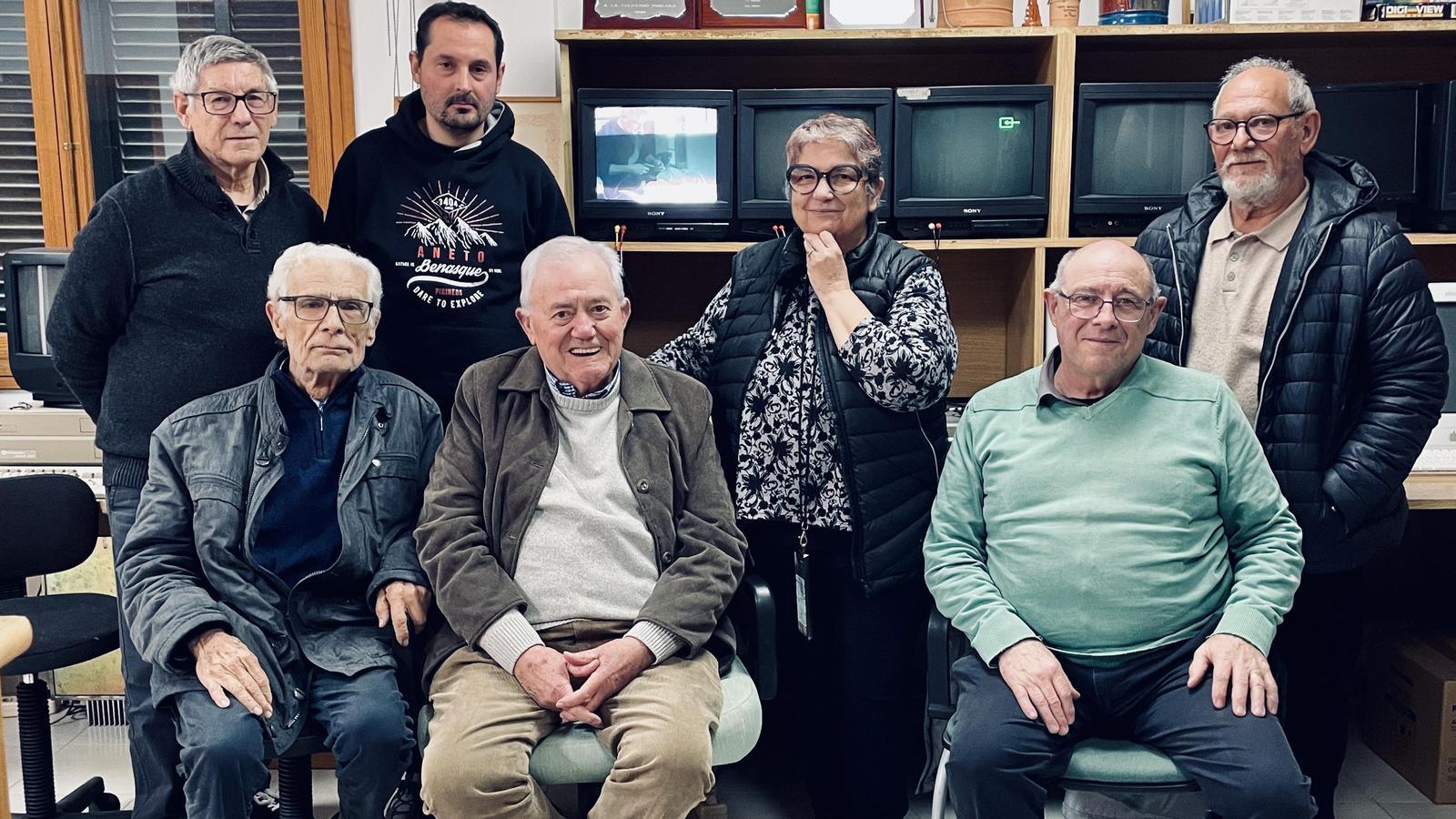
This was Televisió Poblera, an experience born in 1986 that, for almost twenty years, documented the social, cultural, and festive life of the municipality until its end in 2005. A television made with few resources, but with a lot of drive, which ended up becoming a key piece of the town's collective memory.
Now, forty years after the first broadcast, sa Pobla has decided to recover that legacy and give it new life. It does so with a cultural and educational project that combines heritage recovery, citizen participation, and media literacy. “This audiovisual archive constitutes a unique heritage, but it is not yet fully digitized or accessible,” warns the councilor for Culture, Biel Payeras. “This compromises its preservation and transmission to future generations”.
An idea that became television
It all began on February 16, 1986, when the test card first appeared on televisions in sa Pobla. Alexandre Ballester presented the first program of a project born from the initiative of Biel Capó and a small group of collaborators with knowledge of electronics. “The content of the broadcasts comprised local news programs, sports, cultural, historical news... and live broadcasts such as the Rua of '86”, recalls Capó.
That television was put together with what was available. The same collaborators provided cameras, microphones, wiring, and mixing consoles. They covered expenses and, in some cases, even had to take out loans to continue.
Despite everything, the project grew. The studios were moved –from the radio room on Varet street, to parish facilities and, later, to Can Corró– and the programming was expanded.
The screen where everything happened
Every Thursday afternoon, live, and rebroadcast on Sundays, TV Poblera entered homes. And it did so with an increasingly complete program. There were local news with images, reports, interviews, opinion pieces, contests, and even humor. Festive events, processions, and popular happenings were broadcast. The camera went out into the street to capture people's voices. The television didn't just inform: it articulated the town's narrative.
Over time, it gained an audience to the point where few families didn't follow it. That screen became a tool for cohesion and a shared space where the town recognized itself.
A fragile but essential archive
When the new legislation put an end to local televisions, in 2005, TV Poblera was shut down, but it left behind an extensive archive recorded on VHS and SVHS tapes. Valuable but vulnerable material. As time passes, tapes degrade. Therefore, part of the task of the sa Gavina Cultural Association –an entity that provided coverage for the project– has been to digitize this collection, from which dozens of videos have already been recovered and published.
The archive today constitutes a historical and cultural heritage that allows us to reconstruct the life of the municipality over two decades.
Young and old, before the same camera
The new project promoted by the City Council wants to go beyond the recovery of material. The proposal, coordinated by Curly Commas, focuses on intergenerational participation.
Nearly a hundred students from educational centers in the municipality will participate in video journalism workshops with elderly people. Together they will learn to use cameras, microphones, lights, and chroma. But they will also work on interview and active listening techniques.
The young people will interview people who lived through the TV Poblera era. And, conversely, the elderly people will interview the young people to understand how they get informed today, what platforms they use, and how they verify the news. This exchange generates a space for dialogue about the social and technological changes that have transformed communication.

Educating the gaze in times of renewal
The project also includes a pedagogical package that will be worked on beforehand in educational centers. The material offers context on TV Poblera and tools to reflect on information consumption.
The objective is clear: to foster critical thinking. At a time marked by disinformation and the accelerated consumption of content, the initiative aims to help understand how information is constructed and how it can be verified. Looking back, in this case, also serves to learn to better understand the present.
A new piece with images from yesterday and today
Between May and July, this entire process will translate into a collective audiovisual piece of between fifteen and twenty minutes. The editing will combine fragments from the TV Poblera archive, the material recorded during the workshops, and the participants' reflections, along with current images of the municipality.
The project will culminate with a public screening before the Santa Margalida and Sant Jaume festivals, with an open debate involving local journalists and disinformation experts.
Recovering a way of telling oneself
TV Poblera was born as a modest, almost improvised initiative. But it ended up becoming a tool for explaining the town from within. Forty years later, sa Pobla recovers this legacy not only to preserve it, but to activate it. Because within those tapes there are not only images. There is a way of looking, of telling, and of building community that, amidst the current noise, makes sense again.
