Accumulated corpses and lack of resources: the Forensic Institute of the Balearic Islands, at its limit
The strain on services and the increase in cases put the functioning of the Balearic IMLCF on the ropes

-
CAT -
CAST -
DE
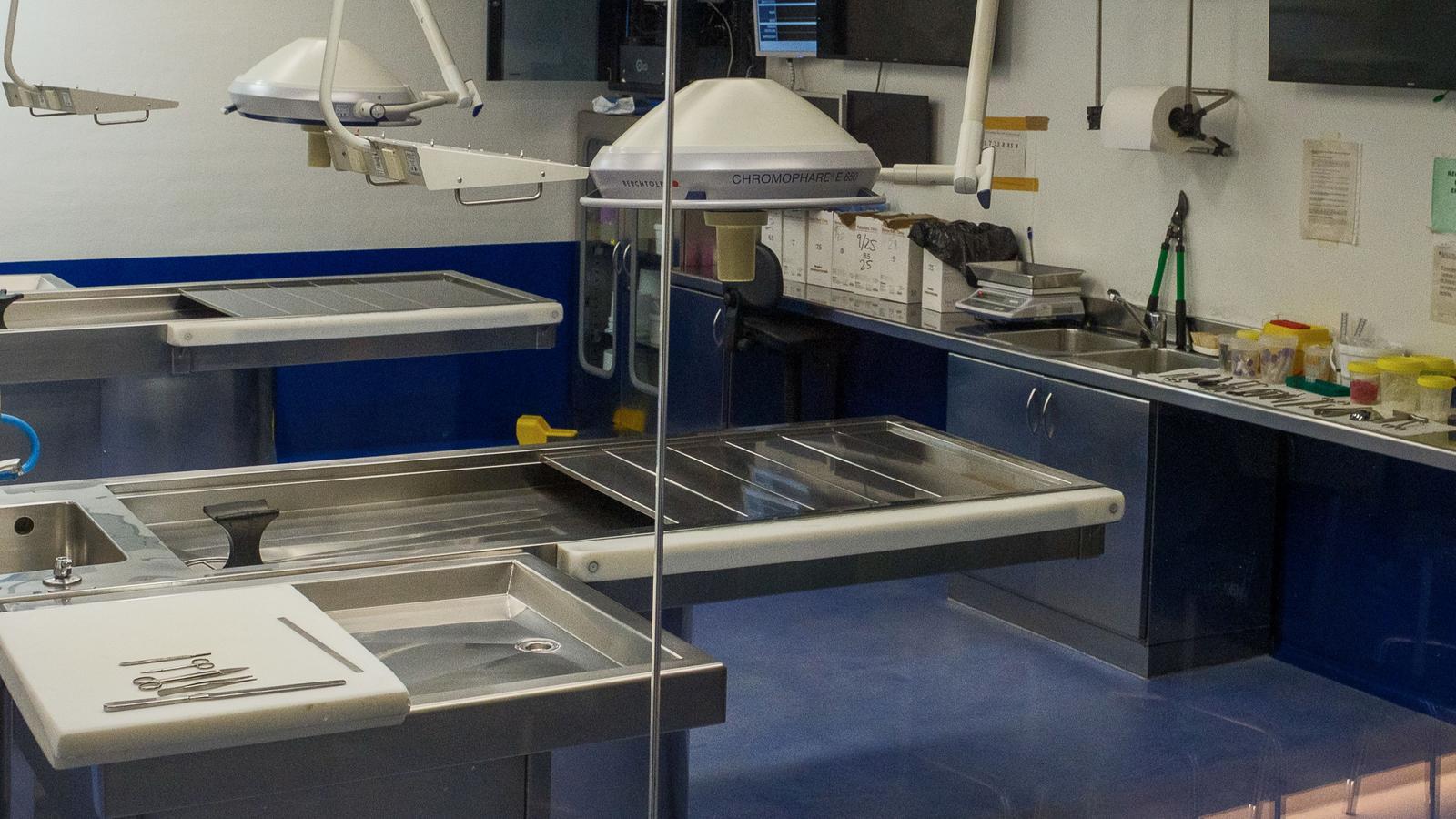
PalmWork overload and understaffing continue to strain the operations of the Institute of Legal Medicine and Forensic Sciences (IMLCF) of the Balearic Islands, which has been plagued by structural problems for years regarding human resources, infrastructure, and technical equipment.
Sources familiar with the situation explain that there is currently a significant shortage of forensic doctors and, above all, autopsy technicians, a problem that has worsened in recent years and directly affects the daily functioning of the service, in addition to causing the accumulation of bodies on several occasions, awaiting autopsy or collection by the funeral home. As they denounce, the Justice Administration cannot quickly cover sick leave, retirements, or vacancies, because the current administrative formula prevents the hiring of interim civil servants while the Ministry of Finance does not authorize certain budgetary allocations.

This administrative blockade has caused a situation that consulted sources describe as "senseless", since not even positions that exist in the organic staff can be filled. As a consequence, retirements and temporary absences are not replaced for months, further increasing the workload of the remaining professionals. In fact, as of today, the Balearic Islands have the same forensic doctors as the Legal Medicine Institute of Badajoz, despite the difference in population andthe floating population of the Islands –in Badajoz, just over 154,000 people live, while the residents of the Balearic Islands are more than 1.2 million.
The situation reaches its limit during the summer season: the population of the Islands almost doubles during the peak tourist season. This increase affects the work of the Institute, which must handle many more cases related to sexual assault, gender-based violence, homicides, and other criminal acts. In fact, the former director of the IMLCF, Consuelo Pérez, has acknowledged that last summer a total of thirty bodies accumulated in the Institute's morgue, a figure far exceeding what this organization's infrastructure allows. An unusual situation resulting from a lack of resources in the face of an overloaded workload.

The increase in discoveries of dead bodies of migrants at sea and arriving on the coasts of the Islands also contributes to the overload. These bodies are analyzed to try to determine their identity, a task often complicated by the poor condition of the bodies.
However, the assistance pressure even led to the inability to clean the cold rooms to guarantee the wholesomeness and hygiene of the space. Usually, these facilities are washed periodically and, when a room is occupied, the body is temporarily moved to another. Pérez explained that there are times without "room for maneuver" because the accumulation of bodies causes a lack of space.
In addition to the lack of staff, another problem is the aging of the facilities and machinery. The cold rooms have stopped working at certain times, especially during the summer months, when the engines are working at their capacity limit. Expert sources emphasize the seriousness of this situation, with corpses inside the facilities. They also point to waterproofing problems in the building's roof, with leaks that hinder the maintenance of the premises.
The lack of autopsy technicians has even forced part of the Institute's own tasks to be outsourced. The Administration has resorted to funeral home staff for certain support functions related to autopsies, such as dissections and tissue extractions. In Ibiza, for example, the service is maintained thanks to the temporary hiring of a funeral technician, after the island's only autopsy technician retired and the position has not yet been filled.
Professionals warn that the overload of care, the lack of staff, and the deterioration of the infrastructure are creating a situation that is increasingly difficult to sustain. Therefore, they call for urgent intervention to strengthen the service and guarantee adequate conditions for workers and the development of judicial procedures, taking into account that the expert reports prepared by forensic doctors are a key piece in the resolution of trials and require especially rigorous work.
Added to all this is a certain internal unrest among the workers, a situation that is not new either, although it has revived with the change of management, which has also been due to a lack of resources and constant confrontation with the Ministry of Justice. Sources from the Institute itself explain that “there are certain people” with unprofessional attitudes that hinder the normal development of work and episodes of absenteeism.
The precarious situation of this body, very important for guaranteeing a task that requires rigor and respect –for expert evidence in a trial and for the families of the deceased–, is not exclusive to the Balearic Islands. According to sources consulted, similar problems are repeated in almost all forensic medicine institutes dependent on the Ministry of Justice, such as those in Albacete, Cuenca, Guadalajara, and Burgos, among others.
