And if finally the eclipse could not be seen from Mallorca?
The state of the atmosphere will mark the observation of the phenomenon on the island, which expects thousands of visitors to contemplate it

-
CAT -
CAST -
GER
PalmaMallorca has become one of the most sought-after locations to observe the solar eclipse on August 12. Thousands of people will travel to the island to witness the astronomical phenomenon, while Majorcans eagerly await an event that has not occurred in the Archipelago for over a century. Flights with no availability, full hotels, and residents searching for the best spot to observe it. There is, however, a possibility that almost no one has foreseen: what if it cannot be seen from Mallorca after all?
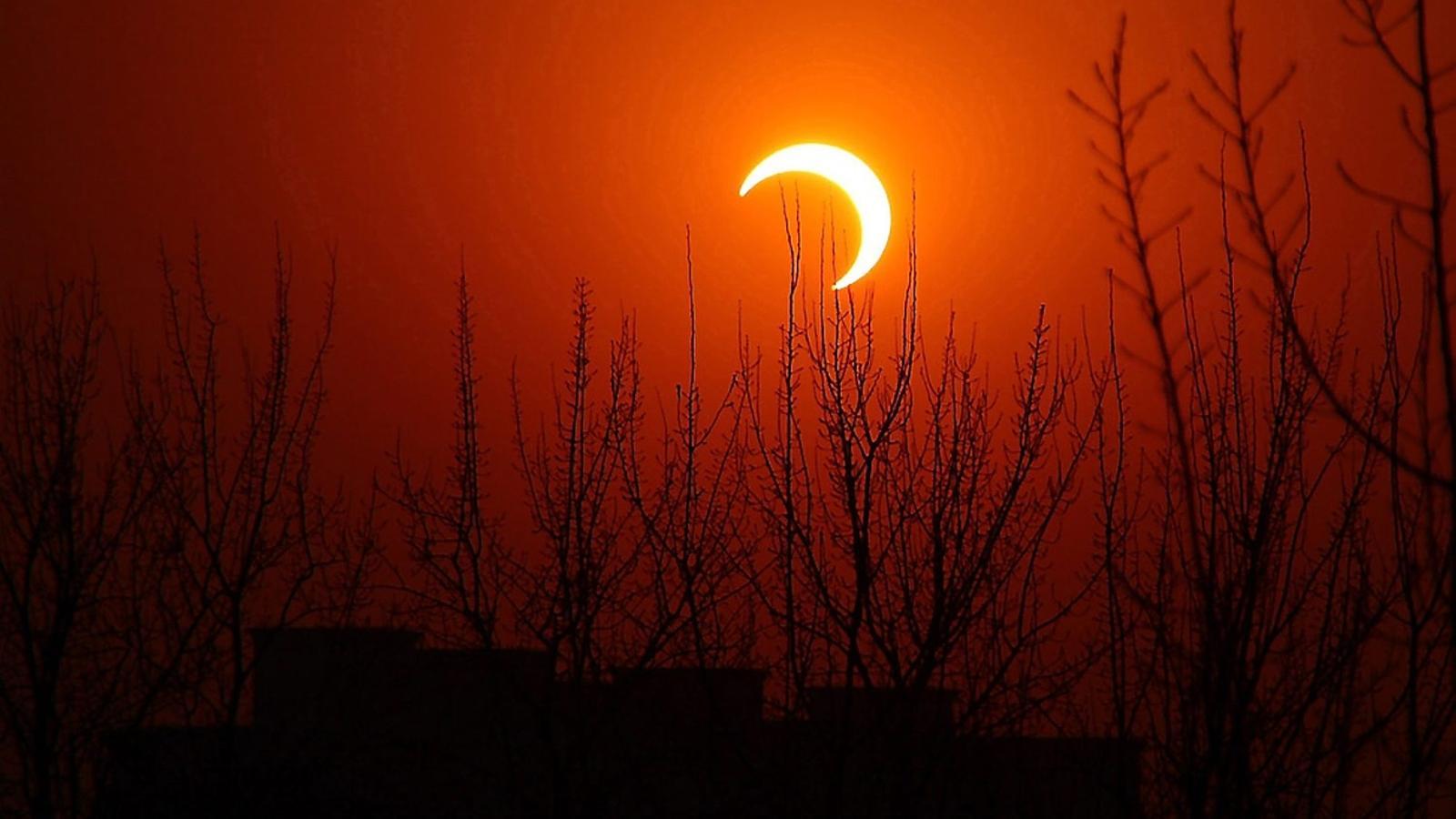
While a large part of the debate has focused on traffic restrictions and the crowding predicted in the Serra, astronomers and science communicators remind us that there is another variable, equally or even more decisive: the state of the atmosphere. Accumulated humidity and the presence of haze – the phenomenon caused by suspended dust particles that cloud the sky and reduce visibility – can turn one of the best places in the world to observe the eclipse into a disappointment.
"Humidity and haze are a danger that has practically not been taken into account," warns UIB astronomer Ramon Oliver. As he explains, if the atmosphere continues to be laden with dust and water vapor that evening, the quality of the observation will be significantly reduced. An analysis shared by science communicator Pep Marcús: "As the horizon is right now, with this humidity and this haze, we wouldn't see almost anything." Both agree that, beyond clouds, the transparency of the air will be one of the decisive factors for the experience to meet expectations.
For this reason, both are also looking at the sky in the days leading up to it. Oliver assures that the ideal scenario would be for "a good rain to fall the evening before or the morning of the 12th," as the rain would help to cleanse the atmosphere of suspended particles. Marcús recalls that this situation is not at all unlikely. "Usually, when July ends with so much heat and so much haze, August usually begins with rain episodes that clear the horizon. It would be ideal if this happened," he explains.
However, both insist that it is still too early to make a reliable prediction. The meteorological conditions that will determine the quality of the observation will not be known with sufficient precision until a few days before, and even the hours beforehand can be decisive.
What does the forecast say?
A week before the eclipse, meteorological models still do not allow us to anticipate with enough precision what the sky above Mallorca will look like during the evening of August 12th. The State Meteorological Agency (Aemet) insists that a reliable forecast will only be possible from the days prior to the phenomenon, when it will begin to publish specific bulletins on the state of the sky and the probability of clouds.

With the data currently available, the scenarios point to a fully summery day, with high temperatures and no widespread instability in the Balearic Islands. Nevertheless, the great unknown remains the transparency of the atmosphere, a factor that will ultimately determine whether Mallorca can offer the great astronomical spectacle expected or if humidity and haze end up eclipsing the eclipse.
