ARCA: "Preserving the Feixina has not contributed to it becoming the 'ultra' meeting point"
The spokesperson vindicates the historical values despite the criticisms the entity has received for defending what many consider a monument to Francoist exaltation
-
CAT -
CAST -
DE
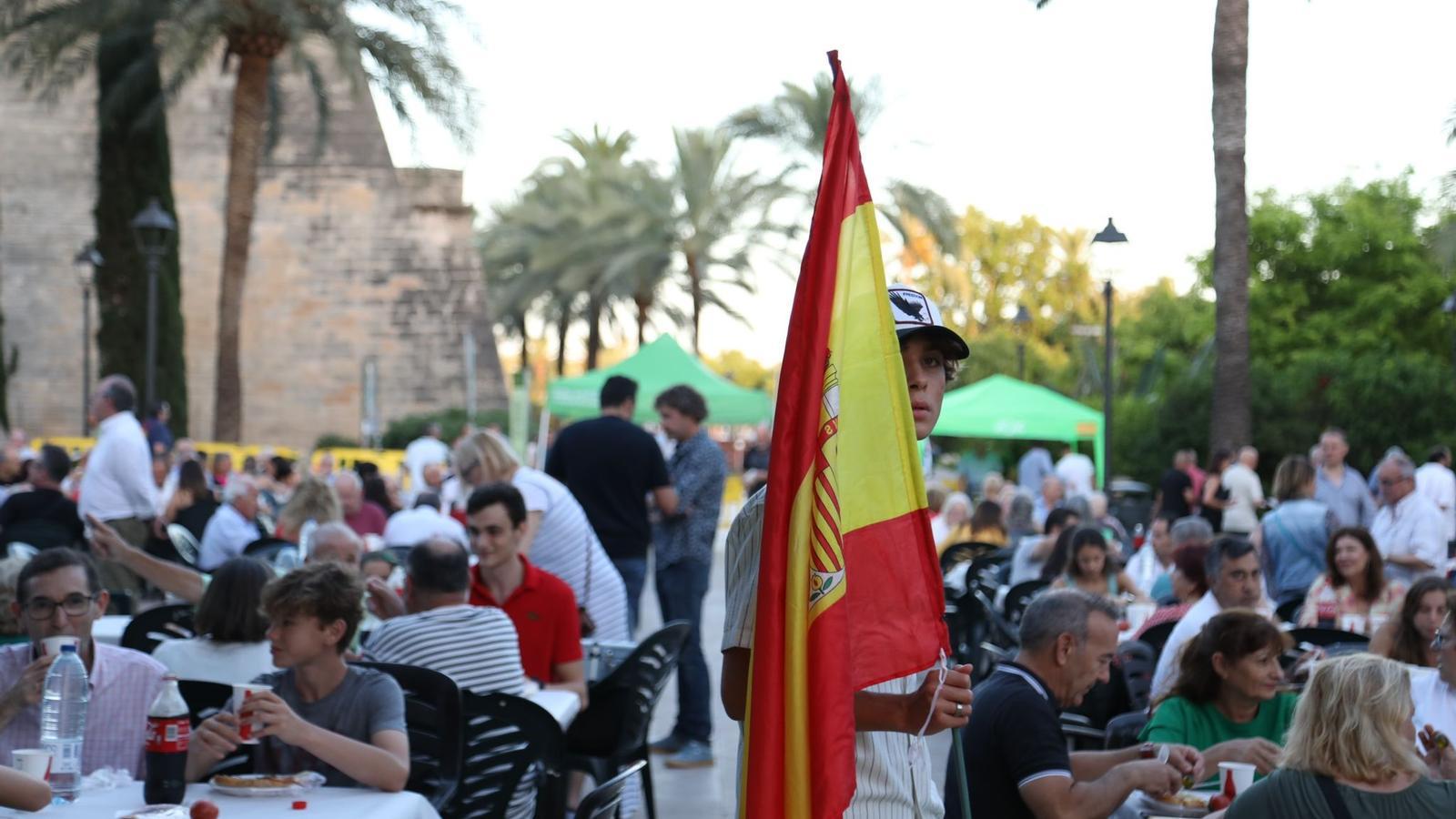
PalmaThe ultra concentration of Nucleo Nacional scheduled for this Sunday at La Feixina has revived the debate on the advisability of preserving this space. ARCA is one of the most prominent entities opposed to its demolition, which a large part of the progressive movement calls for, because the monument represents "Francoist exaltation", according to entities like Memoria de Mallorca. The vice-president of ARCA, Àngels Fermosselle, wants to "completely" dissociate the entity from "any responsibility for a gathering for which only the conveners are responsible", she told ARA Balears – ARCA has also publicly condemned the call.
The meeting comes amid a new open institutional clash between the Spanish government and the Palma City Council over the future of the monumentappeal against the Spanish government's resolutionTrue to its criteria, ARCA has decided to appeal the Spanish government's resolution to demolish La Feixina. The entity considers that Madrid's decision ignores the heritage criteria and institutional agreements that have supported the monument's conservation for years. Meanwhile, Cort has strengthened its urban planning and heritage protection to hinder any demolition attempt. The entity rejects that its historical and heritage defense of the monolith has contributed to turning it into "a meeting place for the far-right", criticizes Fermosselle.
“When Francisco Roca made the work, he used the techniques and styles of the time. It is a work of historical interest”, explains Fermoselle, who claims the architectural value of the monolith. “It is one of the few examples of Art Deco in the Balearic Islands”, she adds. The Spanish government considers that La Feixina continues to be a Francoist monument and has requested its demolition. The current Cort government team emphasizes that the monument cannot be demolished due to its architectural and historical value.
Fermoselle recalls that the entity's position has always been in line with what experts such as architect José Morata and Carlos García-Delgado defended. “As the doctor in art history Pepín Morata said, it is about separating the symbolism from the architecture”, he points out. According to ARCA's spokesperson, the entity could have opted for a simpler position. “Perhaps it would have been easier to also ask for it to be demolished, but we cannot ignore voices like Morata's nor patrimonial and legal criteria that informed in favor of its survival”, she says.
Endorsed by the left in Calvo's time
Fermoselle recalls that the protection of the monument was institutionally supported during Aina Calvo's (PSOE) term at Cort. "It was unanimously approved to preserve La Feixina, with Nanda Ramon as councillor for Culture," she explains.
ARCA argues that the monument was "re-signified" during that period, when elements of Francoist symbolism were removed from it. "During Aina Calvo's term, the symbolism that could hurt feelings was removed; the argument that this work cannot be demolished remains valid," she states. The entity completely disconnects its position from any extremist use of the monolith. "If some people with extremist ideologies use it as a meeting place, they have no idea what they are doing," assures Fermoselle. "No building or construction should serve to advocate for anti-democratic values and conduct. This is the exclusive responsibility of these movements."
The president of ARCA insists that the association condemns "any violence and values that do not fit within democracy" and also any proposal that does not condemn the Civil War. Fermoselle admits that the entity's position has been the subject of strong criticism from memorialist associations, especially Memòria de Mallorca. "Our position receives constant criticism, but we are committed to historical and heritage values," she continues.
She also acknowledges that there were reports against the monument's conservation. "The one by Margalida Capellà stated that this construction goes against the principles of democratic memory. I understand and respect that," she says. Nevertheless, she argues that the monument cannot be reduced solely to the Francoist interpretation. "It is not a monument to the [cruiser] Baleares, but to the victims of an attack, who were mostly young people, very young, and not all of them were fascists," she argues. "We must leave behind rejoicing in any death and advocate for all victims."
Fermoselle assures that the public debate about La Feixina has often become excessively tense. "Any calm debate is good, but I have even had unknown people approach me in an intimidating way," she recounts. "I can understand that a victim of Francoism experiences it with passion, but history must be above specific cases."
