"At that moment I already knew that I had become a quadriplegic"
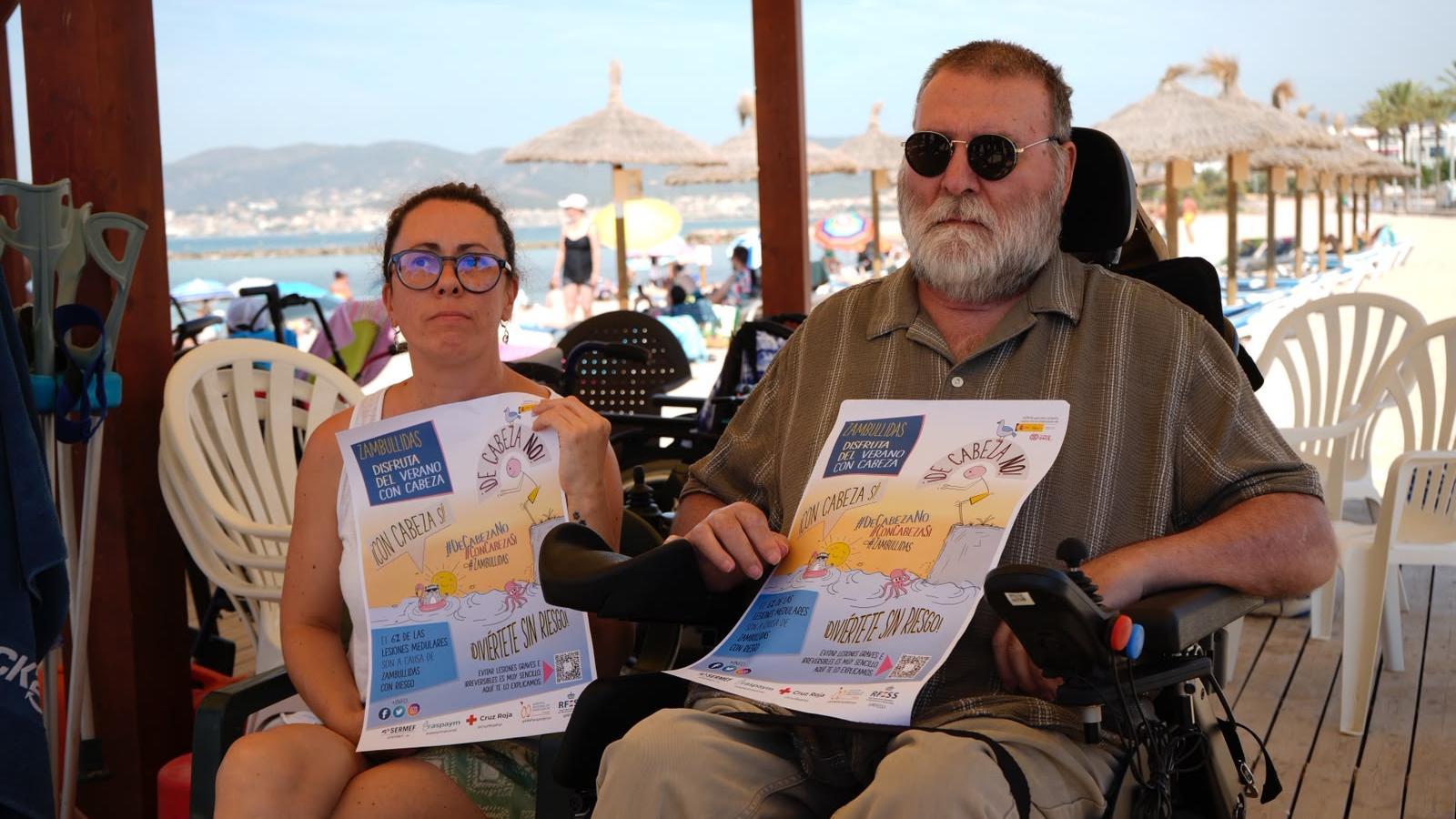
Aspaym warns that 6% of spinal cord injuries are a consequence of risky dives and presents a prevention campaign aimed especially at young people
-
CAT -
CAST -
DE
Antonio Balaguer became tetraplegic nine years ago after diving into a swimming pool in Magaluf, during a birthday celebration. "I dived headfirst without my hands against the ground. I hit the bottom. I didn't break my nose, which is the most common thing in these cases. At that moment, I already knew I had become tetraplegic".
He received assistance from a friend to get out of the water. In these cases, there is also a risk of drowning. “We were playing to see who would do the biggest stupid thing, and I got the highest number,” he recalls. From that moment on, he spent two years in hospitals. Now he needs to be constantly accompanied, he cannot “pick up a glass of water to drink” and he tells his story, because in an accident “you can lose everything”. He also emphasizes the loss of independence: “You need someone next to you always. It's not just you, it's also your family. They are the most important thing”. Finally, he explains that most beaches are not equipped for him to swim in: they do not have the equipment to assist someone totally dependent.
Aspaym
Antonio Balaguer explained his story this Friday during the presentation of the campaign Capbussades, promoted by the Association of People with Spinal Cord Injury and other Physical Disabilities (Aspaym) at Ciutat Jardí beach in Palma. The initiative is national, takes place during the summer months, and is especially aimed at young people as a risk group, with the aim of preventing spinal cord injuries caused by reckless dives.
The vice-president of Aspaym Illes Balears, Carolina Ligero, stated that 6% of annual spinal cord injuries are due to risky dives. She asked for caution, because “the consequences can be very tedious”.
During this month of June, two cases of hospitalizations due to falls at Caló del Moro have already been registered. According to the latest record from the National Hospital for Paraplegics, last year three hospital admissions were recorded for spinal cord injuries caused by dives: all men, aged 18, 40, and 51. “We are talking about injuries that change the lives of young people —explains Dr. Alcobendas, director of the National Hospital for Paraplegics. The most painful thing is that many could have been avoided. That is why we must act before it happens: with prevention you save lives”.
