Cristina Oliver i Xavier Peña: "Catalan is a kind of password that unites a class of people who stick together abroad"
Mallorcans in Switzerland
-
CAT -
CAST -
DE
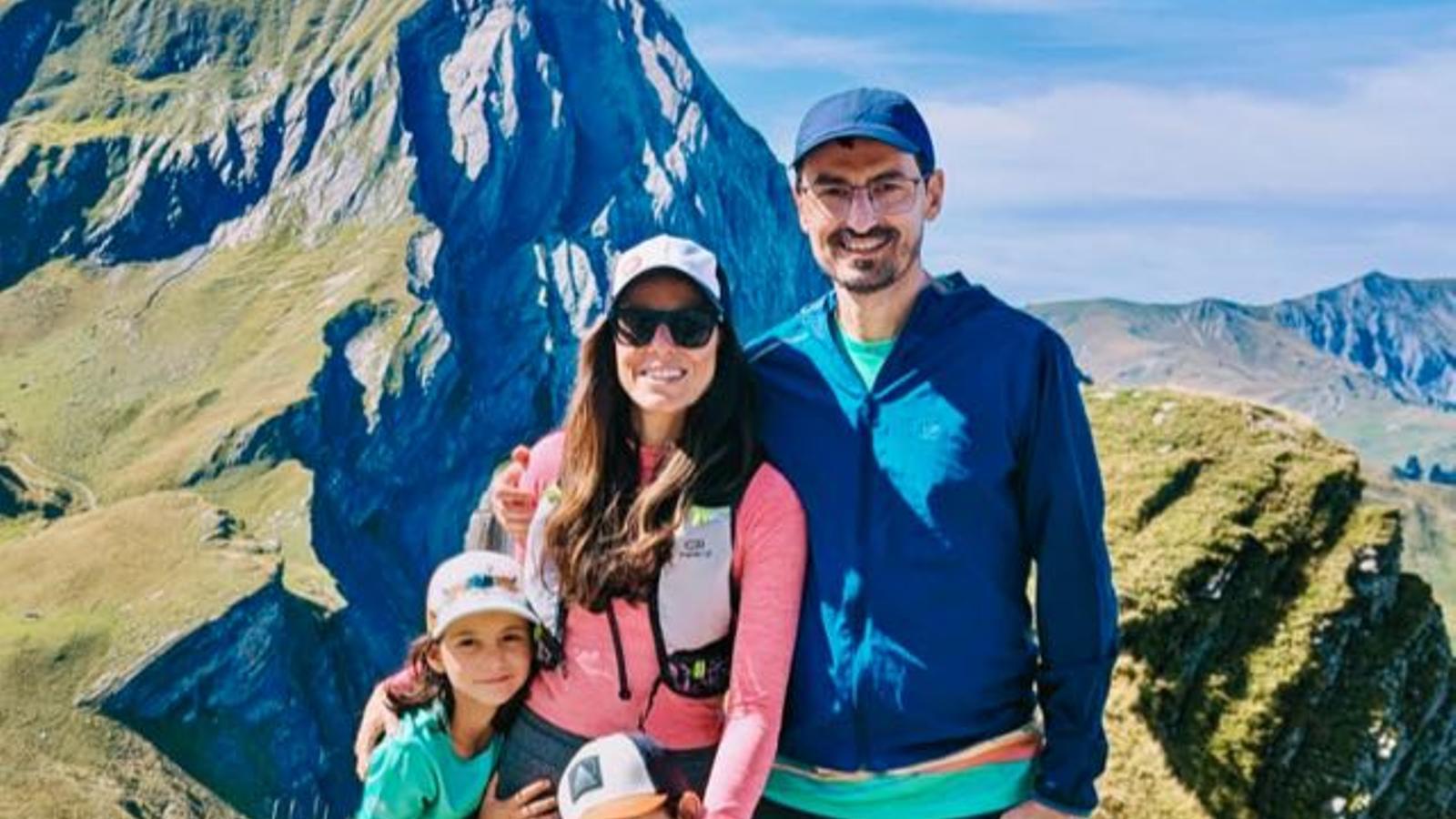
ManacorCristina Oliver and Xavier Peña are a couple from Mallorca who live in Lausanne. He went there for an Erasmus and stayed to live there 19 years ago. She moved there later, after having lived for a few years in London. They have two children, aged seven and three, Júlia and Leo. At home they speak Catalan, between themselves and also to their children. They want them to be able to communicate with their family in Mallorca and to feel like they are from Mallorca, while growing up in a French-speaking environment and being in contact with other languages such as Spanish and English. We speak with them about how they have experienced the transmission of the language, the resources that have helped them, and the concerns they have regarding the future.
Why did you decide to speak in Catalan with Júlia and Leo? Was it clear to you from the beginning?
— Cristina Oliver: Everyone's mother tongue is Catalan. It is the language we have always spoken at home and that all our family speaks, so for me there was no other option but to speak to them in Catalan. It is the language that comes from my heart and most naturally. Also because we try to go to Mallorca as much as we can and we want the children to speak the language well, to be able to communicate with everyone, and to feel integrated. I remember that, at one point, before Júlia was born, Xavier told me that he was considering speaking to her in Spanish to facilitate her learning of that language, and I found it outrageous. For me, it is unthinkable to speak to your son or daughter in a language that is not your mother tongue. Furthermore, it is a language she has learned over time autonomously with our friends (and which she continues to learn and perfect). Now that Leo is 3 years old, we can already see that he is starting to speak it, too.
— Xavier Peña: For us, it had always been very important that our children could speak Catalan. The reason is clear: to be able to communicate with the rest of our family, who are 75% Catalan-speaking, 100% from where we come from, Manacor. The other 25% is from León. I was not always sure about it, speaking to him myself in Catalan: before he was born, I considered speaking to him in Spanish so that he would learn it. I dismissed it for two reasons: on one hand, they say that parents should speak to their children in the “language of the heart”... and for me, obviously, it is easier to express myself in Majorcan than in Spanish. The difference in extra effort must not be more than 15%, but accumulated over a lifetime, it is not negligible; on the other hand, speaking with other people who had lived through similar situations (children of Catalans raised abroad) they assured me that Spanish comes on its own. Furthermore, it must be added that our close group of friends in Lausanne speaks Spanish, with which our children learn it almost “by osmosis”, a little bit like when we as children learned Spanish through little things like watching TV.
What language do they speak among themselves? Has it changed over time?
— C. O. For the moment, they speak to each other in Catalan. We are surprised, because based on the statistical samples we see around us, and Lausanne has many of them, because it is extremely multicultural, it seems that the language of the school playground always ends up winning. Sometimes, when playing alone, they speak to themselves in French, because that is what they do at preschool... it's curious. In any case, we assume that there will come a time when they will speak to each other in French, because in all likelihood it will be the language they end up mastering the most, after many years at school, on the playground, etc. Furthermore, the vocabulary they can acquire from their parents may fall short when they have to talk about 'youth' things. But the more this date when they start speaking it to each other is postponed, the better.
— X. P.: For now they continue speaking Catalan among themselves. It is the language spoken in our home and for now they maintain it. We know that, unfortunately, this will probably change when they are older. Through people we know who also speak several languages at home, we know that children, when they grow up, adopt more of the language of the school, friends, activities, social life, and siblings end up speaking this predominant language among themselves. In our case, it is French.
How was the start of schooling in a French-speaking environment? How did they adapt to it and which languages did they start using more?
— C. O.: Both Leo and Júlia were born in Switzerland and have always had French as their native language. Therefore, they have not had any difficulty. It is true that perhaps at the beginning there were some vocabulary differences compared to other children who were purely Francophone, since many words and expressions that the adults around them may use, we do not use, because we do not speak French with them. Apart from that, everything without any problem.
— X. P.: No problem. Both started preschool at a time when, as they say, they didn't speak any language. And they have learned to compartmentalize one or the other perfectly depending on the context. With Júlia, the educators always told us no problem. With Leo, at one point, when he was about 2 years old and changed preschools, they kind of told us he was a bit behind in French...but very shortly after they told us it was perfect, too. A curious anecdote about Júlia at preschool is that she introduced the word 'burratxo' and then all her classmates were saying it (“buggatxós”), as if it were the correct word. In French, the correct word is gribouillage.
Have you noticed that Catalan has lost presence as they have grown up, or that it is harder for them to speak it? How do you assess their command of the language?
— C. O.: For now, it has not lost presence, but it will probably change at some point; when they grow up and spend much less time with us, surely French will gain more strength. Personally, I find that their command of Catalan, especially Júlia, who is older, is really very good for someone who has never lived in Mallorca. She speaks it very well, knows many expressions and words that are very local and typical of Mallorca, and has a lot of vocabulary. Leo also speaks it very well, but with the expressions of a 3-year-old child, which are still quite a bit more limited. At our home, we place great importance on the language and, since they were born, we have encouraged songs in Catalan, reading in Catalan, a close relationship with the Mallorcan family, and activities in Mallorcan when we are in Mallorca.
— X.O.: The truth is that it has neither lost presence nor is it more difficult for them, but we are very lucky to be able to spend long periods in Mallorca, about two full months a year, intermittently. And that helps them a lot. There they feel that it is a living language, because our whole environment speaks it. For them it is completely normal: they hear it constantly in our home in Lausanne, with family and friends in Mallorca... which is why for them within their vital circle it is a completely living and useful language. The command they have of the language is difficult to evaluate. Sometimes they say some Frenchism: Júlia says "reniflar", which is a Majorcanization of renifler, which means to sniffle.. But well, we ourselves have also adopted many French words such as doudou (stuffed animal / transitional object), calin (hug) and ça va (an expression like how it goes, it's fine, good enough... which is said a lot in French and which we find useful).
Which language do they use when they are with friends or doing activities outside the home? And when you are with family members or other people in an environment where not everyone speaks Catalan, which language do you end up speaking?
— C. O.: Well, I think we all experience it quite naturally. Regarding everything related to the school environment, friends from school or extracurricular activities, we parents of the children all speak in French. When we are with Spanish friends, we speak Spanish. Júlia already speaks it very well, she misses some things, but since she learned it all by herself just by listening to them, she does quite well! Leo is now starting to understand it and we also hear him saying things in Spanish. With friends who speak Catalan, we usually speak in Catalan if there are no people who don't understand it. Standard Catalan is a bit difficult for them, but little by little they are understanding more things. Júlia and Leo experience it in a very natural way. They already see that there are different languages they can speak and they speak them when appropriate, depending on the people we are with. Traveling, they have also learned a little English and I suppose that soon, especially for Júlia, it will be time to start learning it, along with German, which is mandatory in Switzerland.
— X. P.: Outside of home they speak in French with almost everyone, but with the children of our friends they speak in Spanish. They don't master Spanish 100%, but ça va! 80% of the time I speak to them in Catalan in front of other people if I am addressing them directly. If it is relevant that someone present understands it, or sometimes to make that person or people present feel included, I switch to French... but clearly most of the time I speak Catalan to them. I make a conscious effort not to feel any kind of discomfort, because if they noticed it: kaput. Cristina explains to Júlia that the Mallorcan dialect is like a kind of secret language that means no one can understand us in Lausanne... and it is quite true, since even central Catalan speakers are quite lost if they hear us talk.
Have you ever found yourself in situations where speaking Catalan has made you feel different, uncomfortable, or out of place? How do children react in these moments?
— C. O.: Well, I don't know what Xavier will answer here, but I personally don't think that has happened to me here, feeling uncomfortable speaking Catalan. We have many Spanish friends and I do remember that, during everything that happened on October 1st, 2017, there were political frictions in the group regarding independence. There were people who were against it, people who were more right-wing. There was trouble! But with the language, the truth is no. Our friends have known us for many years now and are very used to hearing us speak in Mallorcan among ourselves and with the children. When we are with these friends, we never change the language to speak among ourselves or with the children, even if they don't understand us. We have other friends who, for example, speak to their children in German, Swiss German, and Indonesian, and everyone thinks it is quite natural and normal that they do so. Our children have never experienced any uncomfortable situation in this regard, as far as I can remember. They always speak to us in Catalan, come what may and whoever may be in front of us. Sometimes, in my case, it is me who switches to French with them if I see that there are people who don't know what they are saying to me.
— X. P.: No, I would say it has never happened to us. As I was saying, Lausanne is extremely multicultural, and people are completely used to hearing many languages from all over the world on the street. The thing that made me feel most uncomfortable is when Júlia was a little younger and spoke in Spanish to some Catalan friends, because she did not understand the central dialect.
What concerns or fears did you have when you decided to pass on Catalan to them? Are there any that you still have? For example, are you worried that they might lose it, that they won't master it enough, or that it might pose a difficulty in their environment?
— C. O.: Not even a shred of fear: a good sense of pride. I want them to speak it well, to master it as much as I do, to feel it as their own, to feel they are from Mallorca, aside from being from Switzerland, to love it and, if possible, for them to decide one day to speak it with their own children too. That one day they might lose it or stop speaking it does worry me, I would truly regret it. But I do not believe it will ever pose any difficulty for them. A language is a wealth; they speak others and, the more they speak, the better it is for them.
— X. P.: The issue of standard Catalan versus dialect is, I believe, my greatest anxiety: will they learn to write it correctly? Will they understand books and films in the central dialect, or in any case: will it be easy for them to enjoy them? Will others understand them? For example: a Mallorcan friend has enrolled his children in the Centre Català and the teacher tells them that certain dialectal words are wrong, and he has to correct the teacher. The fact of being a minority dialect within a minority language on a global scale, in a foreign country ... is a matryoshka of difficulties in formal language learning.
Have you looked for ways to strengthen Catalan: books, movies, activities, contact with other Catalan-speaking families, or stays in Mallorca? What has worked best for you?
— C. O.: Yes! Lots of stories and music in Catalan. Now, books for Júlia. Whenever we can we go to Mallorca and here we also have Catalan friends. These last few years we have also become quite close with a family where the father is Majorcan and the mother is Paraguayan, and they have twins the same age as Júlia. Their mother speaks Majorcan very well, and that is despite arriving in Mallorca at 30 years old! The father is one of the few Majorcans we know around here.
— X. P.: Books, above all. Contact with others cannot be forced. As I was saying before, the stays in Mallorca have clearly been the determining factor, both for mastering the language and for perceiving it as useful. We also have regular video calls with the grandparents, for example. Later on, perhaps we will also enroll them in the Catalan Center of Lausanne so they can learn it formally.
How do Júlia and Leo respond when you speak to them in Catalan? Are there moments or topics where it comes more naturally to them, or where they answer you in another language?
— C. O.: Catalan is their mother tongue, so they experience it in a completely natural way. It always happens that there are words or expressions that come to them more in French, because they use them a lot while playing or in the school environment, but it does not go beyond that.
— X. P: Perhaps at some point they have answered us in French, and we have clearly told them that in no way. But it is a message that has caught on very easily, it has by no means been a constant struggle, but rather an extremely infrequent episode. We have not even had to tell them to speak in Catalan among themselves, but rather they have done so naturally. There has been total normality in this aspect. The fact that both Cristina and I speak it makes everything much easier. Many other couples with children in our circle do not have this linguistic homogenization at home, and it shows... the mother's language is the one that ends up winning, but even so they do not master it completely.
What benefits do you think speaking Catalan brings them? What does it mean to you that they maintain it?
— C.O.: The more languages a person speaks, the better. Furthermore, I feel very Mallorcan and I miss the land, the people, and my friendships quite a bit, and I have very good memories of my childhood there. I always think that I would like them to have that special relationship with Mallorca, and speaking the language is essential. Moreover, as I was saying, our entire family speaks Mallorcan, so it is necessary for communicating with them.
— X. P.: Difficult to define in words, but I am convinced that it is extremely beneficial for them. The fact that the Mallorcan dialect is globally minority is irrelevant; if they spoke a dead language perfectly fluently, it would also be very good for them... but furthermore, Catalan is not a dead language, and it is also a kind of password that unites a type of people who stick together abroad. One of the benefits is that they feel at home in two places: in Lausanne and in Mallorca. If they did not speak the language of Mallorca, they would feel like foreigners there. Another benefit is that the more languages you know, the easier it is to learn new ones. In two years, Júlia has to start learning German at school, it is mandatory in Switzerland, and then also English. Another benefit is the ease of changing context that the fact of mastering several languages facilitates. In the current work context, adaptability and changing context is extremely important. Finally, it brings them a cultural richness of empathy towards other cultures and other languages.
How do you imagine the relationship they will have with Catalan will be when they are older? What do you hope will remain for them of the language and culture of Mallorca?
— C.O.: If I am pessimistic, I think that between them they will speak in French and perhaps at some point they will try to speak to us in French as well. And if I am optimistic, I imagine that Catalan will always be the language spoken at home and with the whole family and that they will speak it in a completely natural, fluid and native way. I hope they love Mallorca as if they had been born there and that, why not, one day they go there to spend time, to study or to live.
— X. P: If they stay in Switzerland, the most likely thing is that they will have a partner who does not speak Catalan and it will be very difficult for them to pass it on to their children. Perhaps with effort they will manage it, but then this new generation would almost certainly be the last one to speak Catalan and would no longer pass it on to their children. This is how I foresee it, and I also base it on statistical samples of these cases that I have seen in Lausanne. They will always carry the language and culture of Mallorca in their hearts, just as I have Tremor de Arriba del Bierzo in mine, where I spent a month every year... but just as it happened to me with Tremor, when the old generations disappear, it will be difficult for them to maintain contact. At least Mallorca is much more accessible than Tremor, and more attractive in many other senses.
Is there anything from your experience that you would like other families in a similar situation to know?
— C. O.: Every family and every child is a world of their own, but what I do find is that people must never give up and must speak to children in their own language, even if it seems that the child does not want to or does not accept it. Many people give up, change language, and the child ends up not speaking it. You must persist and have patience and, at a given moment, when the child is older, even demand that they answer you in the language in which you speak to them. That is what I would do if my children did not want to speak to me in Catalan.
— X. P.: One thing I have seen with some migrant people is that they speak to their children in French with a heavy accent, because they don't master it. I don't know the reasons, but I suspect it's a mix of anxiety that the children won't learn the language well and won't integrate well. I think this is utter nonsense. Children (at least in Switzerland, I don't know about other places) learn French perfectly, and they are not marginalized for being multicultural. But that might vary depending on the place, I don't know. I would say that if both parents have things clear and don't have insecurities, managing to speak Catalan at home is easy. And the small difficulties that may arise are compensated by the fact that when it succeeds, everyone can communicate with fluency. My children will master French much more than I do, having lived in Switzerland for 19 years, and I wouldn't want for anything in the world for my communication with them to be unbalanced in their favor... There is also the issue of cultural roots: children of immigrants tend to feel like foreigners both in the place that welcomes them and in the parents' place of origin. My goal is for them to feel 100% from both places, and I think it is perfectly possible. It is often said that in Madrid everyone is from Madrid and from the town where they go to spend weekends and holidays. And they feel they are from both places. Well, for my children, ideally, I would want the same.
