Ciutadella returns cars to the Born due to a fear already overcome in Menorca
The transformation of spaces into squares and pedestrian streets has motivated everywhere an initial rejection from merchants who, over time, recognize the improvement it entails

-
CAT -
CAST -
DE
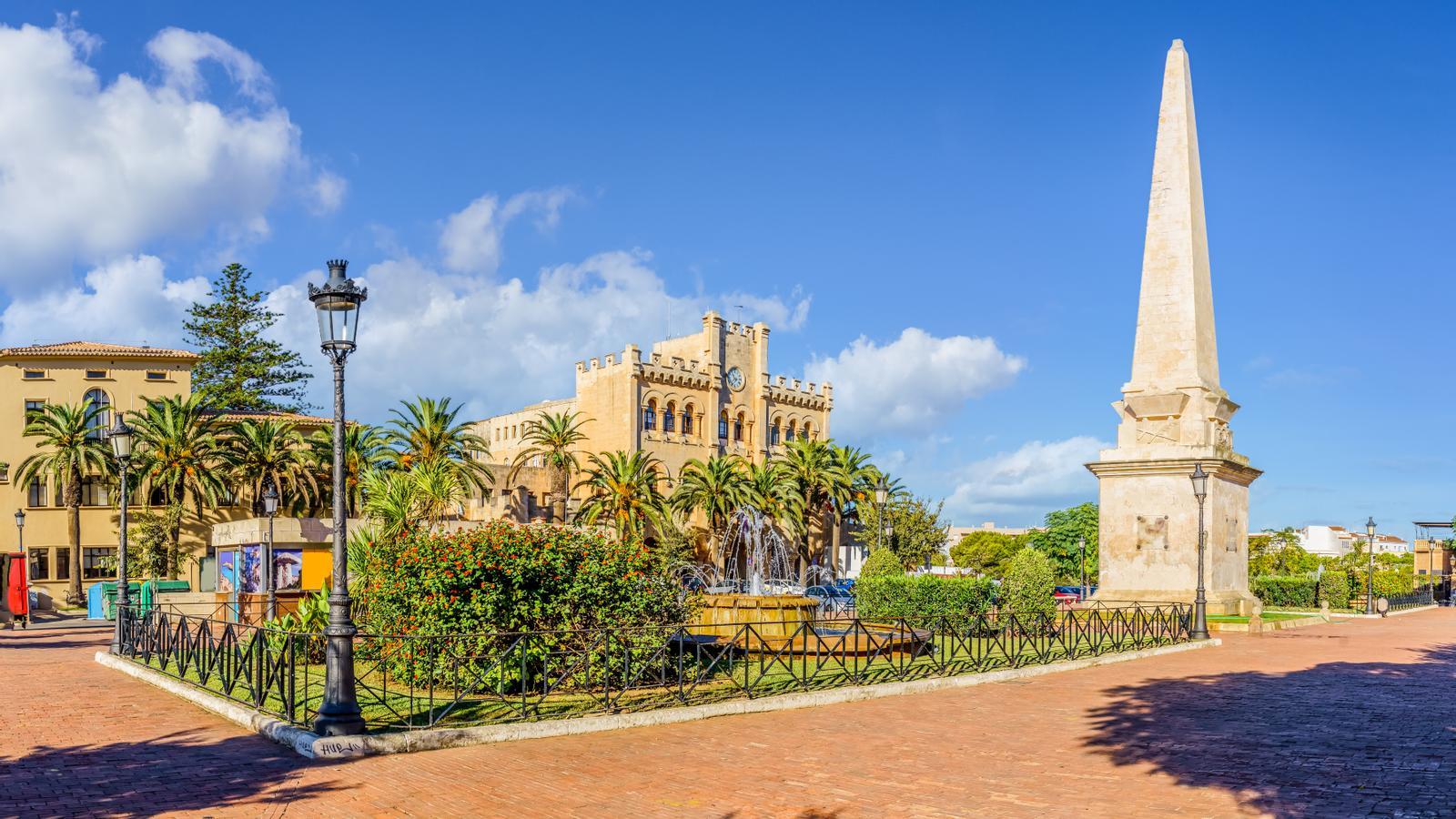
PalmaIt is easier to look for external enemies to make excuses than to engage in self-criticism. And even more so if, from the outside, they cause changes that may affect the business. This is the reaction that businessmen and merchants in Menorca have always had when the Administration's decisions have transformed the space or the conditions in which they have to work. The latest example we are experiencing this summer in Ciutadella, where the resistance of a group of 22 businessmen to accept the pedestrian zone of the city's main square, the Born, has led the court to have to force the City Council to turn back and allow the space recovered 14 months ago for the enjoyment of the citizenry to be filled with cars again.
Throughout this month of September, the street furniture will have to be removed, terrace permits for bars revoked, and the 130 parking spaces repainted. Free and freely available, since those with payment and regulated hours (blue zone) are not provided for in the ordinance that the City Council had to modify to provide legal support for its commitment to “a Born for the people”.
Four-month postponement
It was not enough. After an initial favorable judicial ruling, the businessmen's appeal was upheld, and it was no longer possible, with the various appeals filed, for the Court of First Instance No. 4 of Palma to change the meaning of the judgment. The City Council has managed to postpone the return of cars for four months, throughout the summer, but is now forced to comply with the resolution to avoid the scenario where municipal officials would have to pay with their personal assets the coercive fines that, at the request of the businessmen, the court would impose on them.
“For a few, who have put their particular interest before the general interest of the entire population, the Born will once again be a parking lot and a traffic chaos,” lamented Mayor Maria Jesús Bagur (PSM-Més per Menorca), who still hopes to win the appeal before the Supreme Court, recover the square for pedestrians in a few months, and not have to compensate the businessmen either.
Their lawyer, Víctor Carrera, says that the pedestrianization of the square has caused losses in commercial turnover around the Born of between 20 and 30%. But the municipal government is skeptical and sees no direct relationship between the recovery of an iconic space in the center for pedestrians and the loss of business for the entrepreneurs. On the contrary, the City Council relates this supposed decline in turnover to the weak start of the 2025 tourist season throughout the Islands, coinciding also with the beginning of the pedestrianization of the square.
The only way to avoid backtracking is for the businessmen to withdraw their lawsuit, but they openly refuse and find it “ridiculous” that the City Council asks them to do so. “We will not give up on a procedure in which, until now, we are being proven right,” argues lawyer Víctor Carrera. Only a “global agreement” that included all the group's proposals would make it possible. Above all, that the City Council would agree to put the bus stop back in the Plaça dels Pins, since “if private transport is moved away from the historic center, it makes no sense for public transport to be moved away as well.”
The case of the Born recalls many other precedents in Ciutadella itself, and in the rest of Menorca, where traffic changes have triggered an initial commercial reaction against them that, over time, has transformed into acceptance and, even, into recognition of the overall improvement it entails.
Many people still remember how in the 80s and 90s of the last century cars crossed the Voltes and could go from the Born to the Palmeres, the current central axis –for pedestrians– of the historic center, and how all the squares surrounding the Contramurada ring remained open to traffic.
The last precedent occurred in 2010, when the reform of the Plaça dels Pins was promoted, including the elimination of one of the two traffic lanes in order to gain the sidewalk closest to the center for pedestrians. In this and in all previous cases, the initial suspicion of the affected businesses and a part of the citizenry not very given to urban transformations of greater impact had to be overcome. Now, however, no one disputes the changes.
Even in the Born itself, all the political groups of the corporation, including the Popular Party in the opposition, are in favor of making the square a permanent pedestrian space. The only thing under discussion, beyond the judicial rejection of a few businessmen, are the forms and the timing to materialize this change now without having previously enabled the necessary alternative parking outside the center in order to compensate for the loss of parking that is generated.
The debate, however, is not exclusive to Ciutadella. In Sant Lluís, for example, ten years ago a controversy broke out after the City Council temporarily closed the Cós, the town's main commercial avenue, to traffic. Different governments had to propose alternatives and regulate the closure due to protests from residents and merchants. A decade later, this has ceased to be a problem for the municipality.
Maó had already experienced this controversy a few years earlier, between 2011 and 2013, when the closure to traffic of the Esplanada square, which gives access to the center, motivated the reaction of the small business association. The businessmen complained about the municipal “improvisation” and the “traffic chaos” that it would cause. Closing traffic between the Esplanada and the Carrer de les Moreres “will seriously affect commercial activity”, complained Mô Comercial. The change today is already fully normalized.
The merchants of Alaior and Ferreries had the same reaction when in the 90s –the former– and in 2012 –the latter– the bypasses were built that took the traffic of the main road, which until then had crossed right through the middle of the two towns, outside of them. The general assessment, two decades later, is that in both cases road safety has been gained without damaging the local economy.
Es Mercadal does not suffer from this problem, since the road passes just next to the town and, in any case, it is the merchants who have to attract the attention of drivers so that they stop there. The City Council found the solution when, at the beginning of the century and with Ramon Orfila as mayor, it promoted the purchase of the old military barracks that were on the other side of the road and the urban center and transformed it into a fairground. Thanks to this initiative, as Orfila highlighted, Es Mercadal went from being "a town to pass through" to becoming "a great town". And nobody disputes this anymore either.
