Bàrbara Torrent: “Coming to live in a nursing home should always be the last option”
Director of the Santa Rita Sociosanitary Center
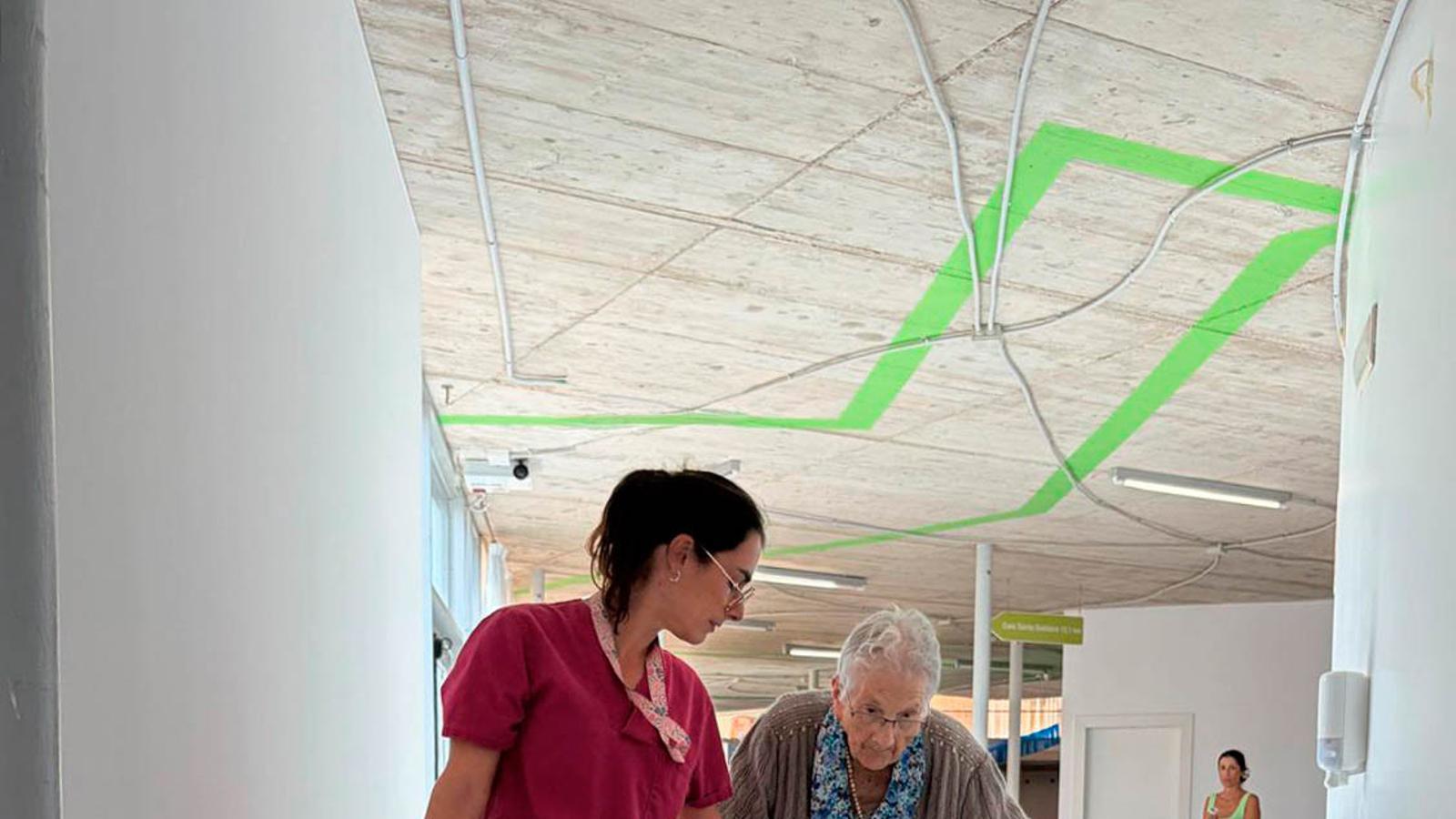

-
CAT -
CAST -
DE
Citadel20 years ago she began working in the social sphere and now, after ten years in politics –first as an insular director and later as a counselor–, she returns. Bàrbara Torrent Bagur (Ciutadella, 1984) has been directing the Santa Rita Sociosanitary Center for a year, where she maintains contact with the elderly who require the most care in Menorca. October 3rd is her big day.
What has reconnecting with social care brought you?
— I was already missing it. Direct contact is a plus, but it also burdens you with more pressure because you have social needs to respond to.
And not all of them have it…
— We can never resolve everything. The demand is very high. Too much time passes between when a place is requested and when it is obtained, and many times we cannot attend to humanly difficult needs of families because there are no vacancies.
What is the capacity of the center?
— We have 110 places, 20 of which are for the day center; 5 for convalescence of patients referred from the hospital; 4 for temporary stays, and 81 for residents. We are the largest center in Menorca and there are people so in need that they decide to be admitted even if they live on the other side of the island.
Is the waiting list only moved when a resident passes away?
— People who enter a nursing home think they are coming here to die; but no, you come to a nursing home to live. We try to ensure that this last stage of life is spent with maximum comfort, care, and well-being.
How does the lack of residential places on the island influence things?
— A lot. Almost all places are governed by the Dependency Law and those who enter exceed 90 points out of 100, that is, they suffer from more illnesses, more advanced dementia processes and less autonomy. These are people who cannot walk, who do not know where they are, or who you have to feed. This increases the care burden on caregivers and excludes people who surely also need a place.
And what outlet do these people have so as not to burden their family environment?
— The majority request a place in a day center, and this way, at least, families only have to worry about the night and weekends. It is usually a preliminary step to admission that also helps in the process of adapting to the center.
How can you ensure that those who are dependent feel comfortable?
— Taking a person to a nursing home still has a certain negative connotation and generates a lot of guilt in some families, who experience it as abandonment. But this feeling changes over time. It is always preferable to have them here than locked in an apartment, unable to go out into the street and interacting only with their caregiver. What kind of quality of life is that? Instead, here they find a lot of adapted activities, from gymnastics to music therapy, cognitive stimulation workshops, bingo, yoga, entertainment… There are bars that don't have as much atmosphere.
How do families treat their elderly?
— We try to avoid infantilization, which is considered mistreatment towards the elderly. They are not small children.
How does leaving their elderly relatives there relieve families?
— Previously, the elderly were cared for at home, and now it is more normalized for them to come to centers. Life expectancy has also increased, and it is more common to live with people suffering from very difficult conditions. We also see many families who arrive overwhelmed by the exhaustion that caring for such a dependent person entails. Alzheimer's cases are especially poignant. Taking care of a person who does not recognize you and does not know where they are, or is at risk of getting hurt, is very exhausting.
Home care is becoming increasingly frequent, and there are also more elderly people, especially women, all alone at home. How should we respond to this reality?
— Menorca has the oldest population in the Balearic Islands. There is less and less pressure on preschools and more pressure on nursing homes. So we have to rethink the model. Today, it is unrealistic to think that we will all end up being cared for in a geriatric home. There must be intermediate alternatives. From people with a sufficient degree of autonomy who can share common spaces to a home help service that is broader.
Is it the future, expanding care at home?
— The institutionalization of coming to live in a nursing home is a good option, but it should always be the last one. Sometimes a residential spot is requested because no other alternative is found. Furthermore, coming to live here uproots you from your home and the street where you have lived. We must ensure that when people come here, it is not because they have not found any other solution that would allow them to stay in their own home.
The eviction of 87-year-old Maricarmen has reactivated the citizen demand regarding housing. How does this problem affect the elderly?
— Families work and those who end up dedicating themselves to caring for our elderly are immigrants who are often in an irregular situation, a precarious and feminized labor sector. Also in families, if someone has to quit their job to care for an elderly person, it is generally a woman who does so. Women also have a longer life expectancy, and the center's workers are mostly women. There is a gender conditioning factor that affects everything. Situations like Maricarmen's in Menorca also happen, but we are lucky that the social network ensures that such a case does not end up on the street. When elderly people have become homeless, we have activated social services to find them another apartment or a social care placement.
Why is it so difficult for people to work in elderly care when it is a profession with growing demand?
— Being in Ciutadella, without the direct competition of the hospital, helps, since the conditions offered by the Health service are better. This means we do not have as many difficulties finding staff. But in sectors like Nursing or assistants, there are always hands missing. A change of mindset is needed. It has been popularly said that working in a nursing home meant cleaning bottoms, when that is what is done the least. There is a mistaken idea about a job that is considered degrading or to which no value is given. Caring for the elderly is a very dignified profession and a very important accompaniment is provided.
But dealing with older people is also taxing…
— Like all social professions, it has a significant mental burden, but it is the flip side of a coin that also contributes to you on a human level. Being able to accompany and help a person who needs you generates a beautiful sense of well-being.
