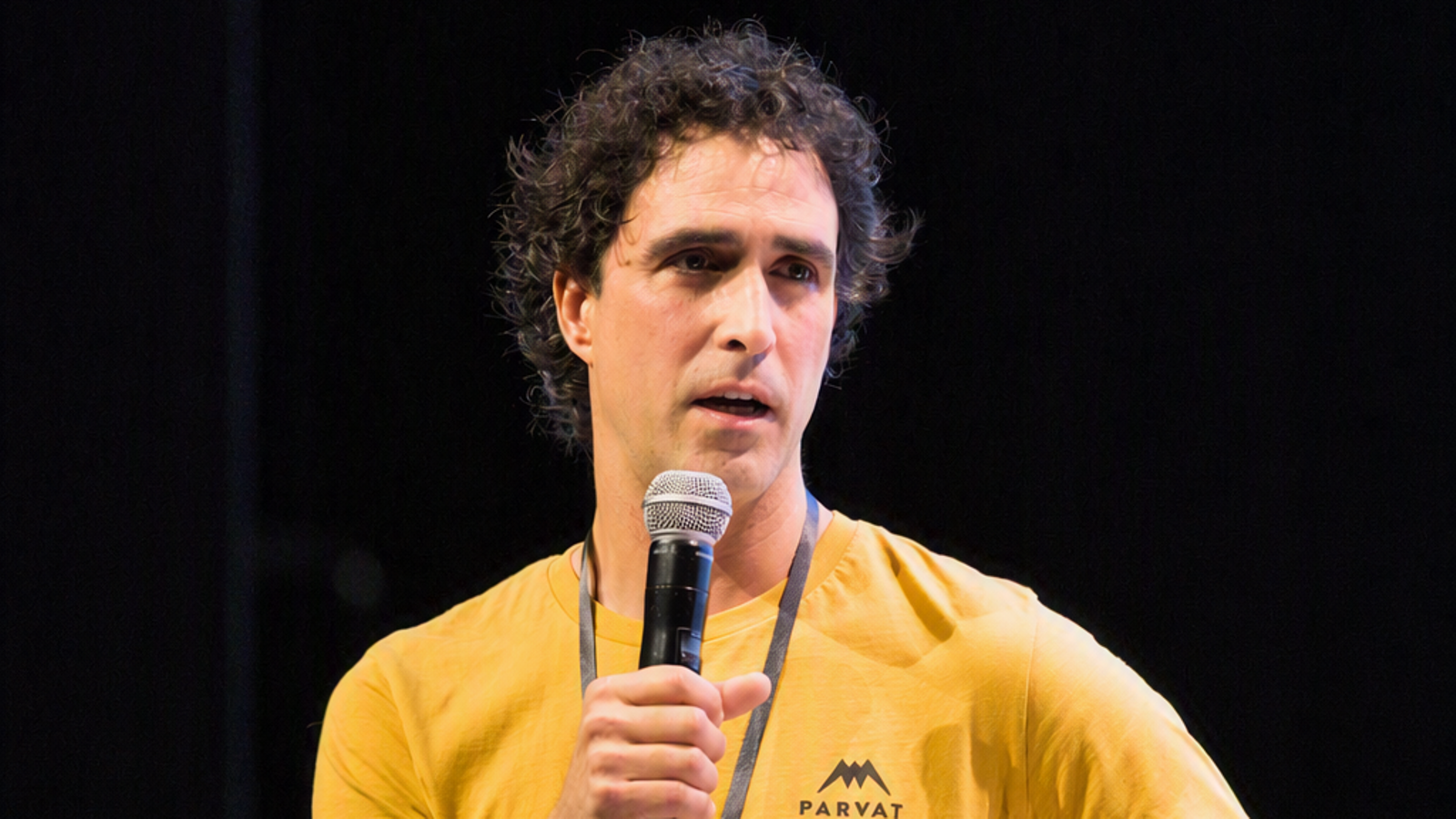
Alfonso García: "Traditions force us to stop, to meet each other and not to be so individual"
Director and winner of the short film award of the Palma Mountain Film Festival

-
CAT -
CAST -
DE
PalmaThe short film Un día al año, by Alfonso García Franco, has been awarded at the Palma Mountain Film Festival, which reaches its 17th edition and dedicates a competitive section to short films about mountains, nature, adventure, and ethnography. The documentary portrays a community of climbers that has maintained a tradition since the 70s and reflects on the value of life, friendship, and the risk of losing collective bonds in an increasingly individualistic society. We talk with the director about the origin of the project and the message he wants to convey to the viewers.
What does it mean to you that Un día al año has won the Palma Mountain Film?
— It is a source of pride, an immense joy, I did not expect it, but it is always a pleasure to see that your works reach so many people and are liked.
How was the idea of Un día al año?
— It all started with a black and white photograph from the 70s that I discovered while working with an investigative photographer for another documentary. Some climbers in costumes appeared in it. From that image, I started to pull the thread and discovered a story that seemed very beautiful to me, because it gathered many layers and dealt with universal themes. I like telling stories that might seem small or local, but that speak of issues that affect us all. In this case, it features the value of health, community, traditions, and the risk of them being lost when there is no generational replacement. Also, the idea that a small thing can become a tradition if we repeat it over the years. In the end, it all starts with a climber who almost dies and who, in the 70s, decides to celebrate life with his friends. What began as a gathering has become a 50-year-old tradition, but one that is now at risk of disappearing. It is a reflection of society through a story that takes place in the mountains.

What captivated you especially about this community?
— That the story has many layers and that it reminds us that, without health, there is nothing. We are often not aware that every day is a gift. For me, this story talks about celebrating life. I am a person who likes to celebrate, and I believe that every day is an opportunity to do so. It is a bit of what lies at the heart of the story and what I wanted to convey. I believe the jury also knew how to see it.
Why is this tradition at risk of disappearing?
— The climbers who started in the 70s are now in their sixties. If there is no generational replacement, traditions die. And that is not necessarily good or bad: I believe that some disappear because they have to disappear and others continue because they have to continue. But, sometimes, it is a bit of a pity. There is also a change in society, which has become more individualistic. We live in a world that goes very fast and, for that reason, it seems especially valuable to preserve small traditions that force us, even if it is one day a year, to stop and meet with others.
What do we lose when these traditions that unite us disappear?
— We are losing something very important: those moments that invite us to pause, find ourselves, and enjoy ourselves and others. Being able to share a day with the people we love and celebrate life seems extraordinary to me.
One day a year does it talk about climbing or, above all, about people?
— Above all, about people. Climbing and the mountains are the context, but what interests me is what happens between people and the bonds they build. It is a story about community, friendship, and the need to share experiences.
What has been the most difficult part of turning this story into a short film?
— It was difficult for us to give shape to the documentary. There was a lot of archive work, searching for images... finding the way to organize all these elements and build a story with meaning was one of the difficulties of the process.

Did you expect that such a local story would connect with an international audience?
— Not necessarily, but it is one of the most beautiful things about cinema. For me, this means that, as a filmmaker, I have managed to address themes that can reach people from other cultures, even if they are very different from our own. One of the most special things about this art is precisely the ability to connect with people who live very far away. If you show loneliness through images, loneliness is the same here as it is in Germany. Emotions can be universal, even if the stories take place in very specific contexts.
Has making this documentary changed anything in your life?
— Yes. Now I value health more and I try to see the people I love more.
What would you like the viewer to take home after watching the short film?
— I would like you to call a cousin, a friend, or a family member whom you have not seen for a long time or with whom you have not spoken for a long time.
