"I have emptied eight of my son's apartments": the invisible drama of Diogenes syndrome
Maria has invested 400,000 euros in her son's well-being, she sleeps in the car when she goes to Mallorca from Menorca and continues looking for an institutional response for an illness that leaves him increasingly isolated
-
CAT -
CAST -
DE
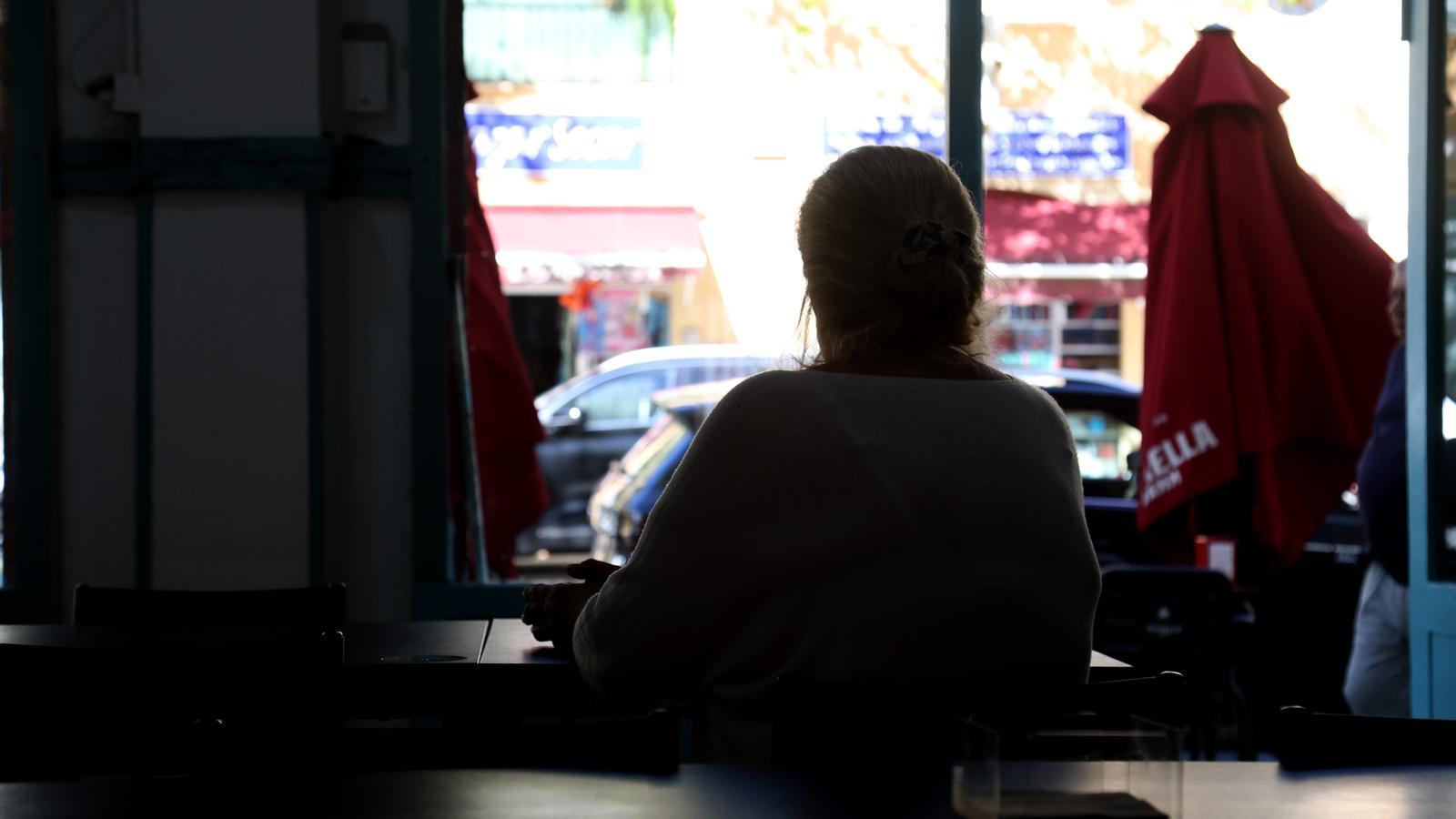
PalmaMaria takes two bags of men's clothing and clean sheets out of the trunk. She has turned the vehicle's seats into a bed. Over the last year, she has traveled 44 times from Menorca to Mallorca to check on how her son is doing, without even knowing if he will receive her or in what state she will find the home she bought and furnished for him in a neighborhood in Palma. “I always sleep in the car,” she asserts. She decides on the fly which boat she will take to return to her home.
“I have already emptied eight of my son’s apartments,” she confesses before explaining the cleaning process of the dwellings on both islands; the necessary renovations, the administrative tasks, and the 400,000 euros she has invested to ensure well-being and stability for Pau, aged 40. “I am already like anesthetized, vaccinated against a pain that does not go away. The last time, the fridge was in such a state that we weren't even able to open it to empty it. There were writings and knife marks on the walls, and his feces everywhere. I cleaned all of that myself,” she reveals while showing the palms of her hands. “I left the baseboards and the tile joints so clean you could eat off the floor. I have strived so that he has a home,” she continues.
Pau accumulates objects and filth until his home becomes uninhabitable. As a child, “he would keep senseless things,” Maria remembers. A rubber band, lighters, papers. “It’s indescribable, but at first, you don't realize it. It happens little by little.” When he grew up, “his whole room was a disaster.” “He didn't want me to enter or touch anything of his. It was unsustainable and affected the common areas.” From age 7 to 14, that situation was “a hell” of visits to psychologists and psychiatrists to understand what was happening to that “affectionate, attached to his mother, hardworking and responsible” child, who even managed to pass the university entrance exam for those over 25.
Psychiatrist Javier Kuhalainen, from the Inca hospital, explains that hoarding problems—or Diogenes syndrome, when extreme abandonment of personal care, lack of hygiene, and profound social isolation are added—can also appear in young people who, outside the home, maintain an apparently satisfactory work and social life. The deterioration can remain hidden for years. “The most serious cases have always started gradually, insidiously and silently,” he points out.
When Maria leaves her two bags on a chair at the neighborhood bar and orders an iced coffee, the staff tells her that her son is polite and that they see him every day. “But he doesn’t receive anyone, he has no company and he is unmotivated. I think he has a very severe depression, a lot of anxiety and a lot of loneliness, which is a trigger. He thinks he doesn’t have any problem, but, at the same time, he repeats that he is not well and that he doesn’t know what is wrong with him. It is not a matter of behavior, but the symptom of a serious illness.”

That which cannot be thrown away
When he goes to the supermarket, Pau can buy 40 things even if he only needs four. Later, the food spoils inside a fridge where nothing else fits. If his mother throws away a rotten avocado, he protests because he wants to keep it. When they clean up, he watches the bags and rummages through them. He tries to rescue things from them. He experiences cleaning "as a punishment," as if they were taking away "his treasures."
Kuhalainen places part of the explanation in this relationship with objects. A t-shirt can materialize a memory; a cup can preserve the bond with the person who gave it. The difficulty in letting go of them can eventually reduce the available space to a corner for sleeping and eating. In some cases, he explains, things become a refuge in the face of loss and isolation. "Hoarding is the untold story of the affected person, who replaced words with things, which piled up in their memory and also in their vital and material space," says the psychiatrist.
The mother cannot get her son to explain to her why he keeps certain objects. "When you ask him for something specific, he beats around the bush."
Start over
To provide him with this last home, Maria bought a garage, renovated it, and commissioned a change-of-use project. “It turned out decent and clean,” she recalls. She thought he would take care of it. Later, she had to return with boots and protective equipment to finish cleaning up the filth. She had to replace the toilet and install a new kitchen. The plasterer, the plumber, and the electrician all went through there. Pau ended up sleeping in the patio, inside a tent, because there was no longer any room inside.
Emptying a house can require an investment that families cannot always afford, points out Kuhalainen. However, once the objects are removed, the risk of them accumulating again is very high if the person's underlying problem is not addressed.
The Palma City Council offers aid for deep cleaning in homes with serious unsanitary conditions. Between 2022 and 2025, 47 families benefited from this, although the report does not identify cases of Diogenes syndrome: municipal social services do not establish that diagnosis. Cort coordinates the interventions with the Local Police and the Health and Sanitation departments. Cleaning can be considered when the person accepts it. If they refuse access to the home, it may be necessary to resort to a court authorization.
Pau, now an adult, has received several diagnoses: borderline personality disorder, bipolar disorder, and the latest report from a forensic psychiatrist, which points to a schizoaffective disorder. Maria has asked for help from psychologists, psychiatrists, social services, and the courts. “I have knocked on every door and I know that a wrong diagnosis can lead to wrong treatment, medication, and care,” she summarizes. She continues to seek answers and insists that they attend to a person who, often, does not want to be helped. “He tells me he is not well, that he does not know what is happening to him, and he asks me if I will accompany him to the hospital, but admitting him to a psychiatric institution means I cannot be with him. He is very afraid of that. When you treat someone against their will, you have to be very careful. You cannot blame him for his situation or his illness,” she asserts.
Kuhalainen confirms that few cases of this type reach her public health practice and warns of the need for prevention, continuity of care, and supervision, beyond framing it as a legal issue or a neighborhood conflict. "More social awareness is needed to fight against the stigma, isolation, and unwanted loneliness faced by people affected by a severe hoarding disorder and their families," she demands.
Helping without being rejected
The Director General of Mental Health, the psychiatrist Carme Bosch, explains that isolation, the abandonment of hygiene and health, and the lack of awareness of the problem make it difficult for these people to ask for help. Often, it is those around them who end up alerting others to the situation.
Health authorities have identified 66 people with this disorder. The figure does not allow for establishing the total number of people affected in the Balearic Islands. There is no data broken down by age or gender, but Bosch states that they have not detected an increase in cases. To approach these people, she explains, it is necessary to build a bond. Assertive community treatment teams, made up of professionals from different disciplines, assist people with severe mental disorders who have become disconnected from the healthcare network. Intervention can begin with a need they do recognize: food or some help at home, coordinated with social services.
“You don't have to be invasive, but you shouldn't abandon them either,” summarizes Bosch. She argues that there is good coordination between Health and Social Services and stresses that each situation requires an individual assessment. Involuntary admission, she explains, is considered after a psychiatric assessment and is subject to judicial control. There are also cases that can be addressed within the community, without admission.
Recovery depends on many factors. There are people who manage to regain a stable life and stop hoarding; others return to it. Social and family support also influences this. “It is not the same to have a family that takes care of you and is attentive as it is to have no one.”
Bosch asks that this reality be explained with sensitivity. The lack of knowledge of what may be behind a house or a person in poor hygienic conditions generates misunderstanding. “There is a stigma associated with everything that deviates from the norm,” she points out.
Maria is exhausted and hopes that the institutions can help her son. She arrives with the bags at his home, but he is not there. She asks a neighbor how everything is going and the man, who is walking his dog, shrugs his shoulders with resignation. Maria suffers from the added “pressure” of knowing that her son's situation can cause disturbances and maintains contact with the property management. The trip has been for nothing. She carries the bags back to the car and, once on the boat, she will think the same thing as always: “It is cruel to leave him to his fate. I just want him to have a dignified and autonomous life.”
